A busy warehouse is a sign of a healthy business. But with all that activity comes dirt, dust, and debris. Keeping your warehouse floor clean isn’t just about appearances; it’s a crucial part of maintaining a safe and efficient operation. A clean floor can prevent accidents, improve employee morale, and even extend the life of your flooring and equipment.
This guide will walk you through everything you need to know about how to clean a warehouse floor effectively. We will cover the tools you’ll need, a step-by-step process, and tips for keeping it clean long-term.
Why a Clean Warehouse Floor Matters

Before diving into the “how,” let’s quickly cover the “why.” A consistent cleaning routine for your warehouse floor offers significant benefits.
- Enhanced Safety: Dust, spills, and debris create slip, trip, and fall hazards, which are among the most common workplace accidents. A clean floor is a safer floor for everyone.
- Improved Air Quality: Dust and other particles on the floor get kicked up into the air by foot traffic and machinery. This can affect employee health and contaminate products.
- Increased Efficiency: A clean and organized space helps your team move more efficiently. It also makes it easier to spot potential hazards or maintenance issues with your equipment, like forklifts.
- Longer Floor Lifespan: Dirt, grit, and chemical spills can damage concrete and other flooring surfaces over time. Regular cleaning protects your investment and prevents costly repairs or replacements.
- Better Inventory Protection: Dust and dirt can settle on and damage your stored goods, leading to financial losses.
Essential Tools and Equipment for Floor Cleaning
Having the right tools for the job makes the entire process faster and more effective. The specific equipment you need will depend on the size of your warehouse and the type of dirt you typically deal with.
Basic Cleaning Supplies:
- Push Brooms: A wide, sturdy push broom is your first line of defense for sweeping up large debris.
- Dust Mops: Large dust mops are great for daily maintenance to collect fine dust and dirt.
- Mop and Buckets: A traditional mop and bucket are useful for spot-cleaning spills.
- Scrapers: Plastic or metal scrapers help remove stubborn, stuck-on grime like tape or gum.
- Warning Signs: “Wet Floor” signs are non-negotiable to prevent accidents during and after cleaning.
Heavy-Duty Cleaning Machinery:
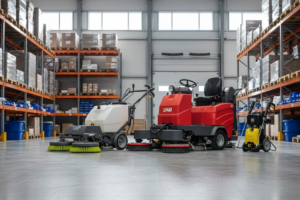
For larger spaces, manual cleaning isn’t practical. Investing in or renting heavy-duty equipment is the way to go.
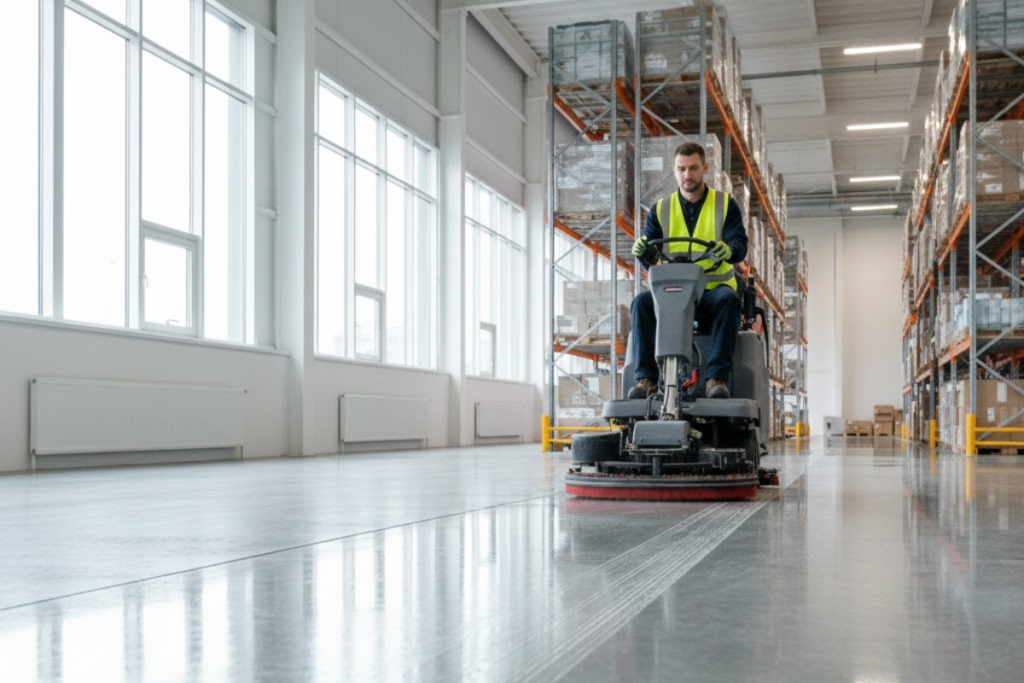
- Industrial Floor Sweeper: These machines can be walk-behind or ride-on models. They sweep up debris far more efficiently than a manual broom, making them ideal for large areas.
- Automatic Floor Scrubber: This is the workhorse of warehouse floor cleaning. An auto scrubber applies a cleaning solution, scrubs the floor with rotating brushes or pads, and then vacuums the dirty water up, all in one pass. It leaves floors clean, dry, and ready for traffic much faster than mopping.
- Pressure Washer: For deep cleaning tough stains, oil spots, or outdoor concrete areas, a pressure washer can be very effective. Use caution, as high pressure can damage some floor coatings.
Cleaning Solutions and Degreasers:
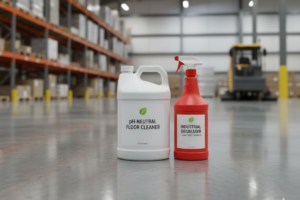
- pH-Neutral Cleaner: For general cleaning, a pH-neutral solution is safe for most floor types, including sealed or polished concrete.
- Industrial Degreaser: Warehouses with vehicle traffic or machinery often have oil and grease stains. A powerful degreaser is necessary to break these down effectively. Always check if the degreaser is suitable for your floor type.
A Step-by-Step Guide to Cleaning Your Warehouse Floor
Ready to get started? Follow these steps for a floor that sparkles. This process is designed for a deep clean using an auto scrubber, the most common method for warehouses.
Step 1: Prepare the Area

First, you need to clear the floor. This is the most labor-intensive part but is essential for a thorough clean.
- Move all pallets, equipment, bins, and other obstacles out of the section you plan to clean.
- Consolidate items to one side of the warehouse if you can’t clear the entire space at once.
- This is a great time to inspect for and dispose of any trash or unwanted items.
Step 2: Sweep and Remove Large Debris

Never run a floor scrubber over an unswept floor. Large debris can damage the machine’s brushes, pads, and vacuum system.
- Use an industrial sweeper or a large push broom to collect all loose dirt, wood chips, plastic wrap, and other large items.
- Pay special attention to corners and edges where dirt tends to accumulate.
- Use a scraper to remove any caked-on grime or old tape before you start wet cleaning.
Step 3: Prepare Your Cleaning Solution and Machine
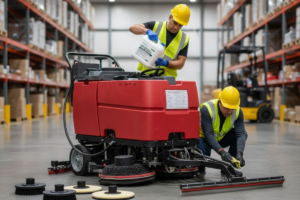
Now it’s time to get your auto scrubber ready.
- Fill the machine’s solution tank with clean water and the appropriate cleaning chemical, following the manufacturer’s recommended dilution ratio. Using too much soap can leave a sticky residue that attracts more dirt.
- Choose the right brush or pad for your floor type. More aggressive brushes are for heavily soiled, durable concrete, while softer pads are for coated or polished surfaces.
- Ensure the squeegee blades on the back of the machine are clean and in good condition to effectively pick up the water.
Step 4: Scrub the Floor
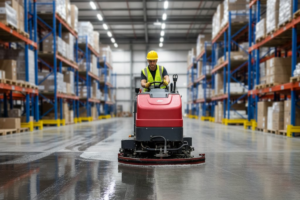
With your machine ready, it’s time for the main event.
- Start cleaning along the perimeter of the cleared section and work your way inward.
- Operate the auto scrubber in straight, overlapping lines to ensure you cover every inch of the floor. A 4- to 6-inch overlap is usually sufficient.
- Keep a steady pace. Moving too fast won’t give the brushes and solution enough time to work, while moving too slow can oversaturate the floor.
- For very tough stains, you may need to pre-treat the area with a degreaser or make a second pass with the scrubber.
Step 5: Final Touches and Safety Precautions
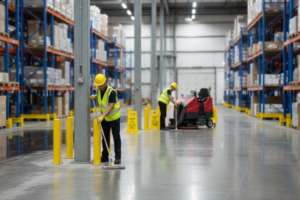
Once the scrubbing is done, a few final steps will complete the job.
- Use a mop to clean any areas the scrubber couldn’t reach, like tight corners or around support columns.
- Place “Wet Floor” signs prominently around the cleaned area. Even though auto scrubbers leave floors mostly dry, some dampness can remain.
- Allow the floor to dry completely before allowing foot traffic or moving items back into the area.
- Clean out your auto scrubber thoroughly. Empty and rinse both the solution and recovery tanks, and wipe down the squeegees. Proper maintenance will keep your machine running well for years.
Tips for Maintaining a Clean Warehouse Floor
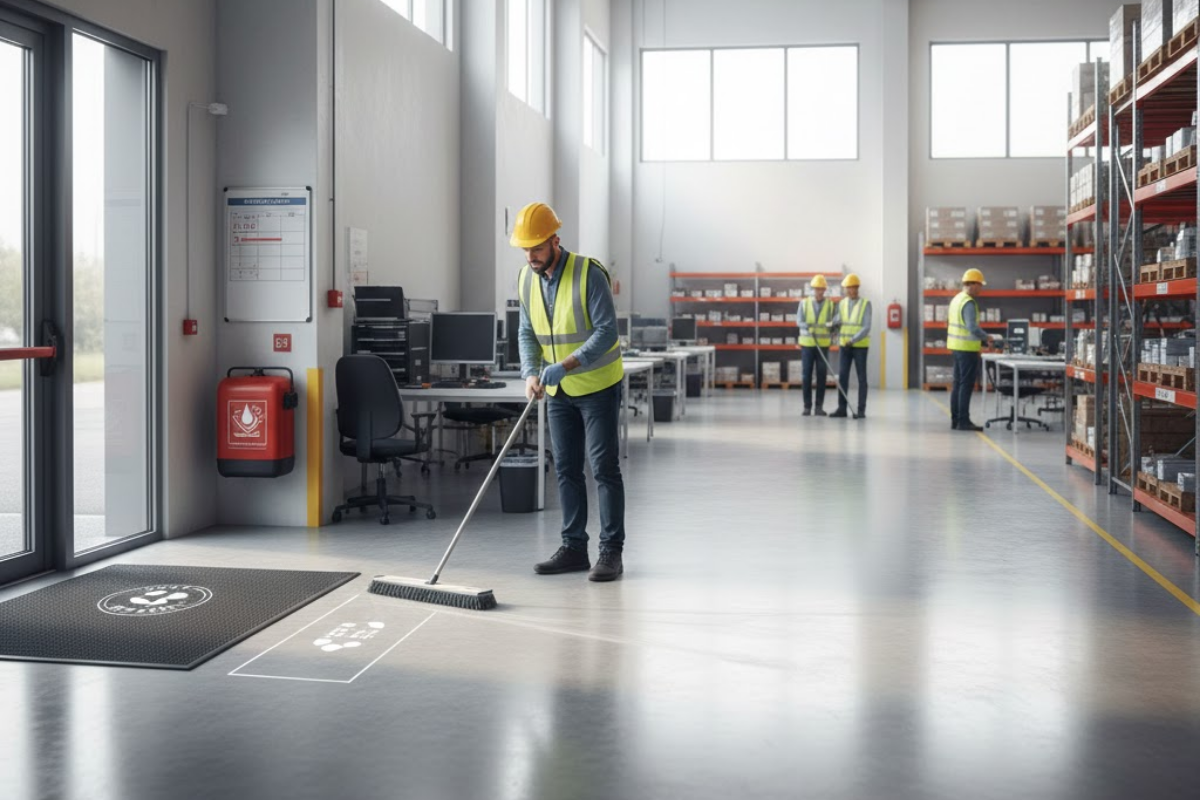
A deep clean is great, but consistency is key. A daily or weekly maintenance plan will make your deep cleans easier and less frequent.
- Implement a Daily Sweeping Schedule: Use a dust mop or sweeper at the end of each day to manage dust and small debris.
- Clean Spills Immediately: Don’t let spills sit. Clean them up as soon as they happen to prevent stains and safety hazards. Keep spill kits readily available in key areas.
- Use Floor Mats: Place heavy-duty mats at all entrances and exits to trap dirt and moisture from shoes and equipment wheels before it gets tracked across the warehouse.
- Schedule Regular Deep Cleans: Depending on your facility’s traffic, schedule a full scrub weekly, bi-weekly, or monthly. Consistency prevents overwhelming build-up.
- Educate Your Team: Encourage employees to help maintain cleanliness by cleaning up their workspaces and reporting any large spills or messes. A clean workplace is a shared responsibility.
By following these guidelines, you can implement an effective cleaning program that ensures your warehouse floor is safe, clean, and professional. It’s a simple investment that pays off in operational efficiency and employee well-being.