Travertine floors are stunning. They bring a warmth and rustic elegance to a home that few other materials can match. Whether you have polished, honed, or tumbled travertine, there is something undeniably special about walking on natural stone. But owning that beauty comes with a bit of responsibility. Travertine is a form of limestone, which means it’s durable but also sensitive.
If you’ve noticed your floors looking a little dull or you’re just terrified of ruining them with the wrong cleaner, you are in the right place. Keeping travertine clean doesn’t have to be a nightmare. In fact, once you know the rules, it’s quite simple.
Here is everything you need to know about how to clean travertine stone floors safely and effectively so they last a lifetime.
Why Proper Care for Travertine Matters
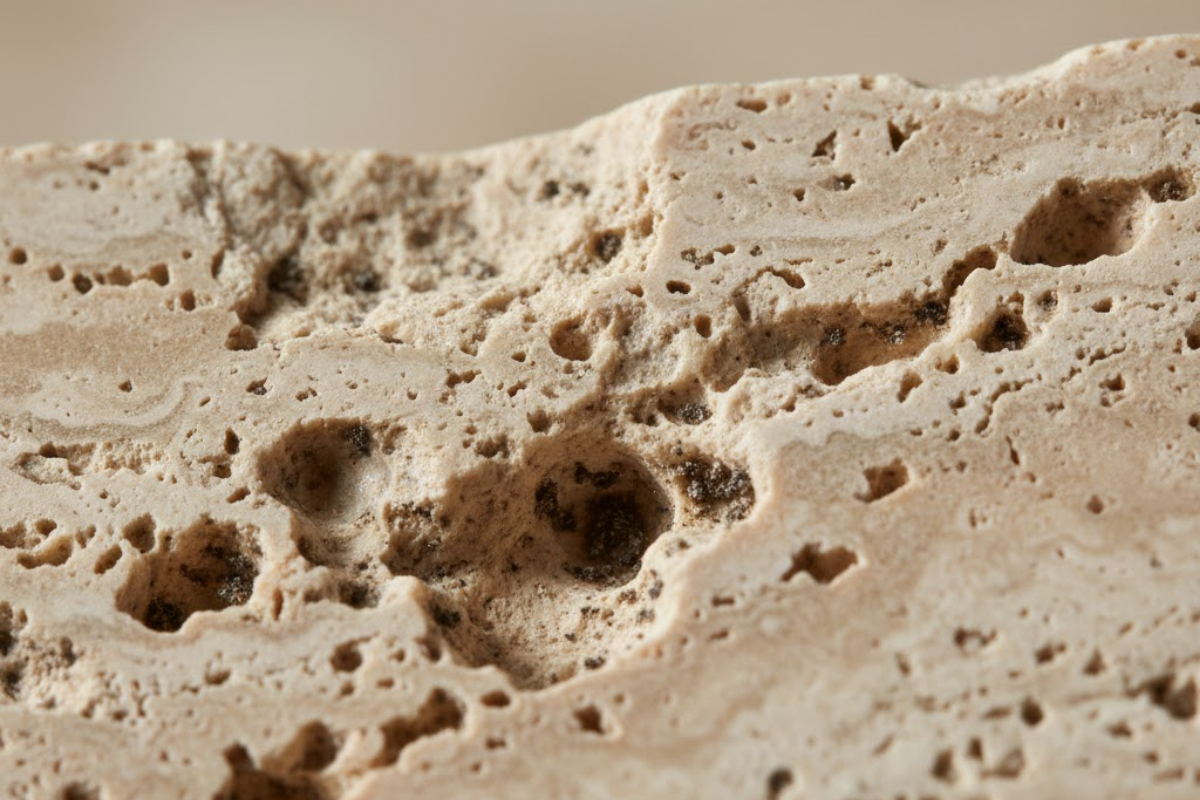
You might think stone is tough as nails. After all, it’s rock. But travertine is actually quite porous. It has tiny microscopic holes that can trap dirt, grime, and liquids. If left unchecked, these can cause staining or etching (dull spots caused by acid).
Regular cleaning isn’t just about hygiene; it’s about preservation. Dirt acts like sandpaper under your feet. Every time you walk across a dirty floor, those little grit particles scratch the surface. Over time, this dulls the finish. By cleaning properly, you are essentially protecting your investment and keeping that gorgeous natural variation visible.
Tools and Materials You Will Need
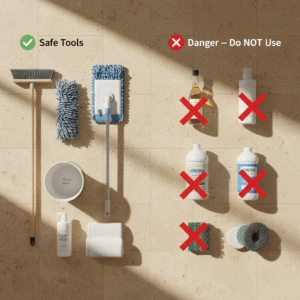
Before you start scrubbing, let’s gather the right gear. Using the wrong tools is the number one reason travertine gets damaged.
The “Safe” List:
- Soft bristle broom or dust mop: Avoid straw brooms that might scratch.
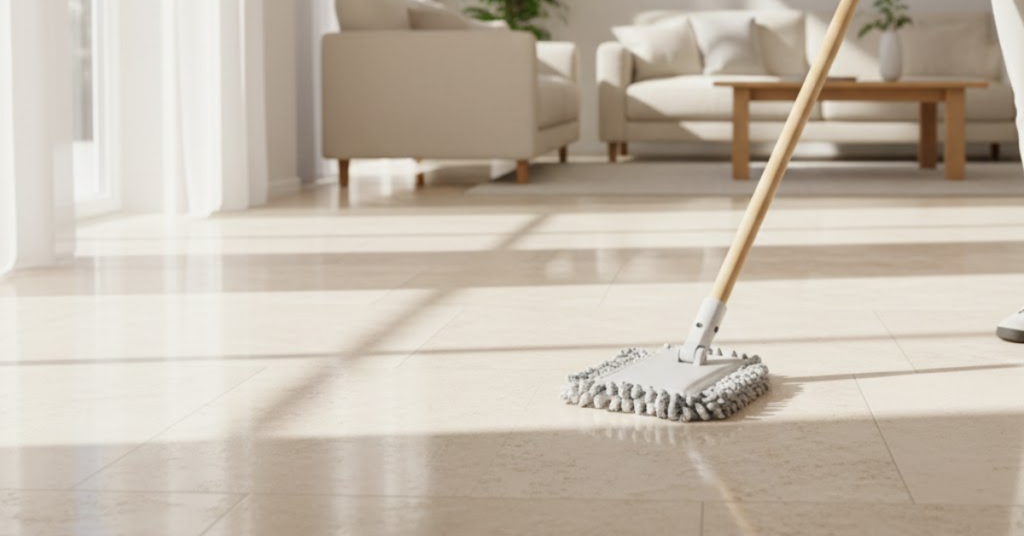
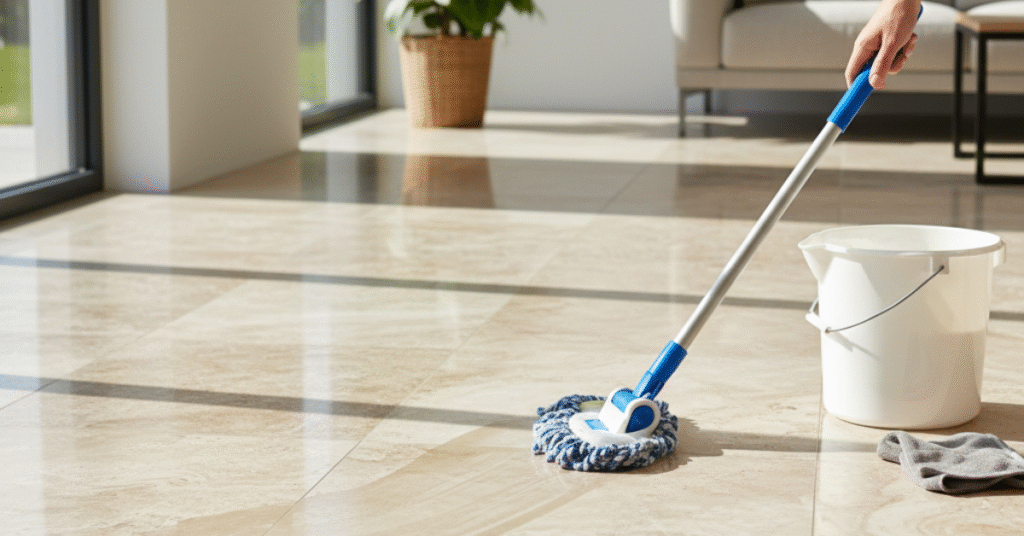
- Microfiber mop: These are fantastic for trapping dirt without scratching.
- Bucket: For your cleaning solution.
- Neutral Stone Cleaner: This is crucial. Look for a pH-neutral cleaner specifically made for natural stone.
- Warm water: Nature’s best solvent.
- Soft towels or cloths: For drying (very important!).
The “Danger” List (Do NOT Use):
- Vinegar: It is acidic and will etch the stone instantly.
- Bleach: Too harsh.
- Ammonia or Windex: Can dull the surface.
- Abrasive scouring pads: Think steel wool or the green side of a sponge. These are travertine’s enemy.
Step-by-Step Guide: How to Clean Travertine Stone Floors
Ready to get those floors sparkling? Here is your foolproof routine.
1. Sweep or Dust Mop Thoroughly
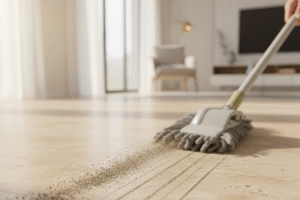
The first step is removing loose debris. Remember the sandpaper analogy? You want to get all that grit off the floor before you introduce water. Use a soft broom or a dry microfiber dust mop. Sweep in one direction to ensure you aren’t just pushing dirt around.
2. Prepare Your Cleaning Solution
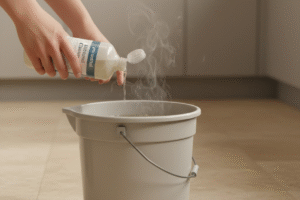
Fill your bucket with warm water. Add your pH-neutral stone cleaner according to the instructions on the bottle. Less is often more here—if you use too much soap, you’ll leave a sticky film that attracts more dirt later.
3. Damp Mop (Don’t Soak!)
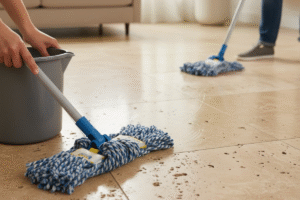
Dip your microfiber mop into the solution and wring it out well. You want the mop to be damp, not dripping wet. Water can seep into the pores of the stone, and if it sits there too long, it can cause discoloration. Mop in small sections.
4. Rinse with Fresh Water
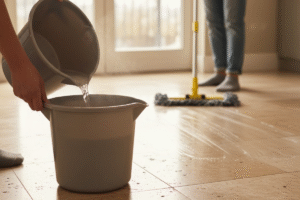
This is a step many people skip, but it makes a huge difference. Once you’ve mopped with soap, empty your bucket and fill it with plain, clean water. Go back over the floor with a rinsed mop to pick up any leftover soap residue.
5. Dry the Floor
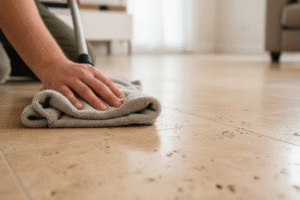
Stone floors can streak if let to air dry. For a truly professional finish, take a soft towel or dry microfiber cloth and buff the floor dry. This prevents water spots and leaves the stone looking its best.
Handling Tough Stains on Travertine
Sometimes, life happens. A glass of wine spills, or muddy paws make their way inside. Here is how to handle stubborn spots.
The Poultice Method
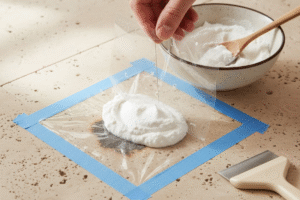
For deep stains that won’t wipe away, you need a poultice. This is a paste that draws the stain out of the stone.
- Make a paste: Mix a baking soda with a little bit of water (or a specific stone cleaner) until it has the consistency of peanut butter.
- Apply it: Spread the paste over the stain about 1/4 to 1/2 inch thick.
- Cover it: Place plastic wrap over the paste and tape down the edges with painter’s tape. Poke a few holes in the plastic so it can breathe.
- Wait: Let it sit for 24 to 48 hours. The paste will dry and pull the stain into it.
- Remove: Gently scrape off the paste (use a plastic scraper, not metal) and wipe clean.
Organic Stains (Coffee, Tea, Food)
Usually, a little hydrogen peroxide (12% strength) mixed with a few drops of ammonia creates a safe bleaching agent for organic stains on light-colored travertine. Test this in a small, hidden corner first!
Oil-Based Stains (Grease, Cooking Oil)
If grease hits the floor, try to blot it immediately. You can use a small amount of gentle liquid cleanser with household detergent, or mineral spirits if the stain is stubborn. Again, rinse well afterwards.
Common Mistakes to Avoid
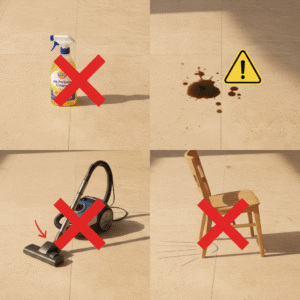
You want your floors to last for decades. To ensure they do, steer clear of these common errors.
- Using Generic Floor Cleaners: Generic “all-purpose” cleaners usually contain acids or alkalis that destroy the sealant on your stone.
- Ignoring Spills: Since travertine is porous, a spill that sits becomes a stain that stays. Wipe up accidents the second they happen.
- Vacuuming with the Beater Bar On: If you use a vacuum, make sure you turn off the rotating brush (beater bar). The wheels and the brush can scratch the stone.
- Dragging Furniture: Never drag chairs or tables across travertine. Always lift them, or use felt pads under the legs.
Maintenance Tips for Long-Term Shine
Cleaning is reactive; maintenance is proactive. Here is how to keep the “wow” factor.
Use Door Mats
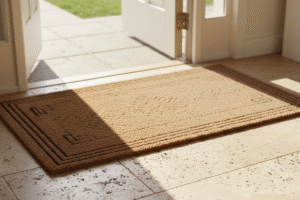
Place mats inside and outside every entrance. This captures dirt before it ever touches your stone. It is the single most effective thing you can do to extend the life of your floors.
Sealing is Non-Negotiable
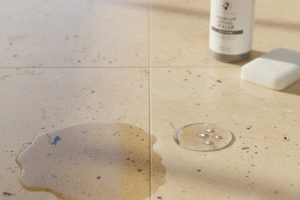
Travertine must be sealed. The sealant acts as a barrier, giving you more time to clean up spills before they soak in. Generally, you should reseal your floors every 1 to 3 years, depending on foot traffic. You can test this easily: pour a tiny bit of water on the floor. If it beads up, your seal is good. If it soaks in and darkens the stone, it’s time to reseal.
Use Area Rugs
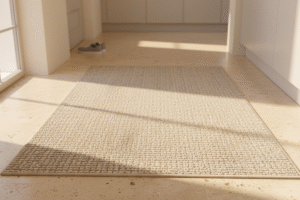
High-traffic areas like hallways or in front of the kitchen sink take a beating. A nice area rug protects the stone from excessive wear patterns.
Conclusion
Cleaning travertine stone floors doesn’t require magic or expensive professionals—just consistency and the right chemistry. By swapping out harsh chemicals for pH-neutral cleaners and keeping up with sweeping, you ensure your floors remain the centerpiece of your home.
Remember, treat your stone gently, seal it regularly, and wipe up spills fast. Do this, and your travertine will look as beautiful in ten years as it does today.