
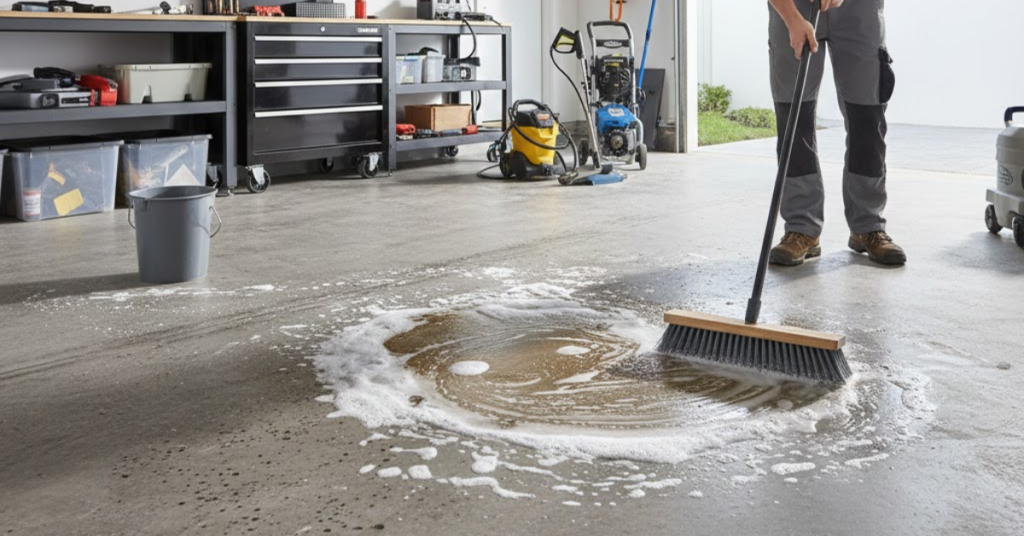
Walking into a clean garage feels fantastic. It’s no longer just a place to park the car; it becomes a usable extension of your home. But let’s be honest garage floors take a beating. From oil drips and tire marks to winter salt and everyday dust, this concrete slab endures more abuse than any other floor in your house.
If you’ve been avoiding the grime, you aren’t alone. The good news is that restoring your garage floor doesn’t require professional help or expensive equipment. With a little elbow grease and the right approach, you can lift stains and bring back the shine.
In this guide, we will walk you through exactly how to clean garage floors effectively. We’ll cover everything from quick spot cleaning to deep scrubbing, ensuring you have a spotless surface that looks great and lasts longer.
Preparation: Clear the Deck
Before you even think about water or soap, you need a clear workspace. Trying to clean around boxes and bikes is a recipe for frustration.
Declutter and Remove Items
Start by moving everything off the floor. This is the perfect excuse to declutter. Put items on shelves, hang tools on pegboards, or move larger equipment to the driveway temporarily. A completely empty floor allows you to clean edge-to-edge without missing spots where dirt loves to hide.
Sweep It All Up
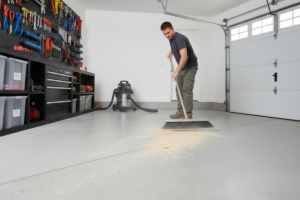
Once the floor is clear, grab a wide push broom. You need to remove all loose debris, leaves, bugs, and surface dust. If you have a shop vac, use it for the corners and along the walls where brooms often miss. Getting rid of the loose dirt now prevents you from just pushing mud around later.
Deep Cleaning Your Garage Floor: A Step-by-Step Guide
Now that the floor is prepped, it’s time to get to work. The method you use depends slightly on how dirty the floor is, but these steps work for most concrete surfaces.
Step 1: Pre-Treat Stubborn Stains
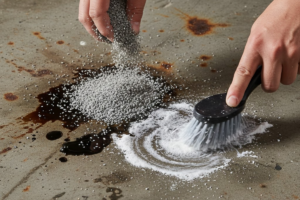
Oil and grease are the enemies of a clean garage. Water alone won’t touch them. You need to treat these spots before doing a general wash.
- For Oil Stains: Cover the stain with cat litter or sawdust to absorb fresh oil. For older stains, apply a commercial degreaser or a paste made of baking soda and water. Let it sit for 30 minutes, then scrub vigorously with a stiff nylon brush.
- For Rust: Pour white vinegar or lemon juice on the spot and let it sit for ten minutes. Scrub and rinse.
Step 2: Choose Your Cleaning Solution
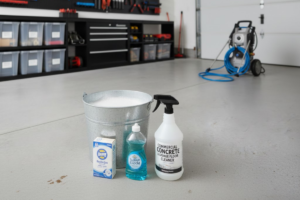
You don’t always need harsh chemicals. Here are a few effective options:
- DIY Solution: Mix warm water with a cup of baking soda and a squirt of dish soap. This is great for general maintenance.
- Heavy Duty: For dirtier floors, use a specialized concrete cleaner or degreaser available at hardware stores.
- Pressure Washer: If you have one, this is the most effective method, but be careful not to use too high a pressure setting, which can damage the concrete surface.
Step 3: Scrub the Floor
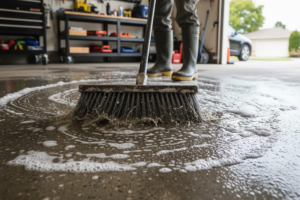
Wet the floor with your cleaning solution. You can use a garden hose to wet it down first, then apply the soap. Using a stiff-bristled deck brush, scrub the floor in sections. This mechanical agitation is crucial for lifting dirt out of the porous concrete.
If you have a large garage, consider renting a floor buffer with a scrubbing pad. It saves your back and does an incredible job.
Step 4: Rinse Thoroughly
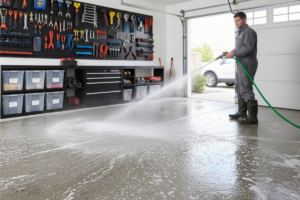
Once you’ve scrubbed, it’s time to rinse. Use a high-pressure nozzle on your garden hose or a pressure washer. Start from the back of the garage and work your way toward the door, pushing the dirty water out.
Make sure you rinse until no suds remain. Leftover soap can make the floor slippery and actually attract more dirt later.
Step 5: Dry the Floor
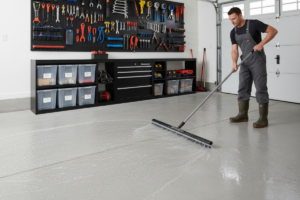
Standing water isn’t great for concrete and can lead to mold issues in enclosed spaces. Use a floor squeegee to push excess water out of the garage. Leave the garage door open for a few hours to let the air circulate and dry the surface completely.
Cleaning Different Types of Garage Floors
Not all garage floors are raw concrete. If you have a coating or special flooring, your approach needs to shift slightly.
Epoxy Floors
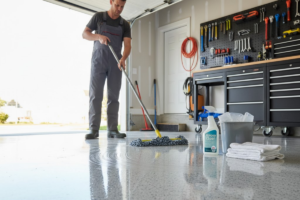
Epoxy coatings look amazing and are durable, but they can scratch if you use abrasive tools.
- Do: Use a soft foam mop or a microfiber mop.
- Don’t: Use citrus-based cleaners or vinegar, as the acid can dull the glossy finish over time. Stick to ammonia mixed with water (about half a cup per gallon) for a streak-free shine.
Garage Floor Tiles or Mats
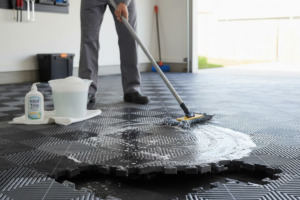
Interlocking tiles are popular for their look and ease of installation.
- Maintenance: Sweep or vacuum regularly.
- Deep Clean: Most tiles can be washed with a mild soap and water solution and a mop. If moisture gets trapped underneath, you may occasionally need to lift a few tiles to let the concrete below breathe.
Painted Concrete
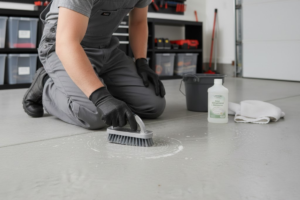
Painted floors require gentle care to prevent peeling. Avoid high-pressure washers, which can strip the paint. Stick to a soft brush and mild detergent, and never let water pool on the surface for too long.
Essential Maintenance Tips
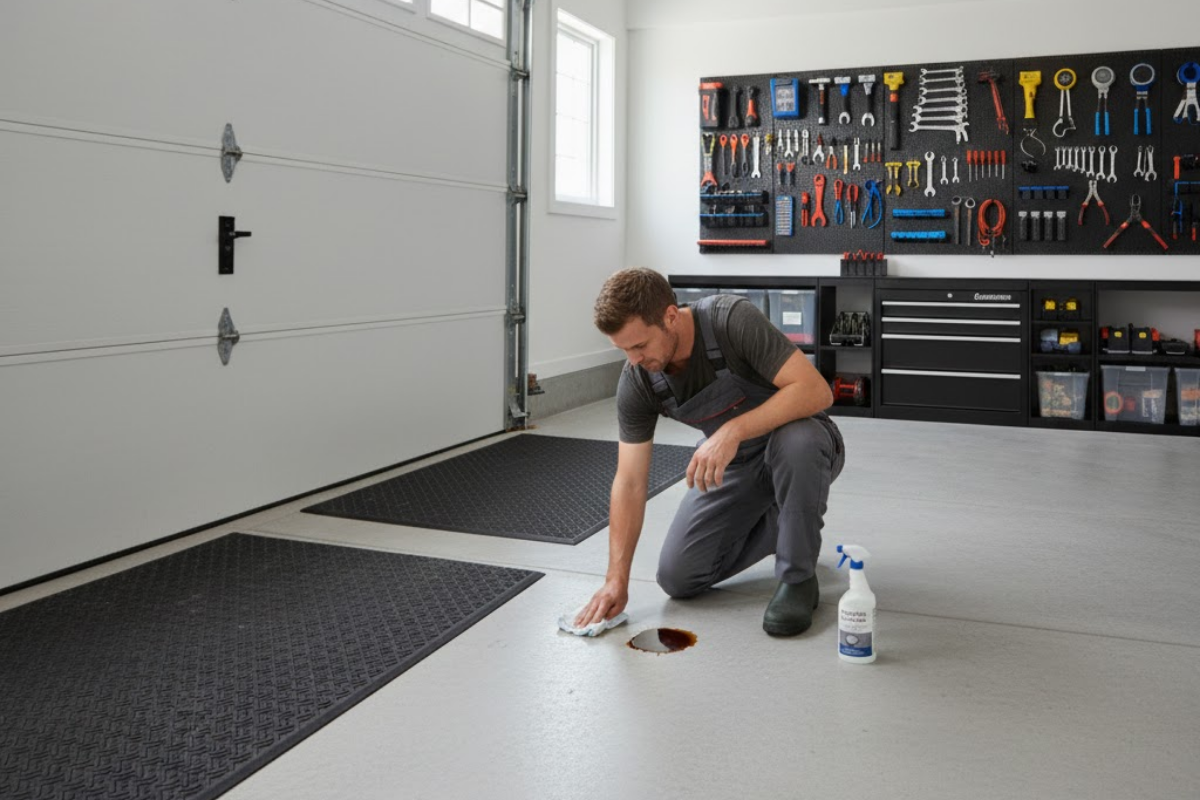
Keeping your garage floor clean doesn’t have to be a massive quarterly project. Small habits make a big difference.
- Place Mats at Entrances: Stop dirt before it enters. A good quality doormat at the door leading into the house and mats under your car’s tires can catch the worst of the mess.
- Spot Clean Immediately: If you spill oil or coolant, wipe it up right away. The longer it sits, the deeper it penetrates the concrete.
- Seal the Concrete: If your floor is raw concrete, consider applying a concrete sealer. This acts as a barrier, stopping liquids from soaking in and making future cleaning much easier.
Frequently Asked Questions
What is the best cleaner for garage floors?
For raw concrete, a dedicated alkaline concrete degreaser is usually best for heavy grime. For general cleaning, a mixture of warm water and simple dish soap or powdered laundry detergent works surprisingly well. For epoxy floors, a mix of ammonia and water is often recommended.
How often should I clean my garage floor?
Aim for a deep clean twice a year once in the spring to remove winter salt and grime, and once in the fall. However, sweeping should happen monthly to prevent dirt buildup.
Can I use bleach on my garage floor?
You can, but use it with caution. Diluted bleach is good for removing mildew or mold spots, but it won’t remove oil or grease. Never mix bleach with ammonia or other cleaners, as this creates toxic fumes.
How do I remove tire marks?
Tire marks are stubborn. A degreaser or a solvent like mineral spirits usually works best. Apply it to the mark, let it sit for a few minutes, and scrub hard with a stiff brush.
Conclusion
Learning how to clean garage floors is about protecting your investment and creating a more pleasant space. A clean garage reduces the amount of dirt tracked into your home and prevents long-term damage to the concrete slab.
By following these steps clearing the clutter, treating stains early, and choosing the right cleaning method for your specific floor type you can transform your garage from a dusty storage unit into a clean, functional part of your home. Set aside a Saturday morning, grab your push broom, and give your garage floor the attention it deserves.


1 thought on “How To Clean A Couch That Smells?”
Great post! It’s so important to make the switch to eco-friendly cleaning products. Thanks for sharing these recommendations; I’m definitely going to check some of them out.