
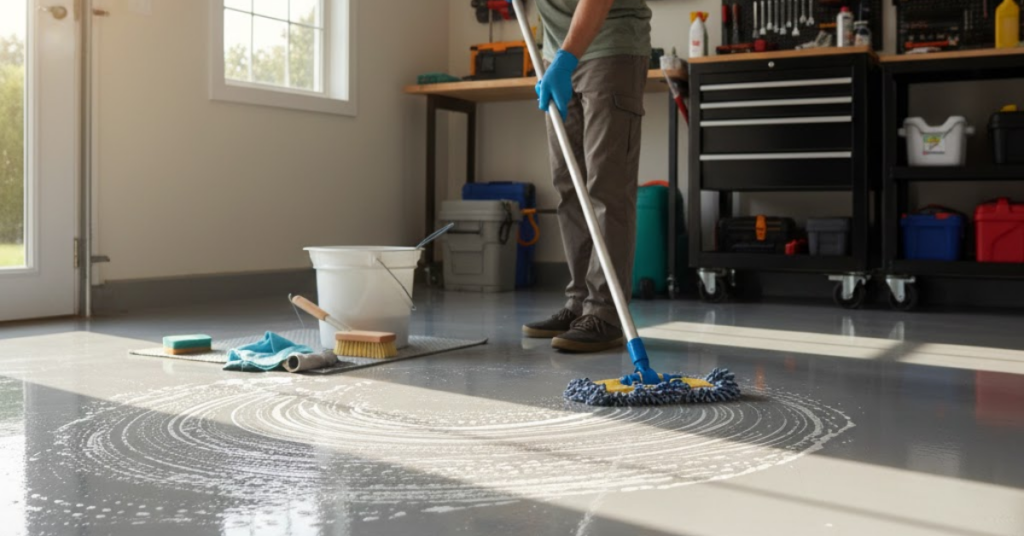
An epoxy-coated garage floor looks fantastic. It’s glossy, durable, and transforms a dingy garage into a clean, functional space. But to keep that showroom shine, you need to know how to clean it properly. Don’t worry, it’s easier than you might think. We’ll walk you through everything you need to know to keep your epoxy floor looking brand new.
This guide will cover the right tools for the job, step-by-step cleaning instructions, and tips for handling tough stains.
Why Proper Cleaning is Essential for Epoxy Floors
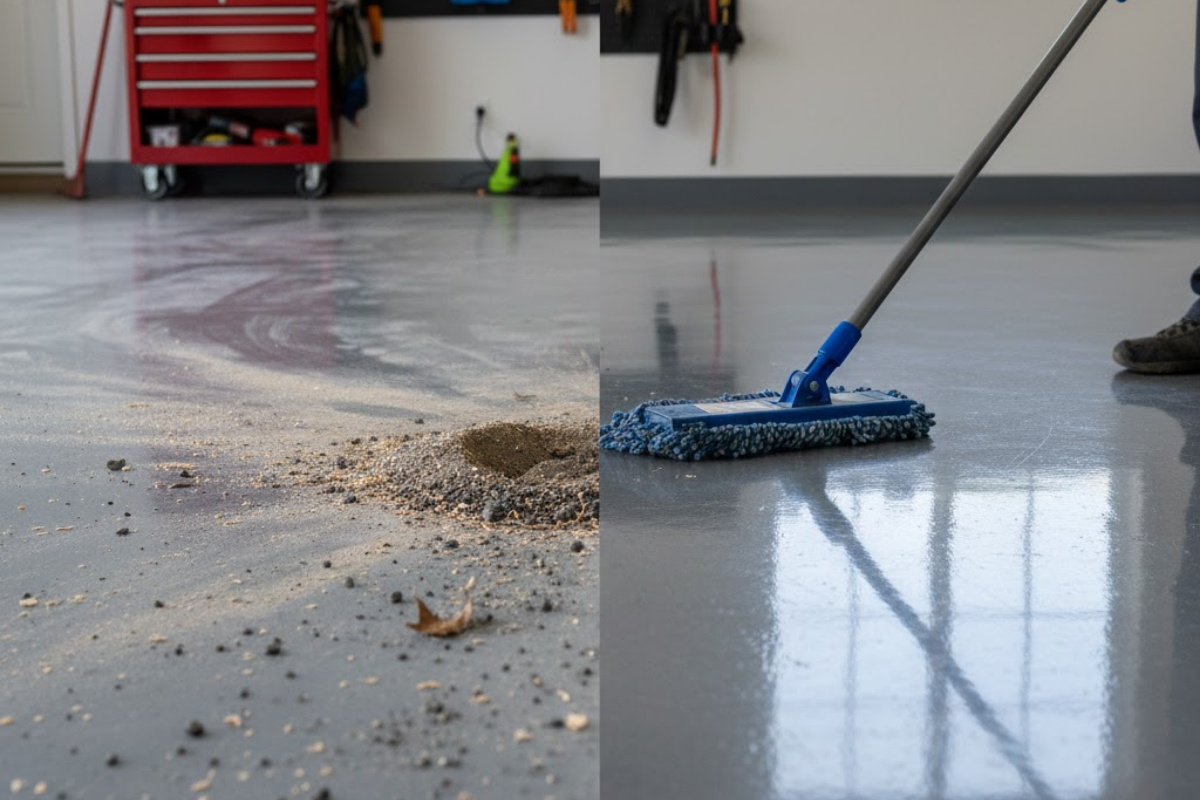
Epoxy coatings are tough, but they aren’t invincible. Dirt, grit, and sand act like fine-grit sandpaper. Over time, walking or driving over this debris can create micro-scratches that dull the floor’s glossy finish. Regular cleaning removes these abrasive particles, preserving the surface and extending its life.
Proper cleaning also prevents stains from setting in. Things like oil, grease, and chemicals can damage the coating if left for too long. A simple cleaning routine is your best defense against lasting damage and keeps your garage looking sharp.
Tools and Materials for Cleaning Epoxy Floors
You don’t need a lot of fancy equipment to get the job done. In fact, simple is often better. Here’s a list of what you’ll need to gather before you start.
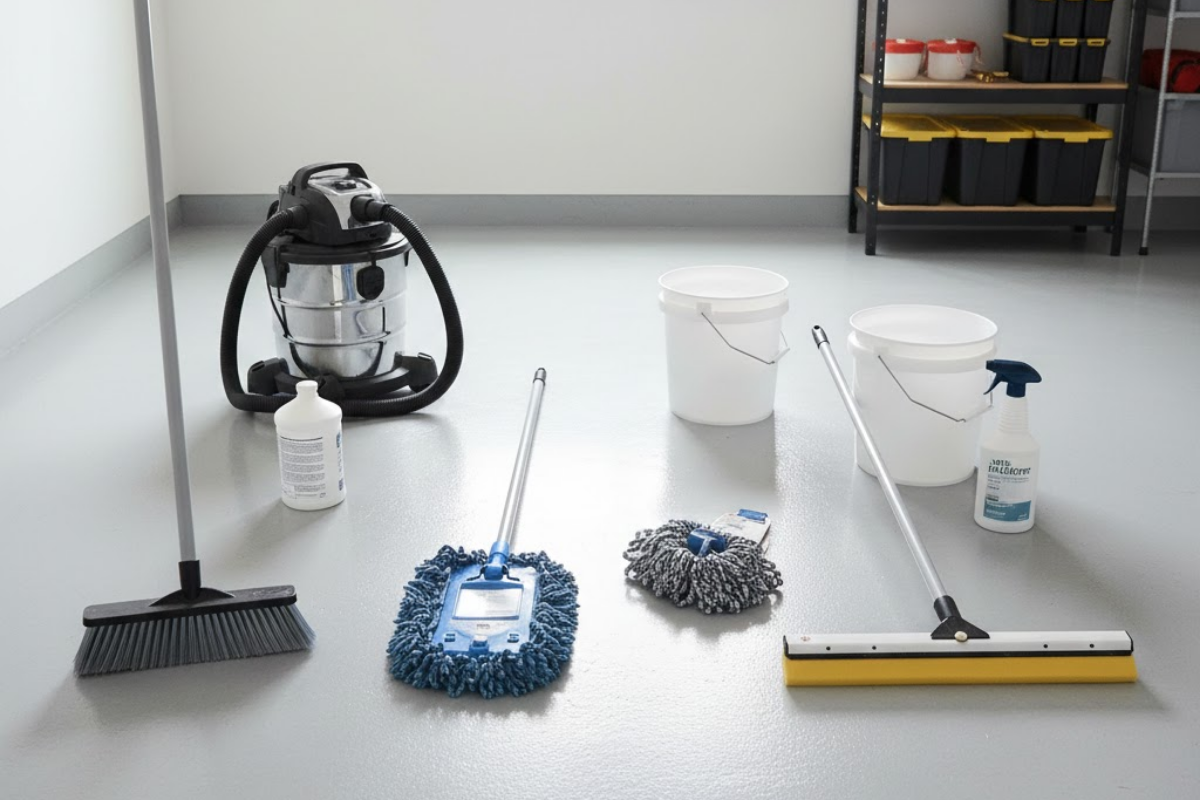
Essential Cleaning Supplies:
- Soft-Bristle Broom or Dust Mop: A broom with soft bristles is perfect for sweeping up loose dirt without scratching the surface. A microfiber dust mop is even better, as it traps fine dust particles effectively.
- Shop-Vac or Vacuum with a Soft Brush Attachment: For a deeper clean, a vacuum can suck up debris from corners and edges. Just make sure to use a soft brush head to avoid scratching.
- Foam or Rubber Squeegee: A squeegee is your best friend for drying the floor quickly and leaving a streak-free finish.
- Two Buckets: Using a two-bucket system—one for your cleaning solution and one for rinsing your mop—prevents you from spreading dirty water back onto the floor.
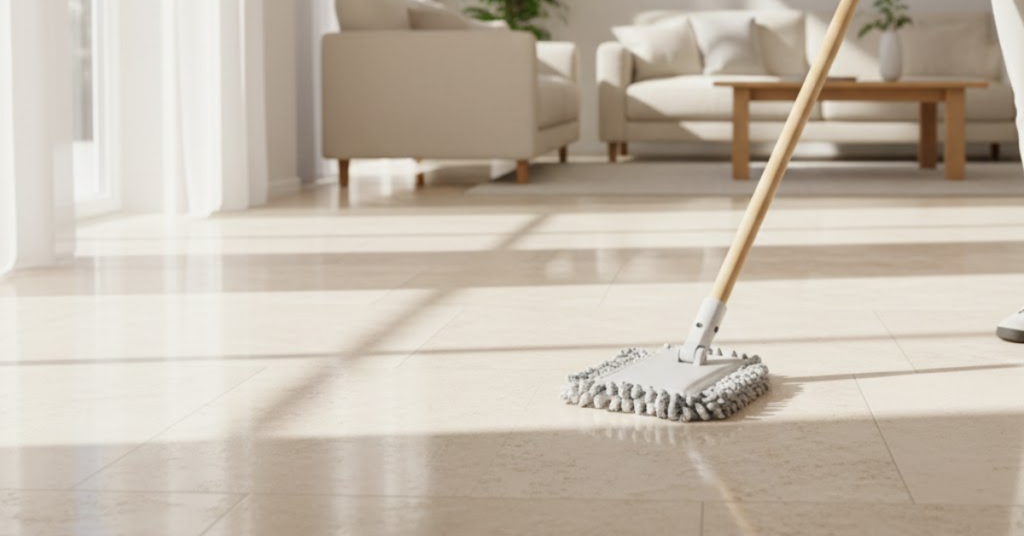
- Hard Foam or Microfiber Mop: A hard foam mop is ideal, but a microfiber string mop also works well. Avoid traditional cotton string mops, as they can leave lint behind.
- pH-Neutral Cleaner: This is the most important item. Acidic or highly alkaline cleaners can strip the shine from your epoxy. Look for a simple, pH-neutral cleaning solution. You can also use a diluted solution of a gentle cleaner like Simple Green or even a few drops of dish soap in warm water.
Step-by-Step Guide to Cleaning Your Epoxy Garage Floor
Follow these simple steps for a routine clean that will keep your floor in top condition.
Step 1: Clear the Floor and Sweep
First, move any vehicles, toolboxes, and other items out of the way. This gives you full access to the entire floor.
Next, use your soft-bristle broom or dust mop to sweep up all the loose dirt, dust, and debris. Pay close attention to corners and along the walls where dust tends to gather. If you have a shop-vac, now is a great time to use it for a thorough pre-clean.
Step 2: Prepare Your Cleaning Solution
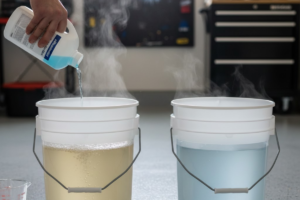
Fill one bucket with warm water and your pH-neutral cleaner. Follow the instructions on the cleaner’s label for the correct dilution. A good rule of thumb is about 2-3 ounces of cleaner per gallon of water. If you’re using a simple solution, a few drops of dish soap in a gallon of warm water works well.
Fill your second bucket with clean, cool water. This will be your rinse bucket for the mop.
Step 3: Mop the Floor
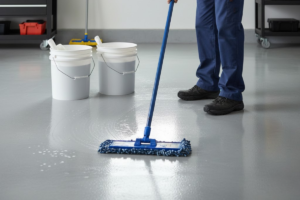
Dip your foam or microfiber mop into the cleaning solution, wring it out well, and start mopping. You want the mop to be damp, not soaking wet. Excess water can leave behind residue and mineral deposits.
Work in small, manageable sections. After mopping a section, rinse the mop thoroughly in the bucket of clean water, wring it out, and then dip it back into the cleaning solution for the next section. This two-bucket method ensures you are always cleaning with a fresh solution.
Step 4: Squeegee the Floor Dry
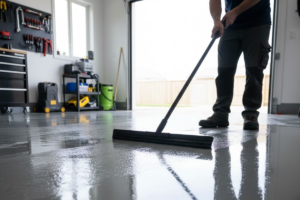
Once you’ve mopped the entire floor, it’s time to dry it. Use your foam or rubber squeegee to pull the excess water toward a floor drain or out the garage door. This is the secret to a streak-free finish. Overlapping your squeegee strokes will ensure you don’t miss any spots.
If you don’t have a squeegee, you can let the floor air dry, but you might notice some water spots. A squeegee provides a much cleaner, more professional result.
How to Handle Tough Stains and Spills
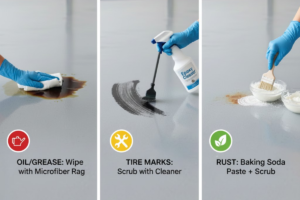
Life happens, and spills are inevitable. The key is to act quickly.
- Oil and Grease: Wipe up oil, antifreeze, and other vehicle fluid spills immediately with a paper towel or shop rag. For stubborn grease spots, you can use a small amount of a citrus-based degreaser on a cloth. Test it on an inconspicuous area first to ensure it doesn’t affect the finish. Rinse the area with clean water afterward.
- Tire Marks: Hot tires can sometimes leave marks on epoxy floors. Often, these can be scrubbed away with your pH-neutral cleaner and a little elbow grease. For stubborn marks, a product like Goof Off or a similar adhesive remover can work, but again, test it first and use it sparingly.
- Rust Stains: Rust can be tricky. Create a paste of baking soda and water and gently scrub the stain with a soft-bristle brush. For very tough rust stains, you may need a specialized rust remover designed for concrete and coated surfaces, but use it with caution and follow the product’s directions precisely.
Common Mistakes to Avoid When Cleaning Epoxy Floors
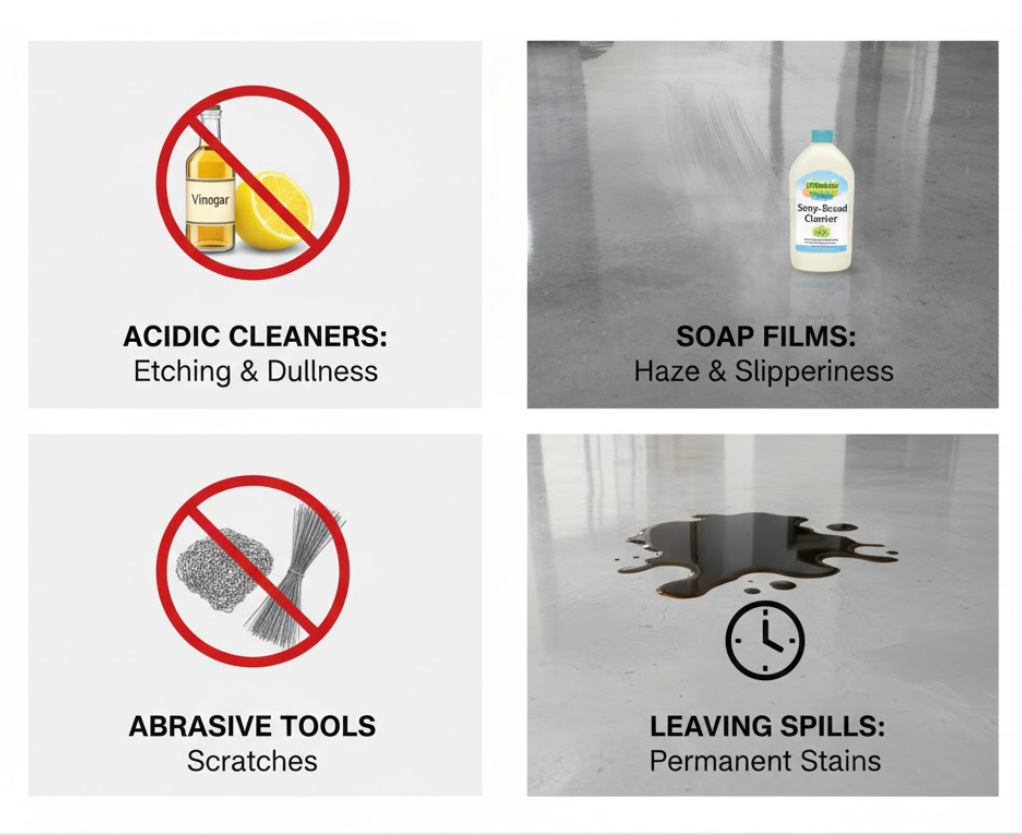
To keep your floor looking its best, avoid these common pitfalls:
- Using Acidic Cleaners: Cleaners containing vinegar or citrus acids can etch the epoxy surface, making it look dull. Stick to pH-neutral solutions.
- Using Soap-Based Cleaners: While a small amount of dish soap is okay, soap-based floor cleaners can leave a hazy film that builds up over time and makes the floor slippery.
- Using Abrasive Tools: Never use steel wool, scouring pads, or hard-bristle brushes. These will scratch the finish and permanently damage your floor.
- Letting Spills Sit: The longer a spill sits, the more likely it is to stain or damage the epoxy. Clean up spills as soon as you see them.
Maintaining Your Epoxy Floor for Long-Lasting Shine
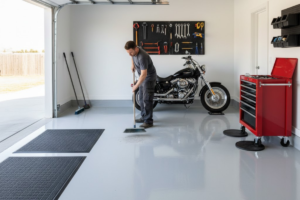
A little preventative maintenance goes a long way.
- Use Welcome Mats: Place mats at all entry points to your garage to trap dirt and moisture before they get onto the floor.
- Sweep Regularly: A quick sweep a few times a week can make a huge difference, especially if you live in a dusty area or use your garage frequently.
- Use Pads Under Heavy Items: Place protective pads or pieces of plywood under motorcycle kickstands, jack stands, and heavy toolboxes to prevent scratches and gouges.
Frequently Asked Questions (FAQ)
Can I use a pressure washer on my epoxy floor?
It’s generally not recommended. High pressure can lift the epoxy coating, especially if there are any chips or weak spots. A standard garden hose with a spray nozzle is a safer alternative if you need to rinse the floor.
How often should I deep clean my epoxy garage floor?
This depends on how much you use your garage. For most homeowners, a deep clean every 3-4 months is sufficient. Regular sweeping or dust mopping should be done weekly.
What if my epoxy floor starts to look dull?
If your floor is looking dull, it might be due to a buildup of soap residue or micro-scratches. First, try cleaning it with a clear ammonia and water solution (about 1/2 cup of ammonia per gallon of water) to strip away any film. If that doesn’t work, you can apply a fresh coat of a compatible epoxy topcoat to restore the shine.


1 thought on “How To Clean A Couch That Smells?”
Great post! It’s so important to make the switch to eco-friendly cleaning products. Thanks for sharing these recommendations; I’m definitely going to check some of them out.