
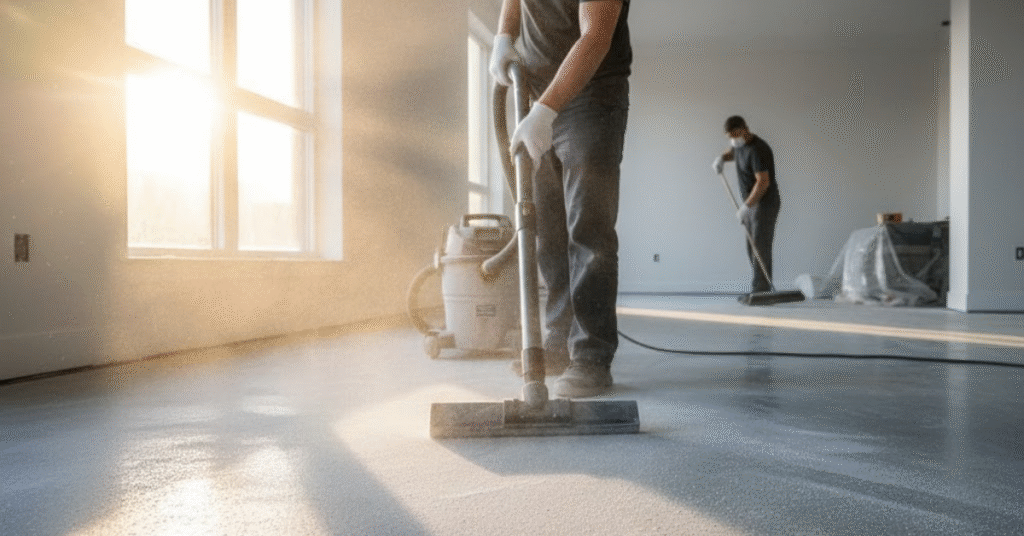
A home renovation or construction project is exciting. It means a fresh new look, updated features, and a space tailored to your needs. What’s not so exciting is the mess it leaves behind. That ultra-fine, seemingly endless layer of construction dust gets everywhere, especially on your floors. Cleaning it can feel like a never ending battle, but with the right approach, you can win the war against dust.
This guide will walk you through exactly how to clean construction dust from floors. We’ll cover everything from the tools you need to specific methods for different flooring types. Soon, you’ll be able to enjoy your new space without a dusty footprint in sight.
Why Is Construction Dust So Hard to Clean?
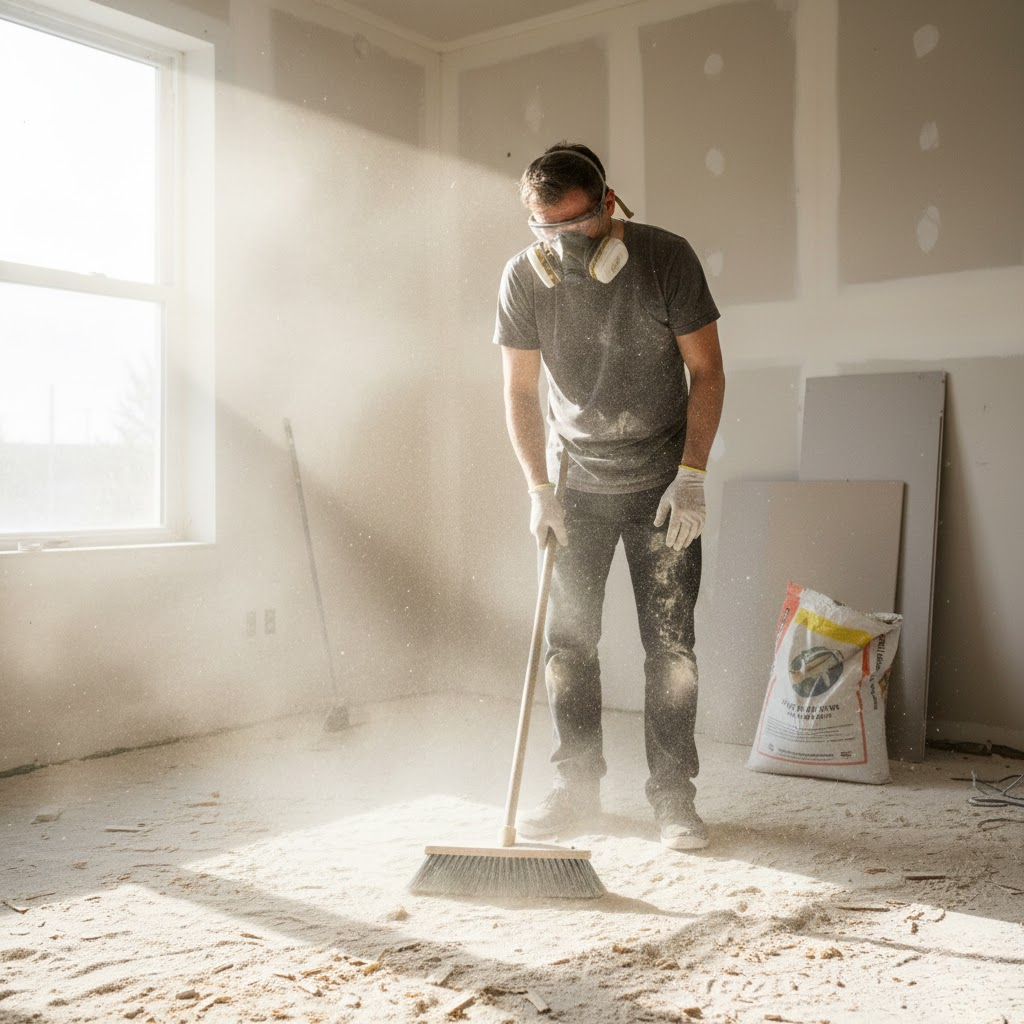
If you’ve tried to wipe up construction dust, you know it’s not like regular household dust. It’s finer, heavier, and clings to every surface. This dust is primarily composed of materials like drywall, wood particles, cement, and plaster.
These particles are so tiny that they easily become airborne. When you try to sweep or dry-dust them, you often just push them back into the air, only for them to settle right back where they were. This is why a simple pass with a broom won’t cut it. Effective cleaning requires a strategy that traps and removes the dust completely.
Beyond being a nuisance, this dust can also pose health risks. Fine particulate matter can irritate your eyes, nose, and throat, and may trigger issues for those with asthma or allergies.
Tools and Materials for Tackling Construction Dust
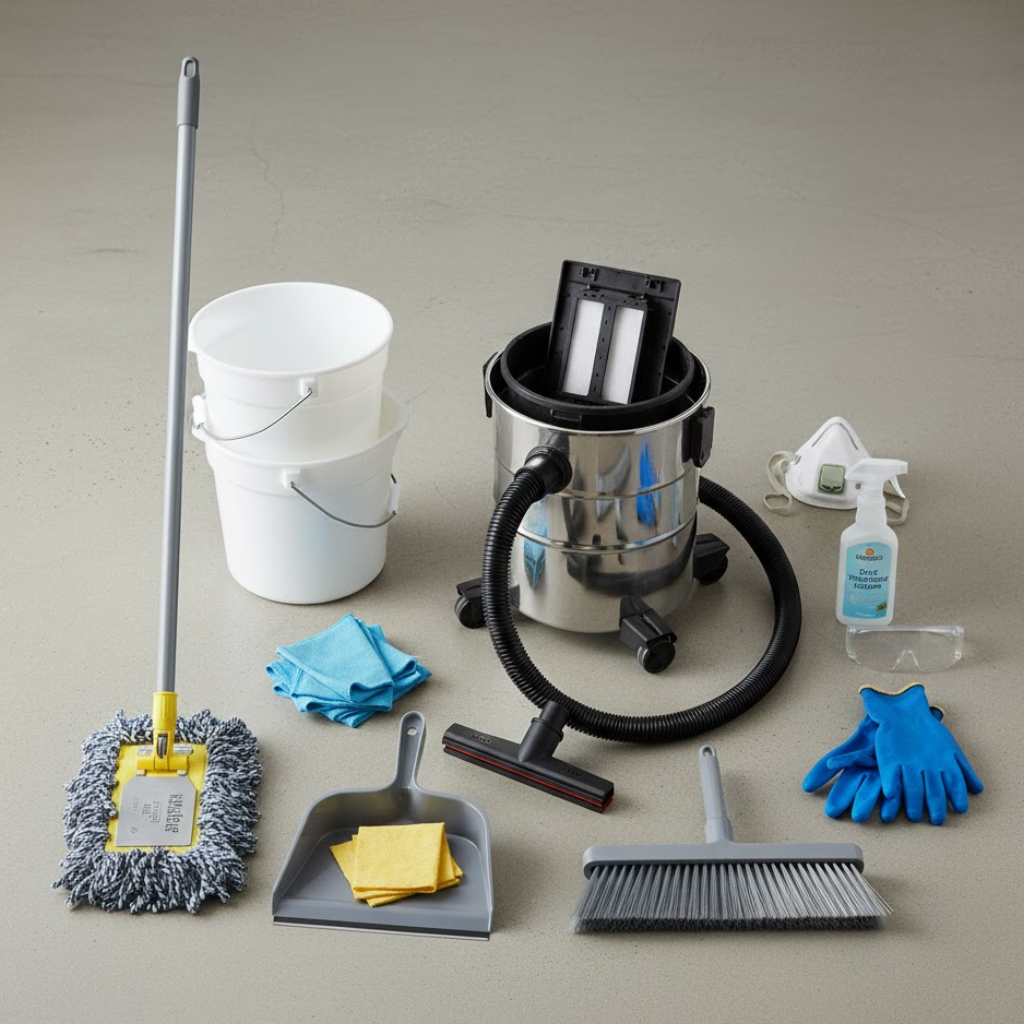
Before you start, gathering the right supplies will make the job much faster and more effective. You don’t want to get halfway through and realize you’re missing a crucial item.
Here’s your ultimate construction dust cleaning checklist:
- Heavy-duty shop vacuum: A standard household vacuum can be damaged by fine drywall dust. A shop vac with a HEPA (High-Efficiency Particulate Air) filter is your best friend. The HEPA filter is key, as it traps the tiny particles instead of recirculating them.
- Microfiber cloths and mops: Microfiber is excellent at trapping dust particles rather than just pushing them around like cotton or paper towels. You’ll want both dry cloths for dusting and a microfiber mop head for floors.
- Buckets: Have at least two. One for your cleaning solution and one for rinsing your mop. This prevents you from spreading dirty water around.
- Tack cloths: These sticky cloths are amazing for picking up the last traces of fine dust on smooth surfaces.
- Broom and dustpan: Use this for the initial sweep of larger debris before you get to the fine dust.
- Protective gear: Don’t forget to protect yourself. A dust mask (N95 is recommended), safety glasses, and gloves are essential.
A Step-by-Step Guide to Cleaning Construction Dust
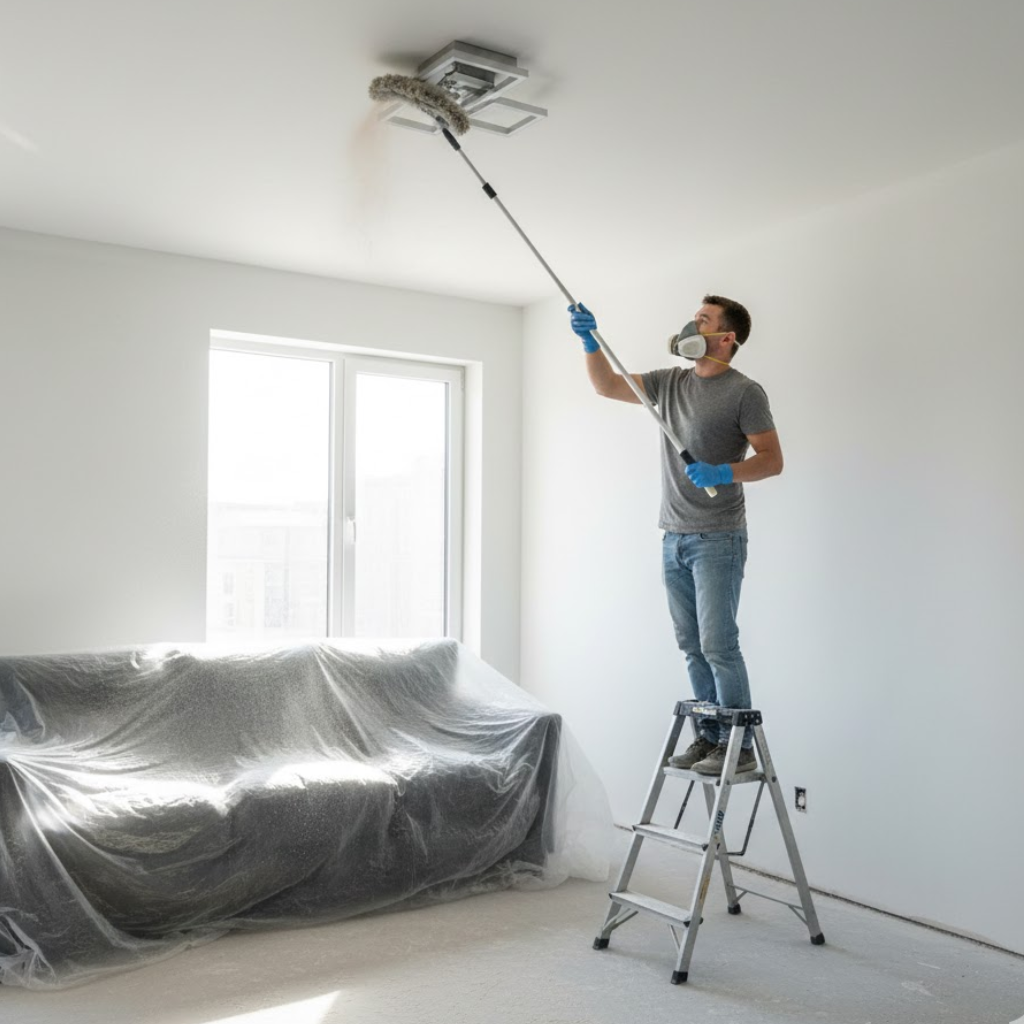
Ready to get started? The key is to work from top to bottom. Dust settles downwards, so cleaning your floors first is a wasted effort. Clean your ceilings, light fixtures, walls, and furniture before you even think about the floors. Once the rest of the room is clean, it’s time to focus on the ground level.
Step 1: Remove Large Debris
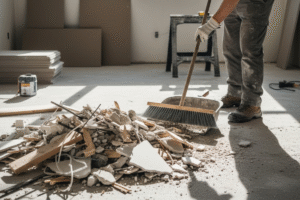
Start by clearing away any large pieces of debris. Use a broom and dustpan to sweep up nails, wood scraps, drywall chunks, and anything else left over from the construction. This clears the way for the more detailed work to follow.
Step 2: The Initial Vacuum (Dry Pass)
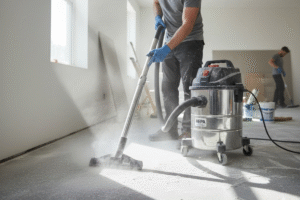
Grab your shop vac with the HEPA filter. Thoroughly vacuum the entire floor. Move slowly and use the appropriate attachment for your floor type. Go over the area several times, moving in different directions to lift as much dry dust as possible. Don’t forget the corners and edges where dust loves to hide.
Step 3: Cleaning Based on Floor Type
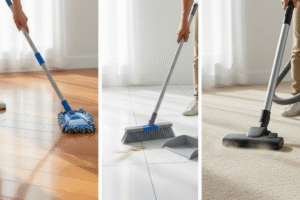
This is where your technique will change depending on the surface you’re cleaning.
How to Clean Construction Dust from Hardwood Floors
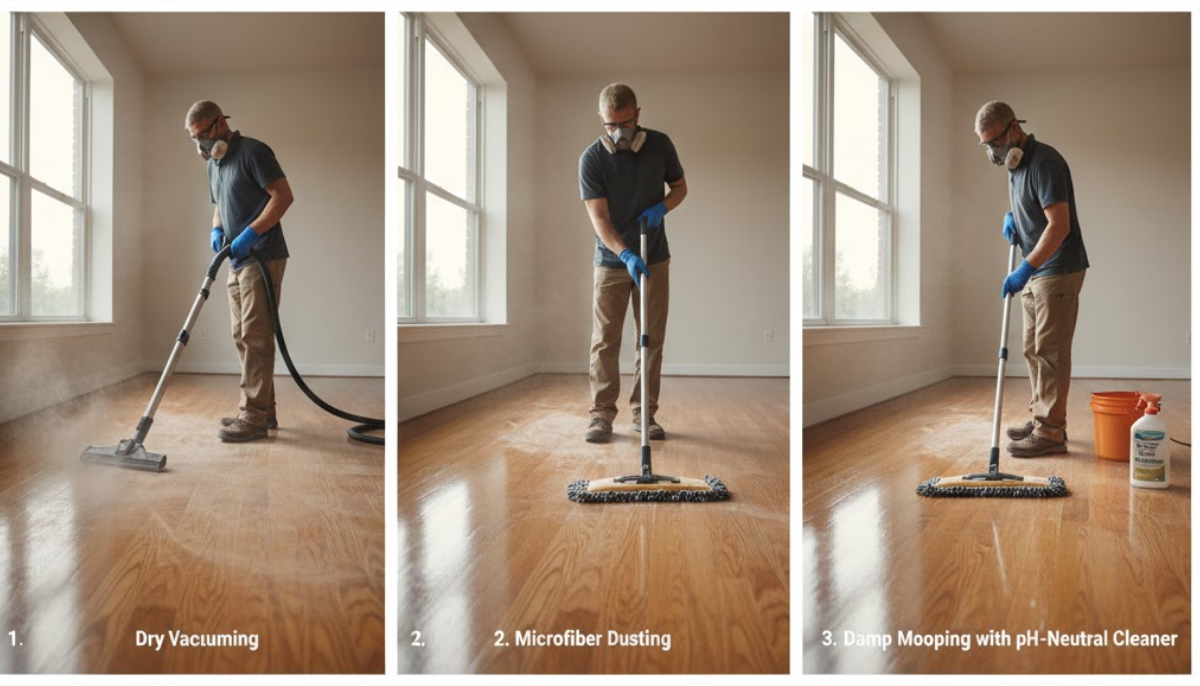
Hardwood floors require care to avoid damage. Water is not their friend, so use it sparingly.
- Vacuum Again: Yes, again. After the initial pass, a second round of vacuuming will pick up dust that has resettled.
- Use a Tack Cloth or Dry Mop: Go over the entire floor with a dry microfiber mop or tack cloths to pick up the finest layer of dust.
- Damp Mop: Mix a small amount of a pH-neutral wood floor cleaner with water. Lightly dampen a microfiber mop—it should not be dripping wet. Mop the floor, working in small sections.
- Rinse and Dry: Use a separate mop dampened with clean water to “rinse” the floor. Immediately follow with a dry microfiber cloth to buff the floor dry and prevent water spots or damage.
How to Clean Construction Dust from Tile or Vinyl Floors
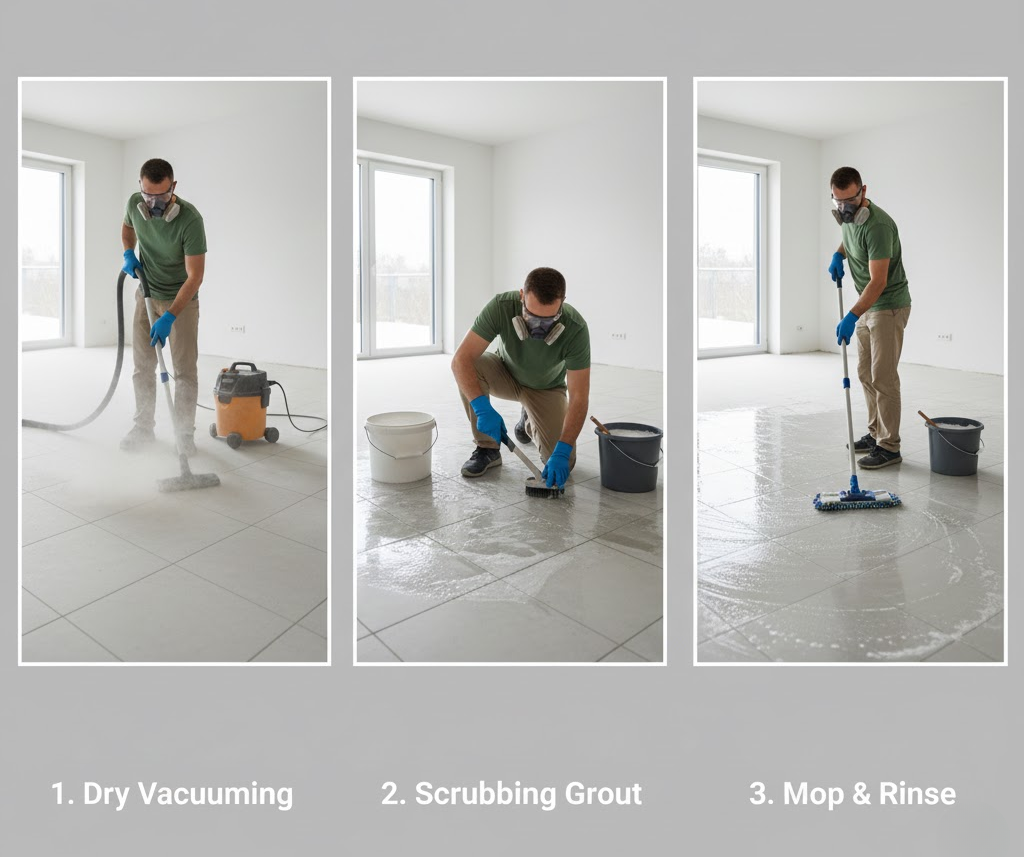
These floors are more resilient and can handle a bit more water, which makes the process a little easier.
- Vacuum Thoroughly: Just like with hardwood, start with a detailed vacuuming session to get rid of loose dust.
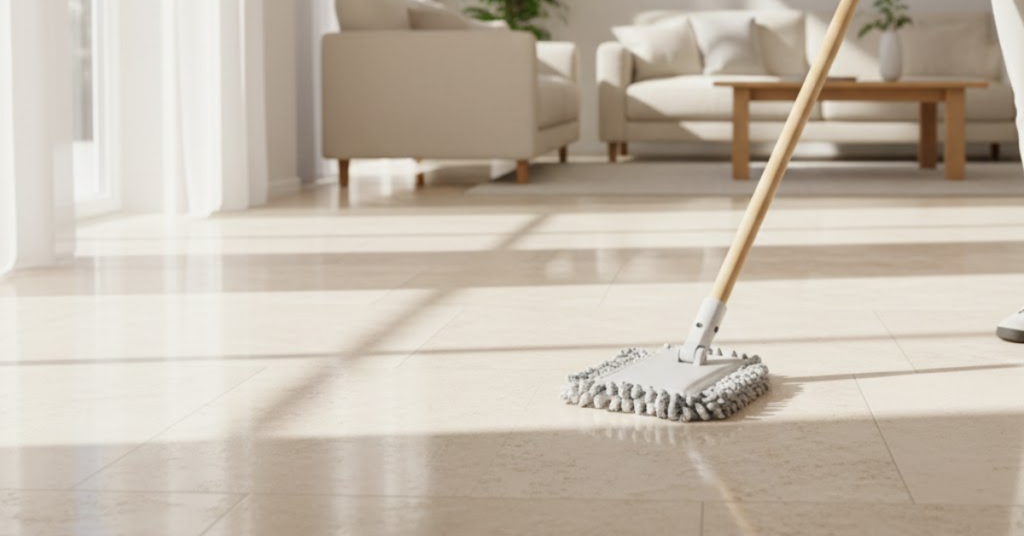
- Wet Mop: Fill a bucket with warm water and a suitable all-purpose floor cleaner. Mop the entire floor, rinsing the mop head frequently in a second bucket of clean water.
- Pay Attention to Grout: Dust loves to settle into grout lines. Use a stiff brush and your cleaning solution to scrub the grout if it still looks dusty after mopping.
- Rinse and Air Dry: Mop one final time with a clean, water-dampened mop to remove any soap residue. You can let tile and vinyl floors air dry or wipe them with a dry cloth for a streak-free finish.
How to Clean Construction Dust from Carpet
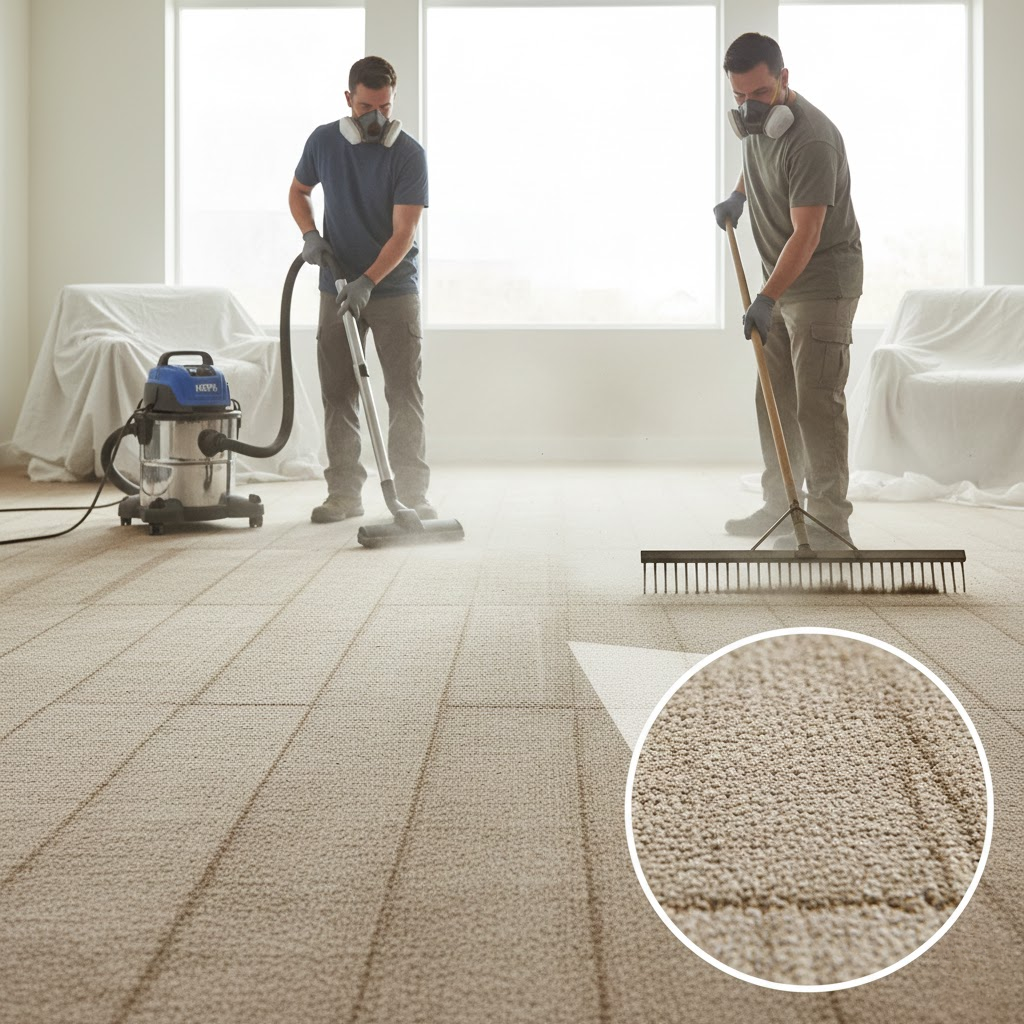
Carpet is the trickiest because dust gets trapped deep within the fibers. You may need to repeat these steps a few times.
- Vacuum, Vacuum, Vacuum: This is the most critical step. Using a vacuum with strong suction and a HEPA filter, go over the carpet multiple times. Work in a grid pattern—north to south, then east to west—to agitate and lift particles from all angles.
- Rake the Carpet: A carpet rake or a stiff-bristled broom can help bring deeply embedded dust to the surface. Rake the entire carpet, then vacuum again.
- Consider a Professional Cleaning: For a truly deep clean, renting a carpet cleaner or hiring a professional service is your best bet. They use hot water extraction methods that can pull out the most stubborn construction dust.
Tips for Preventing Dust During Construction
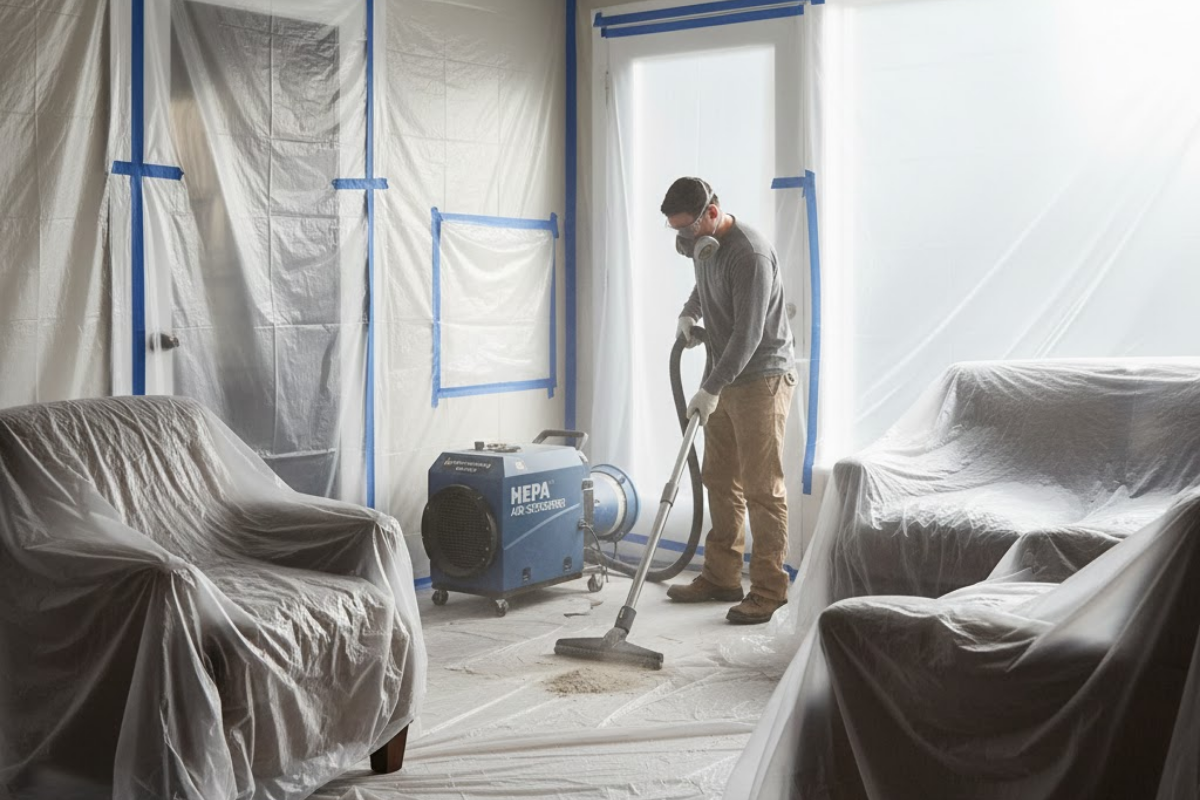
The easiest cleanup is the one you never have to do. While you can’t eliminate dust entirely, you can significantly reduce it with some proactive measures.
- Seal Off the Area: Use plastic sheeting and painter’s tape to seal doorways, vents, and any other openings leading from the construction zone to the rest of your house.
- Use Air Scrubbers: Renting a HEPA air scrubber during the project can capture a large amount of airborne dust before it has a chance to settle.
- Cover Furniture and Floors: Use drop cloths or plastic to cover anything you can’t move out of the room.
- Clean As You Go: Encourage your contractors to perform a daily cleanup. A quick sweep and vacuum at the end of each day prevents massive buildup.
By following these steps, you can effectively and efficiently remove every last bit of construction dust from your floors. It takes some patience and elbow grease, but the reward is a clean, healthy home where you can fully enjoy your newly renovated space.


1 thought on “How To Clean A Couch That Smells?”
Great post! It’s so important to make the switch to eco-friendly cleaning products. Thanks for sharing these recommendations; I’m definitely going to check some of them out.