
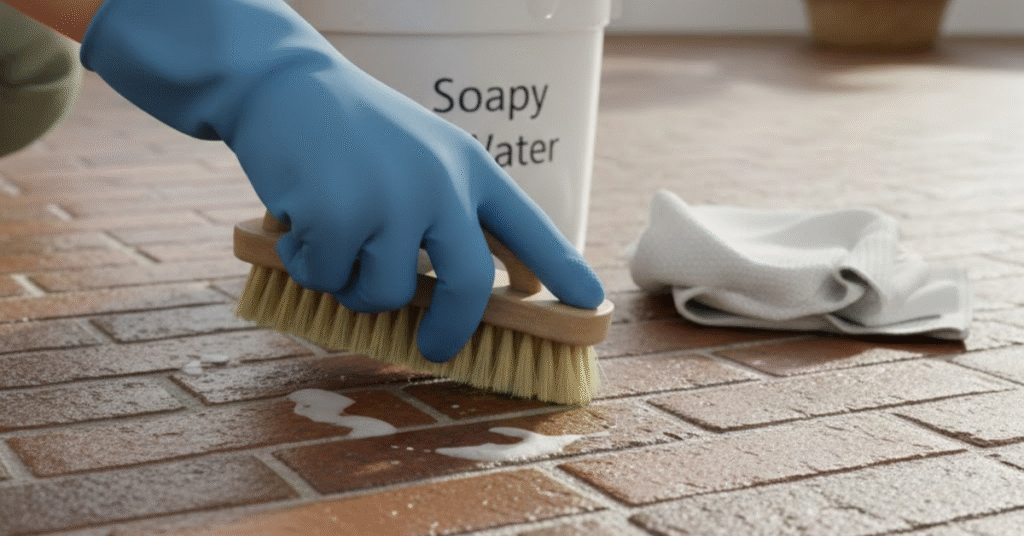
Brick floors add a unique charm and warmth to any home, offering a rustic yet timeless appeal. They are durable, long-lasting, and can handle plenty of foot traffic. However, their porous nature means they can also trap dirt, dust, and grime, making them a bit tricky to clean. If you’re wondering how to restore the natural beauty of your brick floors, you’ve come to the right place.
This guide will walk you through everything you need to know about how to clean brick floors effectively. We’ll cover everything from your daily sweep to deep cleaning and tackling tough stains. With a little care, your brick floors will look fantastic for years to come.
Why Choose Brick Floors?
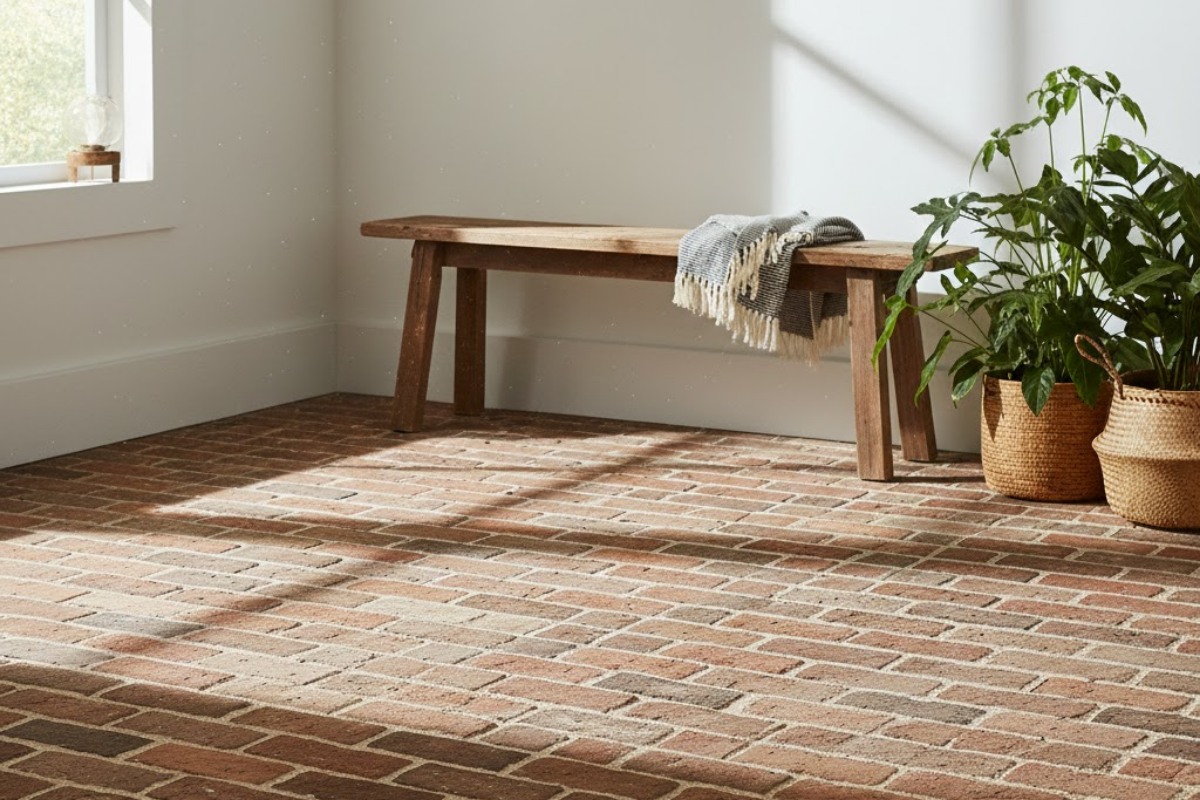
Before we dive into the cleaning process, let’s appreciate what makes brick floors so special. They are incredibly durable and can withstand heavy use, making them perfect for high-traffic areas like kitchens, entryways, and mudrooms. Bricks are also fire-resistant and offer excellent thermal mass, helping to keep your home cooler in the summer and warmer in the winter. Plus, their textured, earthy look brings a sense of character that few other materials can match.
Common Challenges with Cleaning Brick Floors
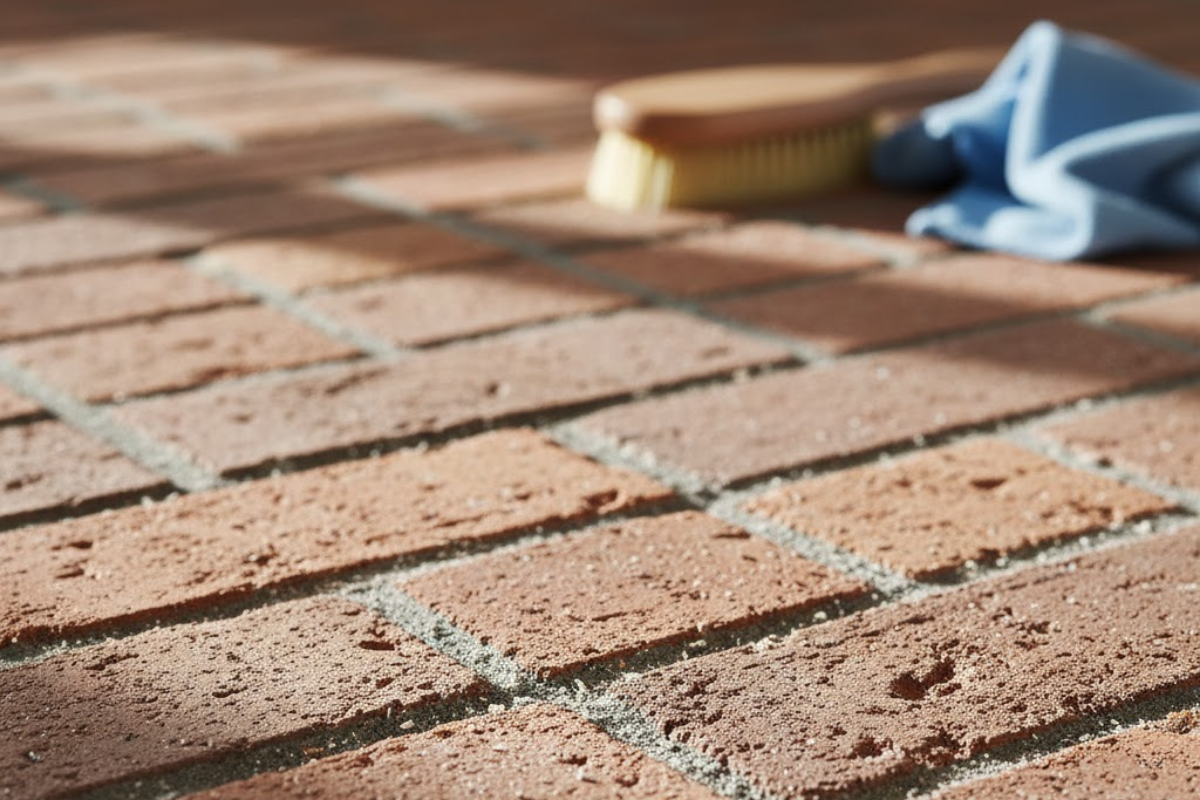
The main challenge with cleaning brick is its porosity. Unlike smooth tile, the rough surface of brick and the grout lines between them can easily harbor dirt and spills. If your brick isn’t sealed properly, liquids can seep in and cause stains. Regular maintenance is key to preventing buildup and keeping your floors in top condition.
What You’ll Need for Cleaning
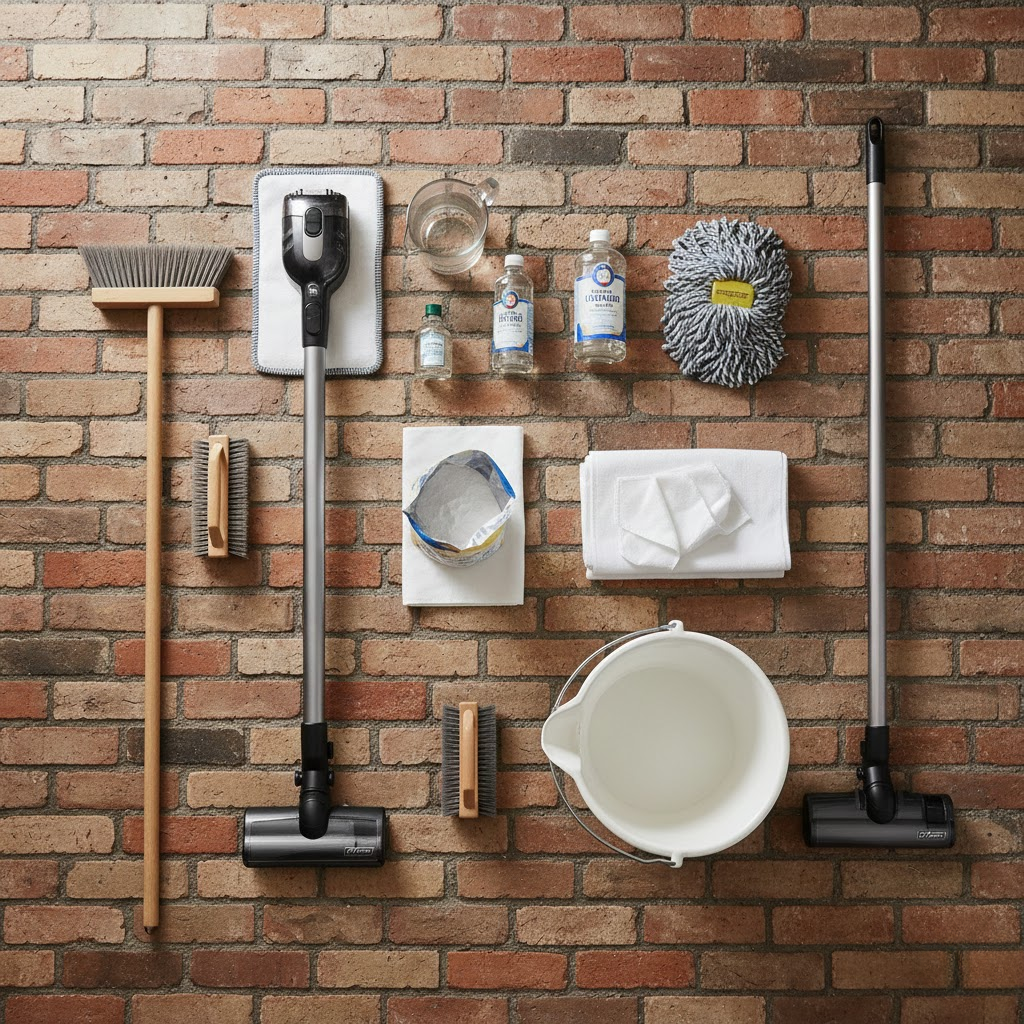
Gathering your supplies before you start will make the process much smoother. Here’s a list of tools and products that will help you get the job done right.
Basic Cleaning Tools:
- Broom or dust mop
- Vacuum with a brush attachment
- Mop and bucket
- Stiff-bristled brush (not wire)
- Soft cloths or towels
Cleaning Solutions:
- Warm water
- Mild dish soap or a pH-neutral cleaner
- White vinegar
- Baking soda
A Step-by-Step Guide to Cleaning Brick Floors
Follow these steps for a routine clean that will keep your brick looking its best. This method is gentle enough for regular use.
Step 1: Clear and Sweep the Floor
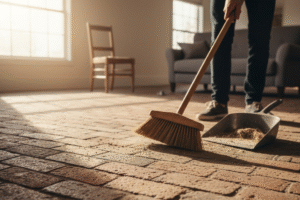
First, remove any furniture, rugs, or other items from the floor. Use a broom or a dust mop to sweep away all the loose dirt, dust, and debris. Pay close attention to corners and edges where grime tends to accumulate.
Step 2: Vacuum for a Deeper Clean
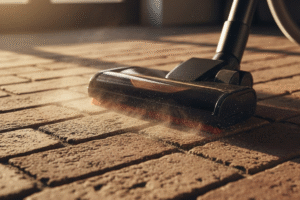
After sweeping, go over the floor with a vacuum cleaner using a brush attachment. This will help pull out any fine dust and particles that are stuck in the crevices of the brick and grout lines. A thorough vacuuming sets the stage for a more effective mopping.
Step 3: Prepare Your Cleaning Solution
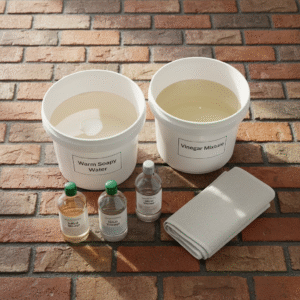
Now it’s time to mix your cleaning solution. For a simple and effective cleaner, fill a bucket with a gallon of warm water and add a few drops of mild dish soap. This gentle solution is perfect for regular cleaning as it won’t damage the brick or its sealant.
Alternatively, you can create a solution with equal parts white vinegar and water. Vinegar is a great natural cleaner that helps break down grime without harsh chemicals.
Step 4: Mop the Floor
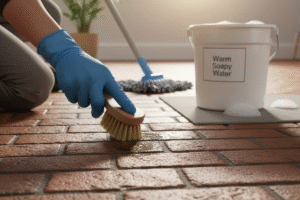
Dip your mop into the cleaning solution and wring it out well. You want the mop to be damp, not soaking wet, as excess water can damage the brick and grout over time. Mop the floor in small, manageable sections.
For areas with more stubborn dirt, use a stiff-bristled nylon brush to gently scrub the surface. Avoid using a wire brush, as it can scratch and damage the brick.
Step 5: Rinse and Dry
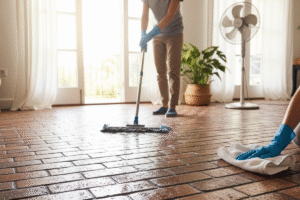
Once you’ve mopped the entire floor, empty your bucket and refill it with clean, plain water. Mop the floor again with just water to rinse away any soap or vinegar residue. This step is important because leftover cleaner can leave a dull film on your bricks.
Finally, let the floor air dry completely. You can speed up the process by opening windows or using fans. Alternatively, you can dry the floor with a clean towel.
How to Handle Tough Stains on Brick
Sometimes, you’ll encounter stains that a simple mopping can’t handle. Here’s how to tackle some of the most common tough stains on brick floors.
Grease and Oil Stains
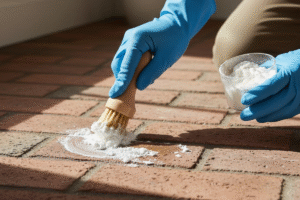
Grease stains can be an eyesore, especially in the kitchen. To remove them, create a paste using baking soda and a small amount of water. Apply the paste directly to the stain and let it sit for about 15-20 minutes. Gently scrub the area with a soft brush, then rinse with clean water and a cloth.
Paint Splatters
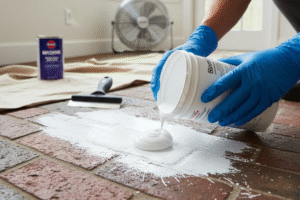
If you have dried paint on your bricks, you may need a bit more power. A commercial paint stripper can be effective, but always test it on a small, inconspicuous area first to ensure it doesn’t discolor the brick. Follow the product’s instructions carefully and ensure the area is well-ventilated.
Efflorescence (White, Powdery Stains)
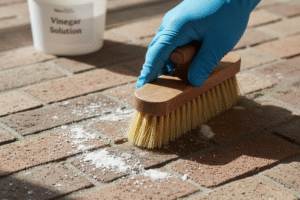
Efflorescence is a white, chalky residue that can appear on brick. It’s caused by water-soluble salts migrating to the surface as water evaporates. To remove it, you can often just use a stiff, dry brush. For more stubborn cases, scrub the area with a 50/50 solution of white vinegar and water, then rinse thoroughly.
Maintaining Your Brick Floors
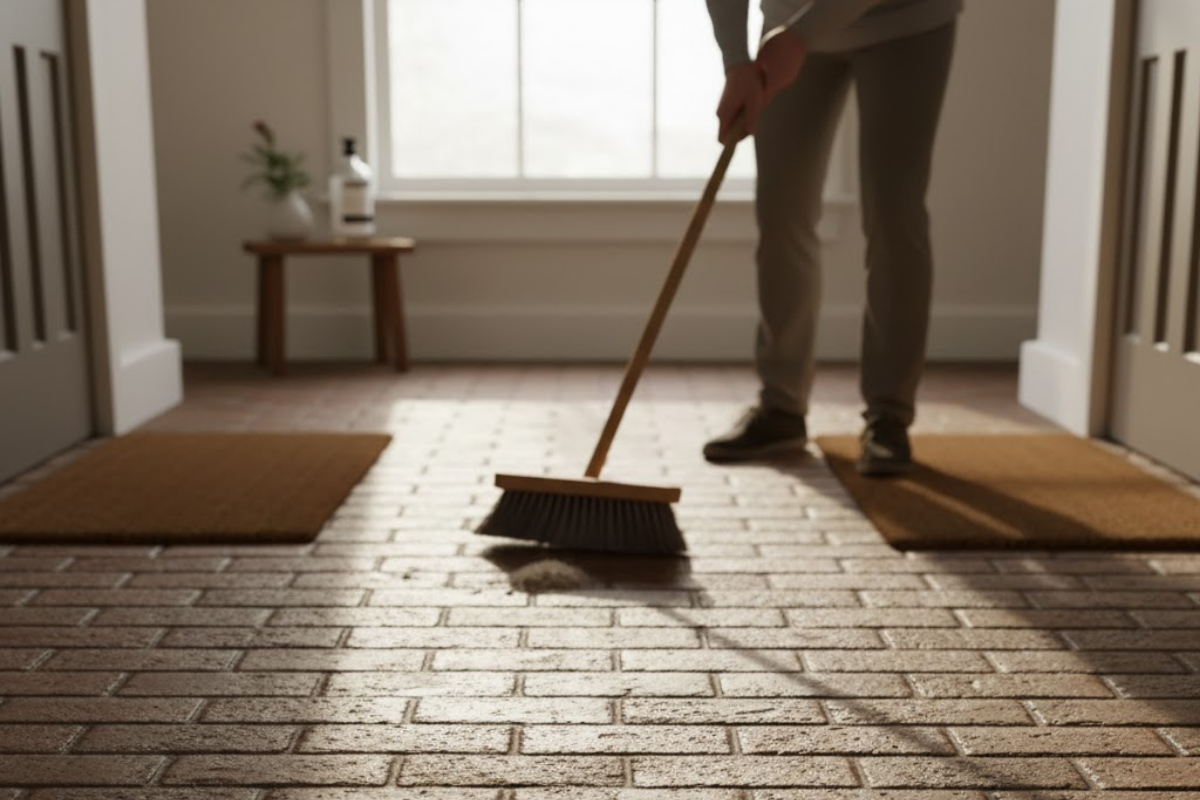
Consistent care is the best way to keep your brick floors looking great and reduce the need for deep cleaning.
- Seal Your Bricks: Applying a quality sealant is one of the most important things you can do. A sealant creates a protective barrier that prevents dirt and liquids from penetrating the porous surface. You’ll likely need to reapply the sealant every few years, depending on foot traffic.
- Sweep or Vacuum Regularly: Make it a habit to sweep or vacuum your brick floors at least a few times a week. This prevents the buildup of abrasive dirt that can wear down the surface.
- Use Doormats: Place doormats at all entrances to trap dirt, mud, and water before they get tracked onto your beautiful brick floors.
- Clean Spills Immediately: Don’t let spills sit. Blot them up quickly with a clean cloth to prevent them from seeping into the brick and causing a stain.
By following these cleaning and maintenance tips, you can easily preserve the rustic beauty of your brick floors. A little regular effort goes a long way in ensuring they remain a stunning feature in your home for years to come.


1 thought on “How To Clean A Couch That Smells?”
Great post! It’s so important to make the switch to eco-friendly cleaning products. Thanks for sharing these recommendations; I’m definitely going to check some of them out.