Natural stone showers are a luxury feature that can transform a bathroom into a spa-like retreat. But let’s be honest: that beautiful marble, travertine, or slate needs a little more love than standard ceramic tile. If you’ve noticed soap scum building up or your stone looking a bit dull, don’t panic. Learning how to clean a stone shower floor isn’t complicated, but it does require the right approach to avoid damage.
In this guide, we will walk you through everything you need to know to keep your stone shower pristine, from the tools you need to the mistakes you absolutely must avoid.
Why Stone Needs Special Attention
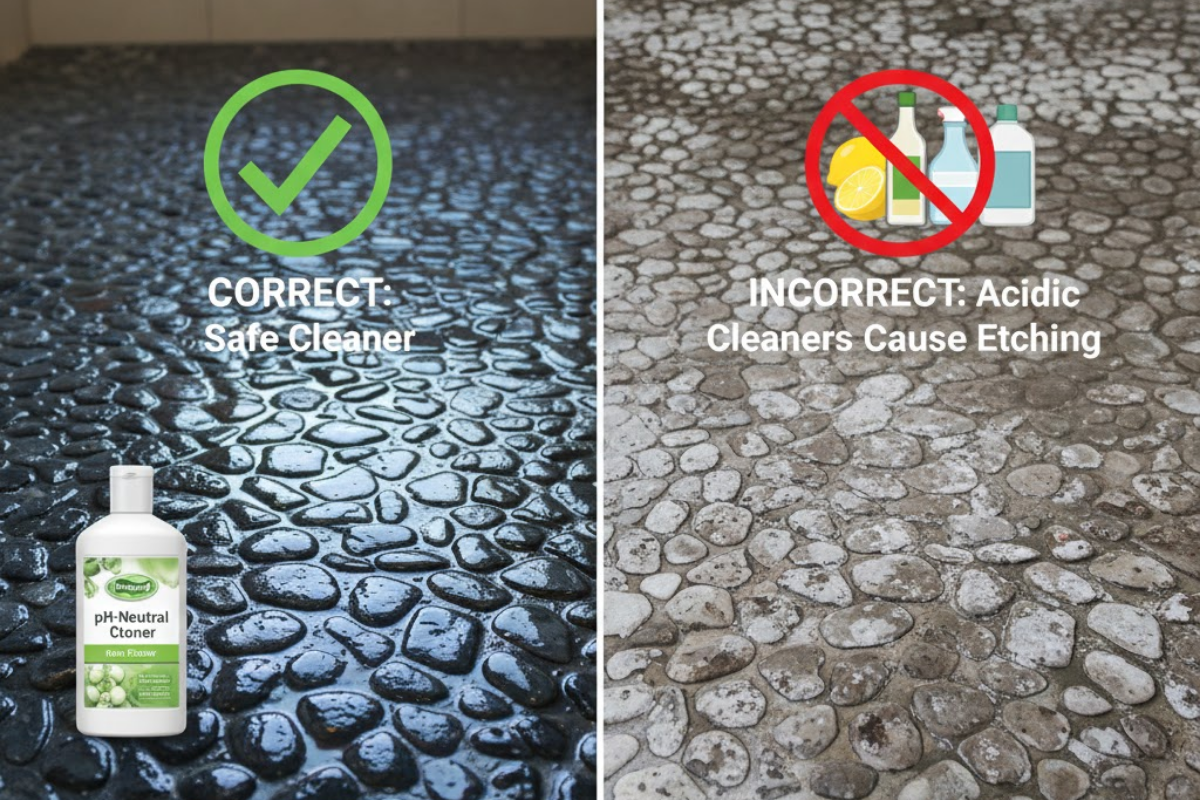
You might be wondering, “Why can’t I just spray it with my usual bathroom cleaner?”
Natural stone is porous and chemically sensitive. Most generic bathroom cleaners are acidic. If you use vinegar, lemon juice, or harsh chemical cleaners on materials like marble or limestone, you risk “etching” the surface. Etching is essentially a chemical burn that leaves dull, white spots on the stone.
Proper cleaning protects your investment. It prevents mold and mildew from taking root in the tiny pores of the stone and keeps the sealant intact, ensuring your shower stays beautiful for decades.
Common Types of Stone in Showers
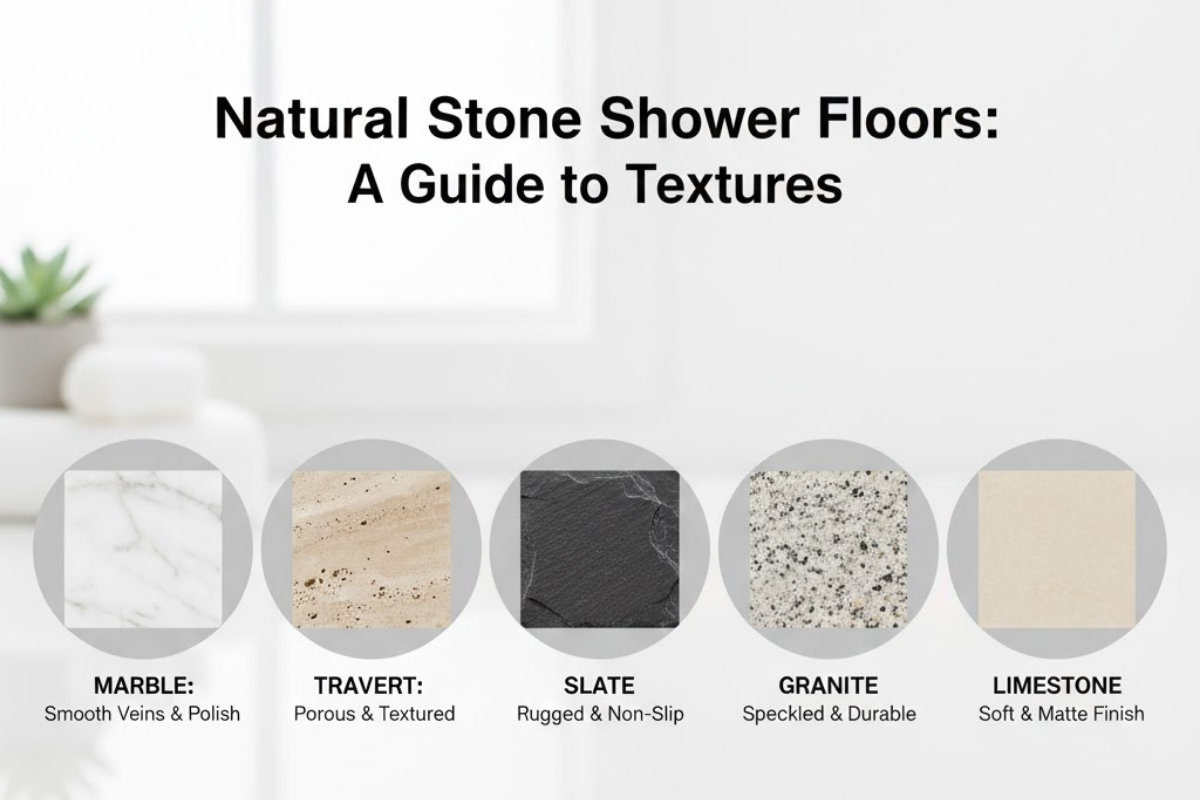
Before you grab a scrub brush, it helps to know what you are working with. While the cleaning process is generally similar, some stones are more sensitive than others.
- Marble: Elegant and classic, but very soft and highly prone to etching from acids.
- Travertine: Known for its distinct, porous texture. It often has filled holes that can collect grime if not cleaned regularly.
- Slate: Durable and rugged with a textured surface that provides good grip, but its unevenness can trap soap scum.
- Granite: Harder and more resistant to chemicals than marble, but still requires pH-neutral cleaners to maintain its shine.
- Limestone: Softer and very porous, requiring gentle, frequent care.
Tools and Materials You Will Need
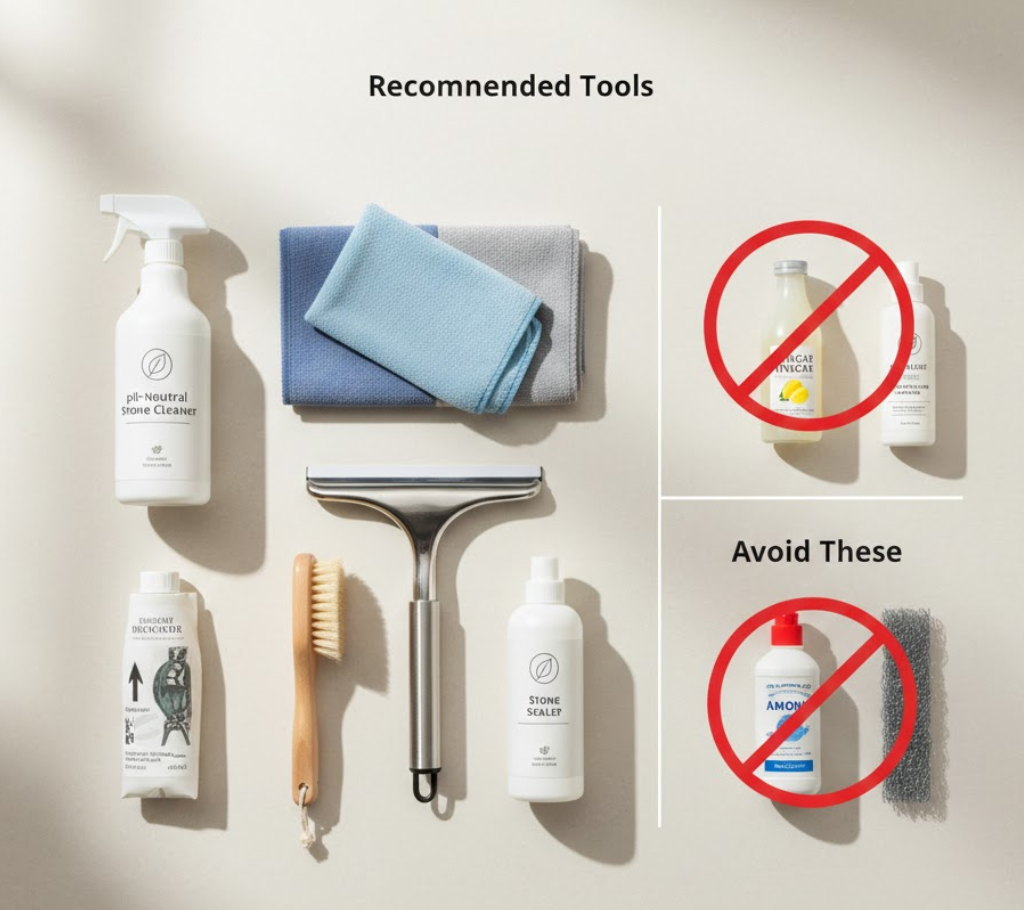
Get your cleaning kit ready. The good news is that you don’t need expensive equipment—just the right chemistry.
The Essentials:
- pH-Neutral Stone Cleaner: This is non-negotiable. Look for products specifically labeled for natural stone.
- Soft Bristle Brush: Avoid stiff metal or abrasive plastic brushes that can scratch the finish.
- Microfiber Cloths: Perfect for wiping down surfaces without leaving lint.
- Squeegee: Your best friend for daily maintenance.
- Stone Sealer: For periodic maintenance (usually once a year).
What to Avoid:
- Vinegar or lemon juice
- Bleach or ammonia
- Abrasive scouring pads (like green kitchen sponges)
- Tile cleaners with acidic formulas
Step-by-Step: How to Clean a Stone Shower Floor
Ready to get to work? Follow these steps to safely restore your shower’s natural beauty.
1. Clear and Rinse
Remove all shampoo bottles, soaps, and loofahs from the shower. Give the entire area a quick rinse with warm water to loosen surface dust and hair.
2. Apply Your Cleaner
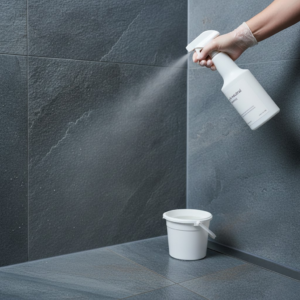
Spray your chosen pH-neutral stone cleaner generously over the floor and walls. If you are using a concentrated formula, mix it with water in a bucket according to the label instructions.
Pro Tip: Let the cleaner sit for 3 to 5 minutes. This dwell time allows the solution to break down soap scum and body oils so you don’t have to scrub as hard.
3. Gentle Scrubbing
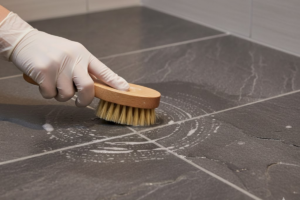
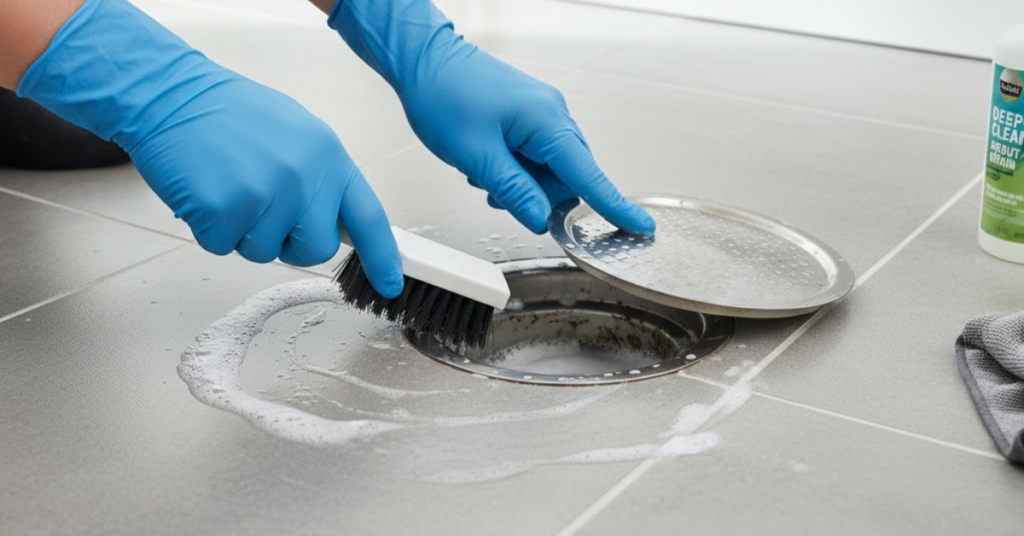
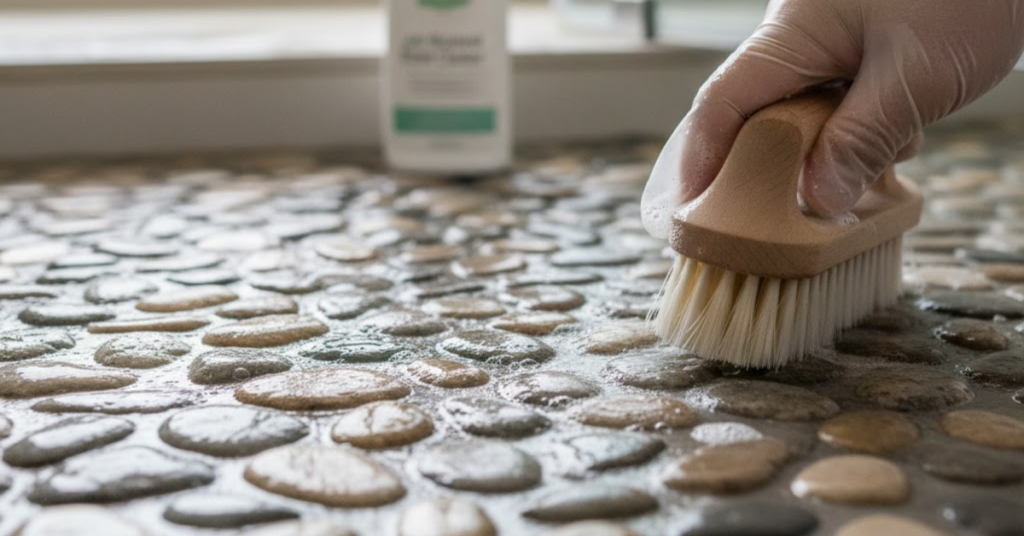
Take your soft-bristle brush and gently scrub the stone. Focus on the grout lines and any textured areas where water tends to pool. Use a circular motion. If you have slate or tumbled stone, you might need to work the brush into the crevices a bit more diligently.
4. Rinse Thoroughly
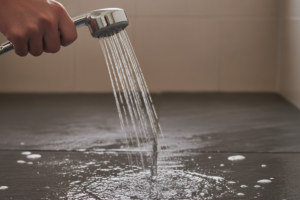
Use your handheld showerhead or a bucket to rinse away all the soap residue. Make sure you don’t leave any cleaner behind, as it can leave a film on the stone that attracts more dirt later.
5. Dry It Off
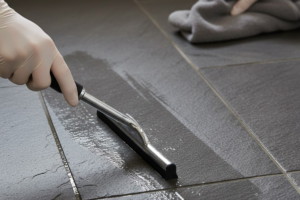
This step is often skipped, but it’s crucial. Use a clean microfiber towel or a squeegee to remove excess water. Standing water can lead to mineral deposits (hard water stains) which are difficult to remove from stone without acidic cleaners.
Dealing with Tough Stains and Mold
Sometimes, a standard clean isn’t enough. Here is how to handle specific problems.
Soap Scum Build-up
If you have a thick layer of soap scum, a dedicated stone soap scum remover is safer than scrubbing harder. These products are formulated to dissolve the waxy buildup without hurting the stone.
Mold and Mildew
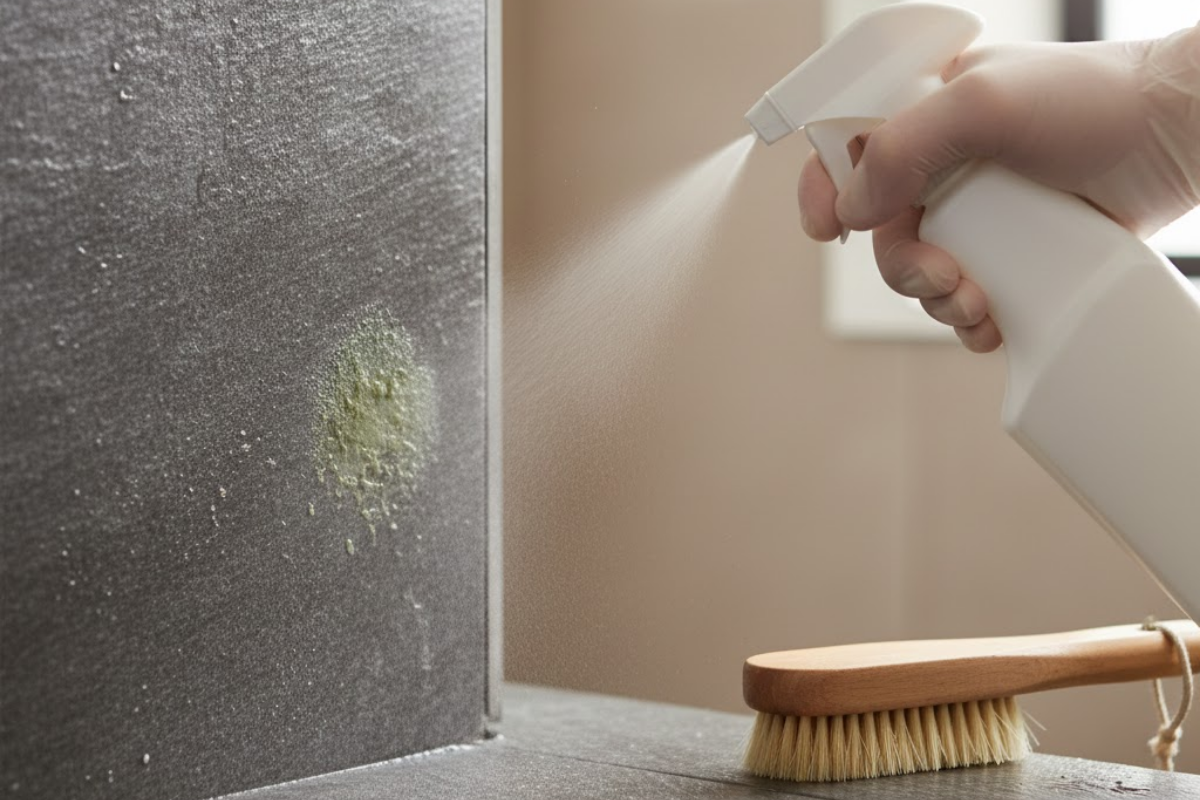
Avoid bleach. Instead, use a solution specifically designed for mold on natural stone. Alternatively, you can mix a solution of one part hydrogen peroxide to one part water (test this in an inconspicuous area first, especially on dark stone). Spray it on the mold, let it sit, and scrub gently.
Maintaining Your Stone Shower: Best Practices
The best way to clean a stone shower is to prevent it from getting dirty in the first place.
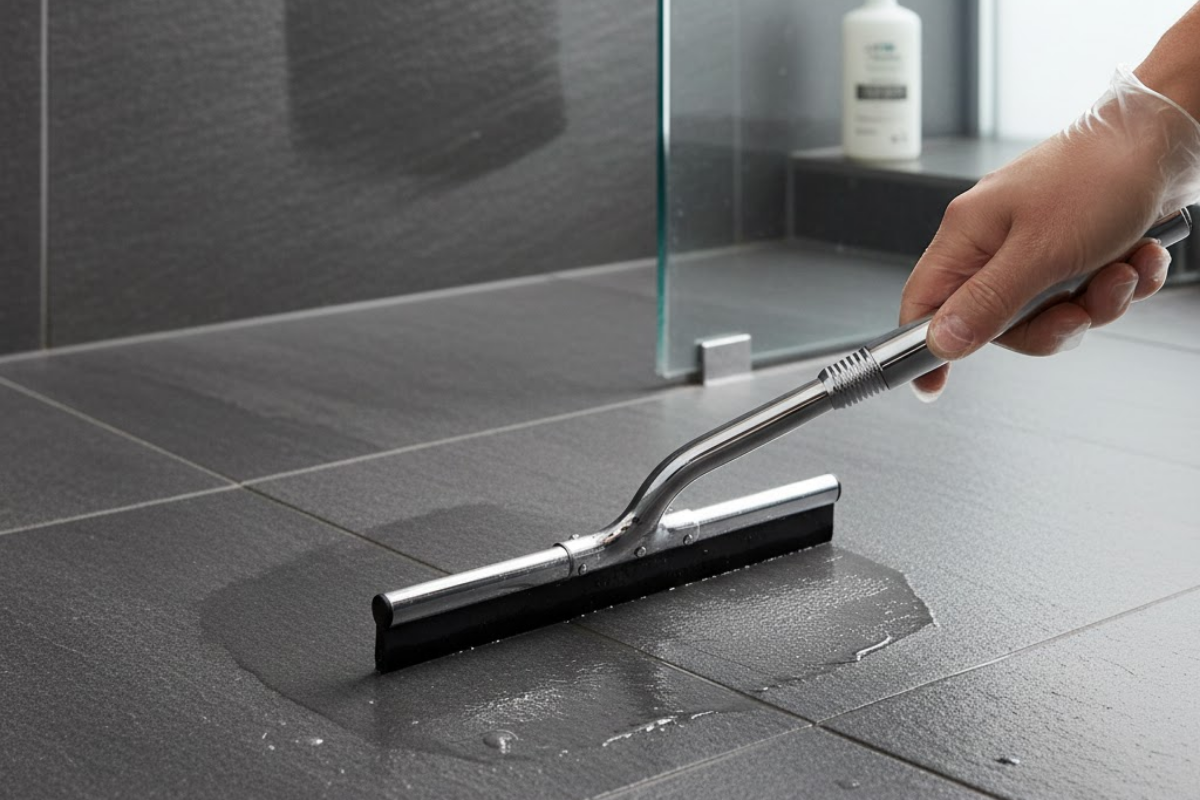
- Squeegee Daily: Keep a squeegee in the shower and use it after every use. It takes 30 seconds and prevents 90% of soap scum and hard water spots.
- Leave the Door Open: improved ventilation helps the stone dry out quickly, discouraging mold growth.
- Seal Regularly: Perform a water test every few months. Pour a small amount of water on the floor. If it beads up, your seal is good. If the stone darkens and absorbs the water, it’s time to reseal.
Common Mistakes to Avoid
Even well-intentioned homeowners make these errors. Steer clear of these pitfalls to keep your stone safe.
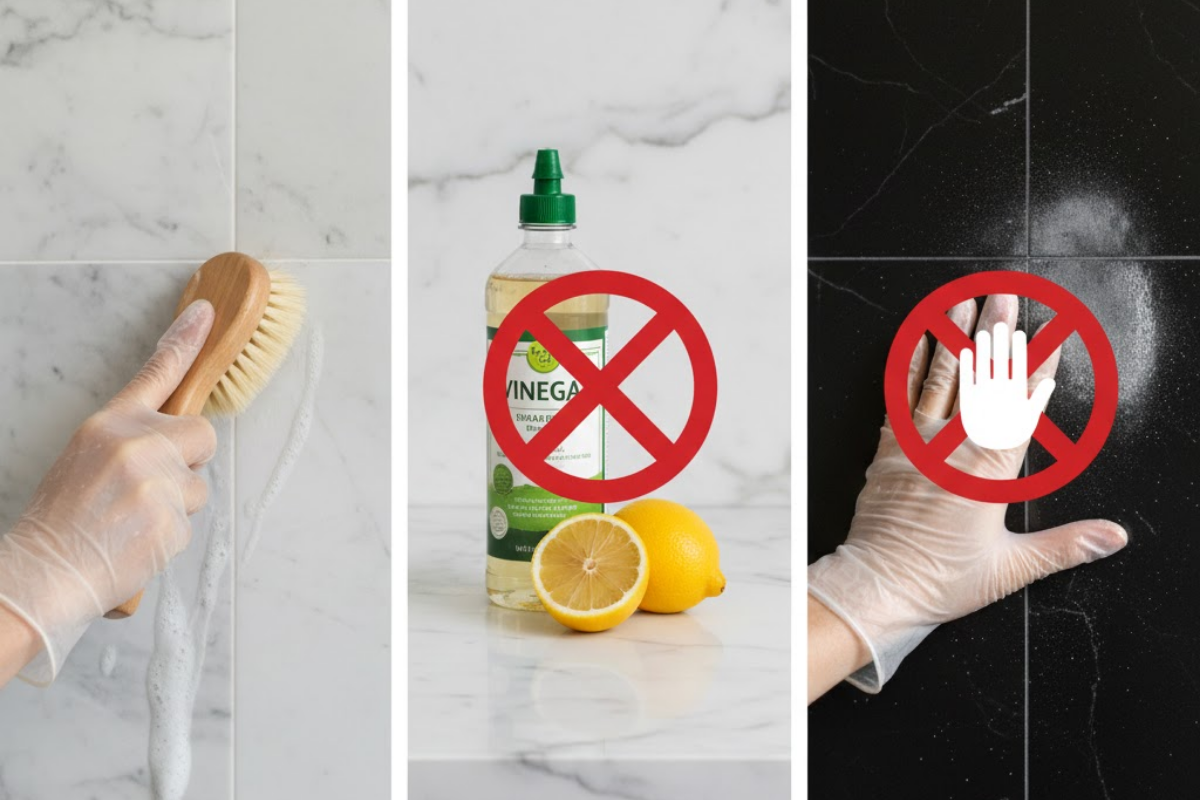
- Ignoring the Grout: Dirty grout makes the whole shower look dirty. Use a soft brush on grout lines, but avoid wire brushes which can strip the grout sealant.
- Using “Natural” DIY Cleaners: While vinegar is great for ceramic, it is kryptonite for marble and limestone. Stick to stone-specific chemistry.
- Over-scrubbing: You can’t scrub away an etch mark. If you see a dull spot that won’t clean up, you’ve likely etched the stone, and scrubbing will only make it worse. You may need a professional honing powder to restore the finish.
Conclusion
Knowing how to clean a stone shower floor is all about respecting the material. Natural stone is durable and timeless, but it requires a gentle touch. By switching to pH-neutral cleaners, using the right tools, and keeping up with sealing, you can enjoy the earthy elegance of your shower for years to come without the headache of stains or damage.