Rubber flooring is a fantastic choice for many spaces. It’s durable, comfortable underfoot, and provides excellent traction, making it perfect for gyms, playrooms, and workshops. But to keep it looking its best and performing well, you need to know how to clean it properly. Unlike tile or hardwood, rubber requires a specific approach to avoid damage and maintain its unique qualities.
This guide will walk you through everything you need to know about cleaning your rubber floor. We’ll cover the right tools and cleaners, a step-by-step process for daily and deep cleaning, and essential maintenance tips to extend the life of your floor.
Why Rubber Flooring Needs Special Care
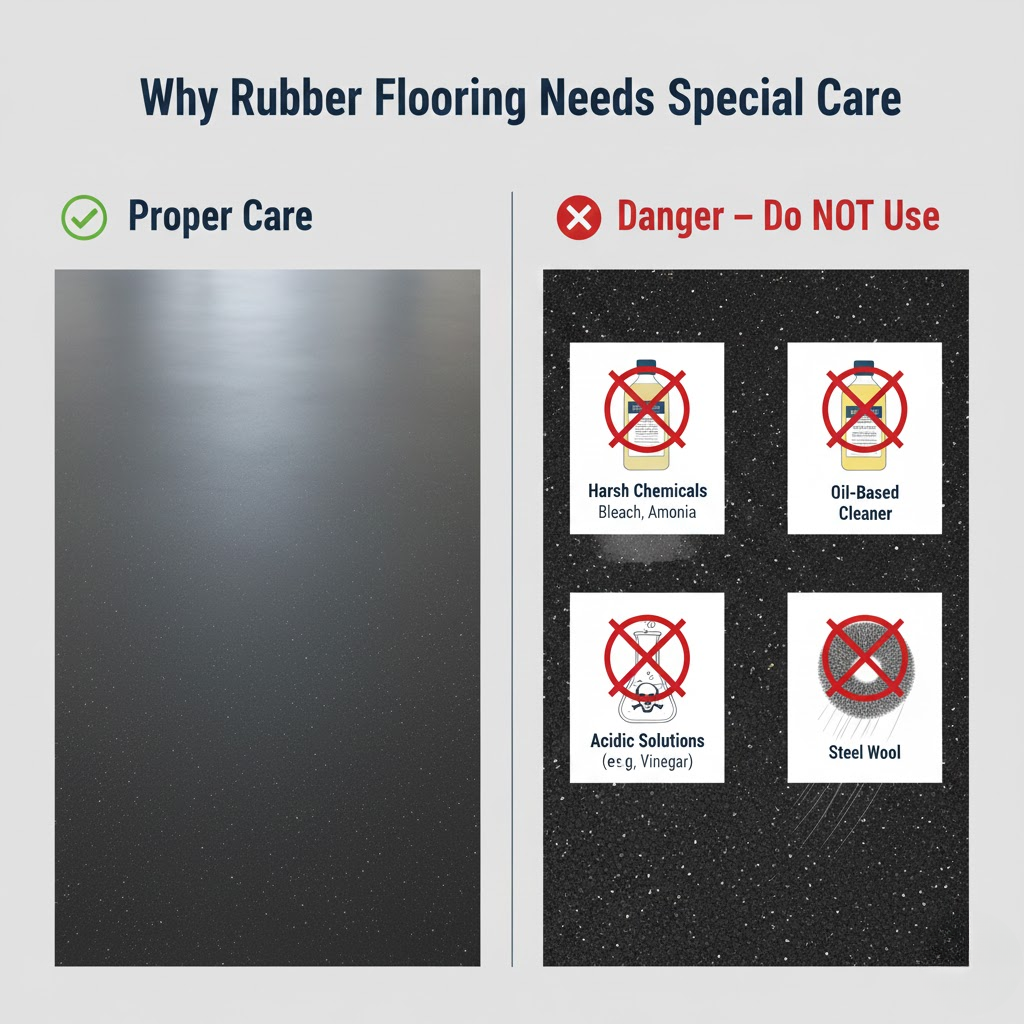
You might think a tough material like rubber can handle any cleaning product you throw at it. However, rubber is sensitive to certain chemicals and abrasive tools. Using the wrong cleaner can lead to discoloration, stickiness, or even cause the material to break down over time.
Harsh solvents, oil-based cleaners, and acidic solutions can strip away the floor’s protective finish and damage the rubber itself. Similarly, abrasive scrubbers like steel wool can create scratches that trap dirt and make the floor harder to clean in the long run. By using the right methods, you protect your investment and keep the surface safe and clean.
Tools and Materials You’ll Need
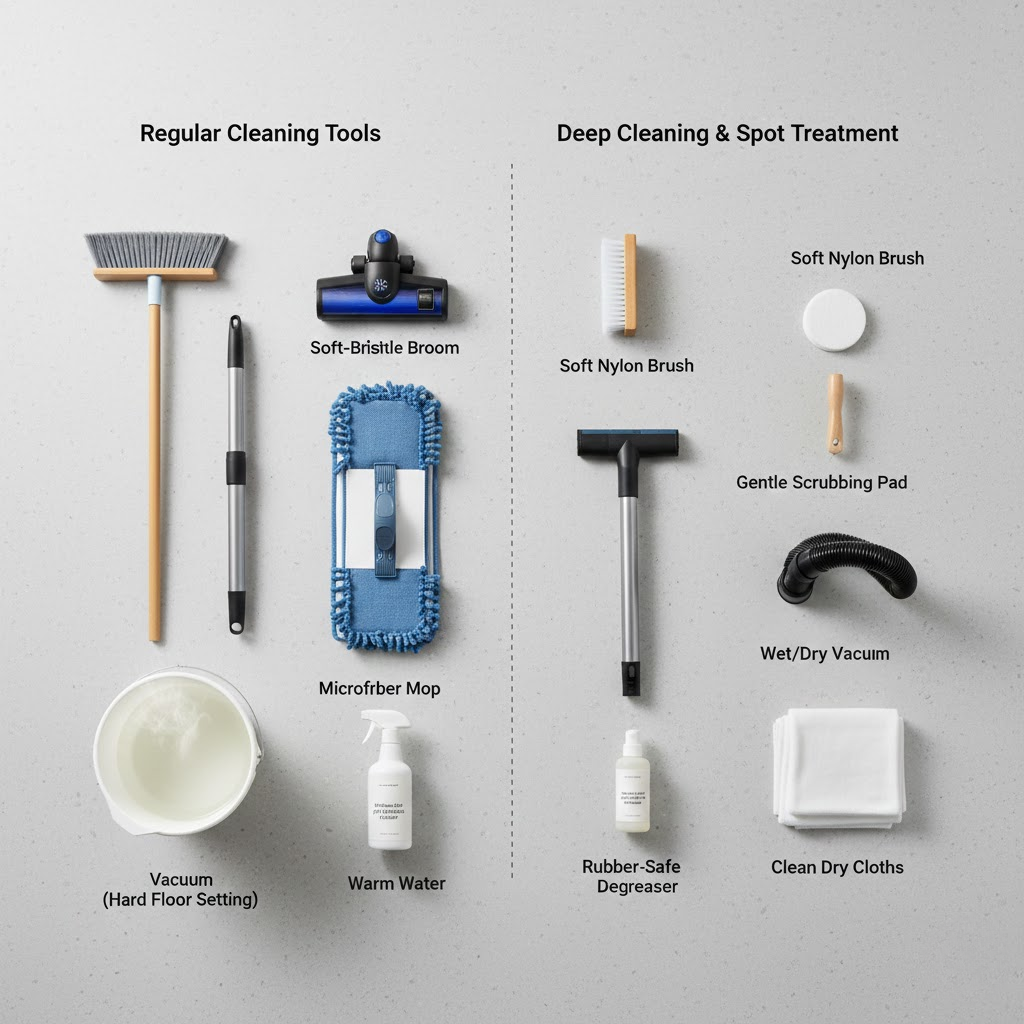
Gathering the right supplies before you start makes the cleaning process much smoother. You probably have most of these items at home already.
For Daily Cleaning:
- A soft-bristle broom or a vacuum cleaner (use a hard floor setting without a beater bar)
- A bucket
- A mop (a microfiber mop is ideal)
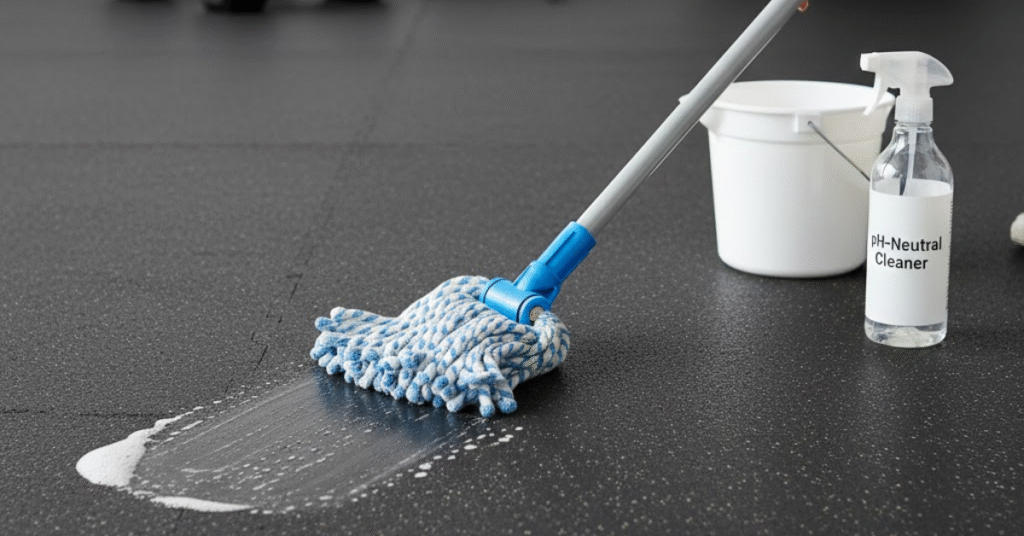
- A neutral pH cleaner or a mild soap solution
For Deep Cleaning and Stain Removal:
- A soft nylon brush or scrubbing pad
- A wet/dry vacuum (optional, but helpful for large areas)
- A rubber-safe degreaser (for stubborn, oily stains)
- A clean, dry cloth or towel
When choosing a cleaner, always look for products specifically labeled as safe for rubber floors or those with a neutral pH level (around 7.0). A simple solution of a few drops of mild dish soap in a gallon of warm water works great for regular cleaning.
Step-by-Step Guide to Cleaning Your Rubber Floor
Cleaning your rubber floor can be broken down into two main routines: a quick daily clean and a more thorough deep clean.
Daily or Regular Cleaning Routine
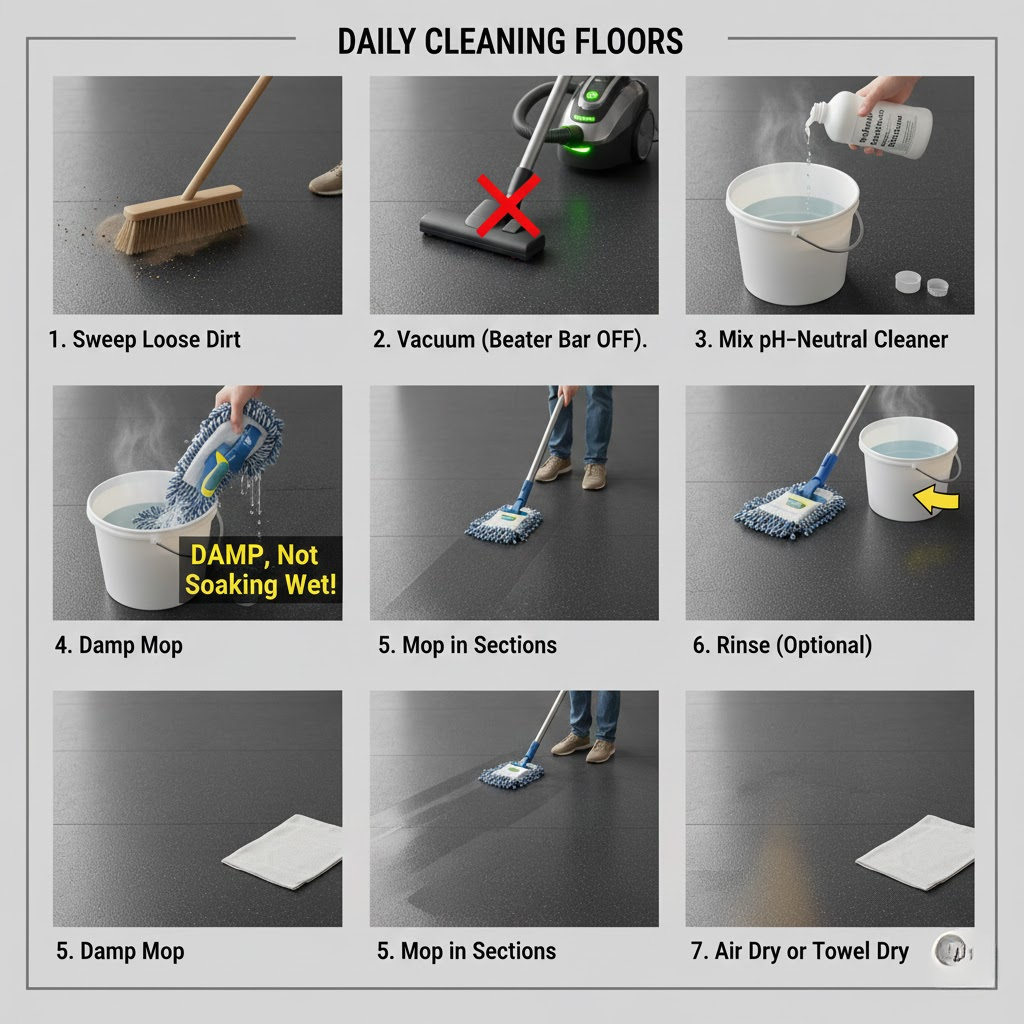
This simple process should be done regularly to prevent dirt and dust from building up.
- Remove Loose Debris: Start by sweeping the floor with a soft-bristle broom to gather up dust, dirt, and any other loose particles. Alternatively, you can use a vacuum cleaner on a hard floor setting. Make sure to turn off the beater bar, as its stiff bristles can scratch the rubber.
- Prepare Your Cleaning Solution: Fill a bucket with warm water and add your neutral pH cleaner according to the product’s instructions. If you’re using mild soap, just a small amount is needed to avoid leaving a slippery residue.
- Mop the Floor: Dip your mop into the cleaning solution and wring it out thoroughly. A damp mop is key—you want to avoid pooling water on the floor. Mop the entire surface in sections, working your way toward an exit.
- Rinse if Necessary: If your cleaner requires rinsing, go over the floor again with a clean mop and fresh water. Many modern neutral pH cleaners are no-rinse, which saves you a step.
- Let It Air Dry: Allow the floor to air dry completely before walking on it. You can also use a clean, dry microfiber cloth or towel to speed up the process, especially in high-traffic areas.
How to Deep Clean Your Rubber Floor
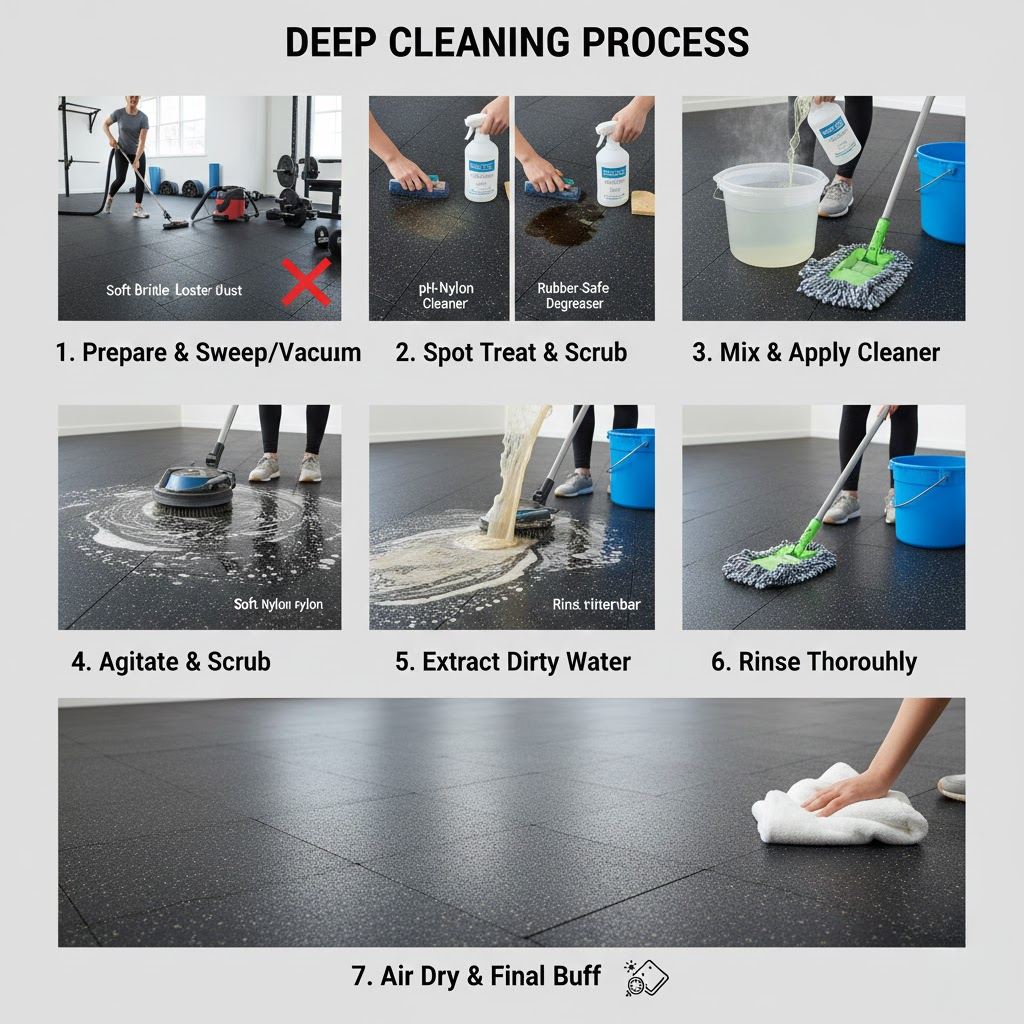
For a more intensive clean or to tackle tough stains, follow these steps. A deep clean is typically needed every few weeks or months, depending on how much traffic the area gets.
- Clear and Sweep the Area: Remove any furniture or equipment from the floor. Give it a thorough sweep or vacuum to get rid of all loose dirt.
- Tackle Stains First: Spot-treat any visible stains. For general grime, your neutral pH cleaner and a soft nylon brush should work. For oily or greasy spots, apply a small amount of a rubber-safe degreaser and gently scrub the area.
- Apply the Cleaning Solution: Mop the entire floor with your warm water and neutral pH cleaner solution. This time, you can be a bit more generous with the solution, but still avoid creating large puddles.
- Scrub the Surface: For a truly deep clean, use a soft nylon brush or a floor scrubber with a soft-pad attachment to gently agitate the surface. This helps lift embedded dirt from the texture of the rubber. Pay extra attention to high-traffic zones.
- Remove the Dirty Water: Use a wet/dry vacuum to suck up all the dirty cleaning solution. This is the most effective way to ensure no grime is left behind. If you don’t have one, use a mop and bucket, but be prepared to change the rinse water frequently.
- Rinse the Floor: Mop the entire floor with clean water to remove any leftover cleaner residue. This step is crucial for preventing a sticky or slippery film.
- Dry Completely: Let the floor air dry or use dry cloths to wipe it down. Ensure it is totally dry before moving furniture back into place.
Common Mistakes to Avoid
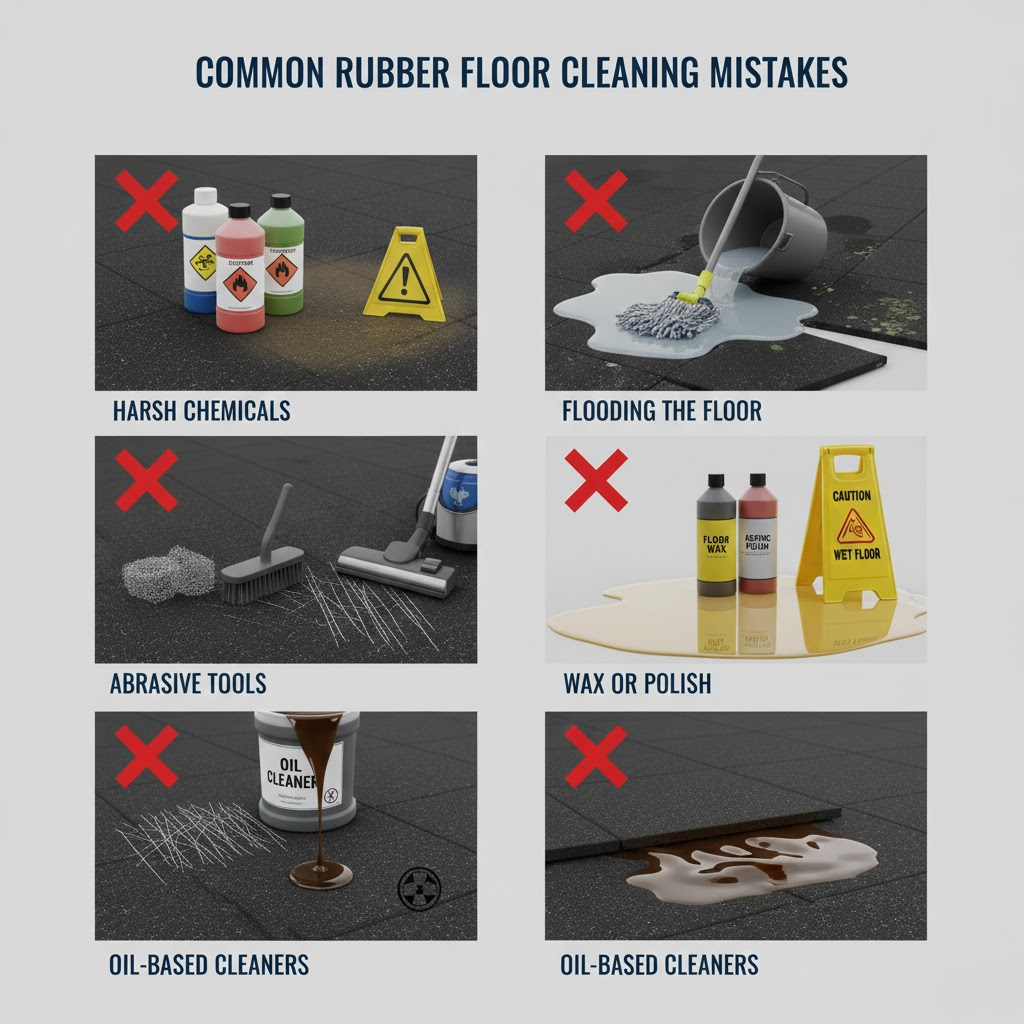
A little know-how can save you from costly mistakes. Here are some common things to avoid when caring for your rubber floor:
- Using Harsh Chemicals: Never use cleaners containing acid, acetone, turpentine, or other solvents. These will damage the floor.
- Flooding the Floor: Excess water can seep into the seams or underneath the flooring, potentially loosening adhesives and encouraging mold growth.
- Using Abrasive Tools: Avoid steel wool, stiff-bristled brushes, or beater bars on vacuums. These can cause permanent scratches.
- Applying Wax or Polish: Rubber floors do not need to be waxed. Waxes and acrylic finishes can create a slippery surface and are difficult to remove without damaging the rubber.
- Using Oil-Based Cleaners: Oil and grease are enemies of rubber, causing it to soften and degrade over time. Stick to water-based, neutral pH solutions.
Long-Term Maintenance Tips
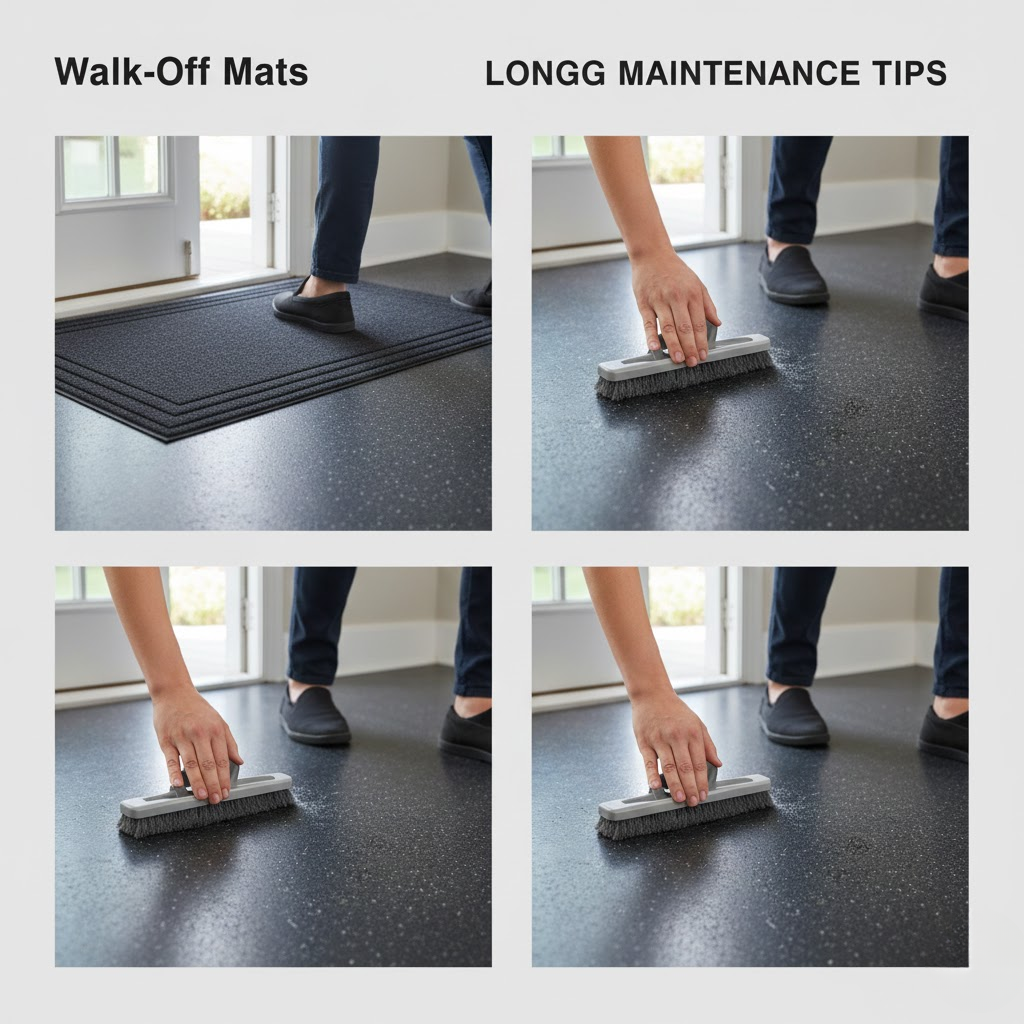
With the right care, your rubber floor can look great for years.
- Use Walk-Off Mats: Place mats at all entrances to catch dirt, debris, and moisture before they reach the rubber floor.
- Clean Spills Immediately: Wipe up any spills as soon as they happen to prevent staining and potential damage.
- Use Furniture Pads: Place felt or rubber pads under the legs of heavy furniture or equipment to prevent indentations and scratches.
- Check for a Sealant: Some rubber floors come with a factory-applied sealant, while others may require one after installation. Check with your manufacturer’s guidelines to see if a sealant is recommended to provide extra protection.
By following these simple steps, you can easily maintain the beauty and durability of your rubber flooring. A little bit of regular care goes a long way in keeping your floor safe, clean, and looking as good as new.