
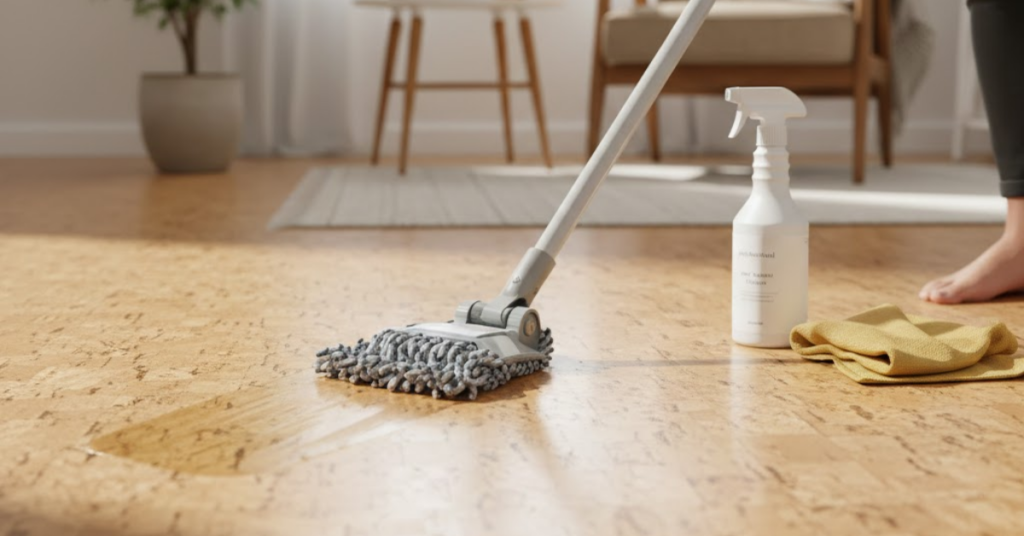
Cork flooring is having a serious moment in interior design, and it’s easy to see why. It’s eco-friendly, soft underfoot, naturally hypoallergenic, and brings a warmth to a room that tile or stone just can’t match. But if you’ve recently installed cork or moved into a home with these beautiful floors, you might be scratching your head about upkeep.
Unlike hardwood or vinyl, cork has a unique cellular structure. It’s resilient, but it also has specific needs. If you treat it exactly like hardwood, you might accidentally damage its finish. If you treat it like tile, you could ruin it entirely.
Don’t worry, though. Keeping your cork floors pristine isn’t complicated. It just requires the right knowledge. In this guide, we will walk you through exactly how to clean a cork floor, from daily dusting to deep cleaning, ensuring your floors stay beautiful for decades.
Why Cork Flooring Needs Special Attention
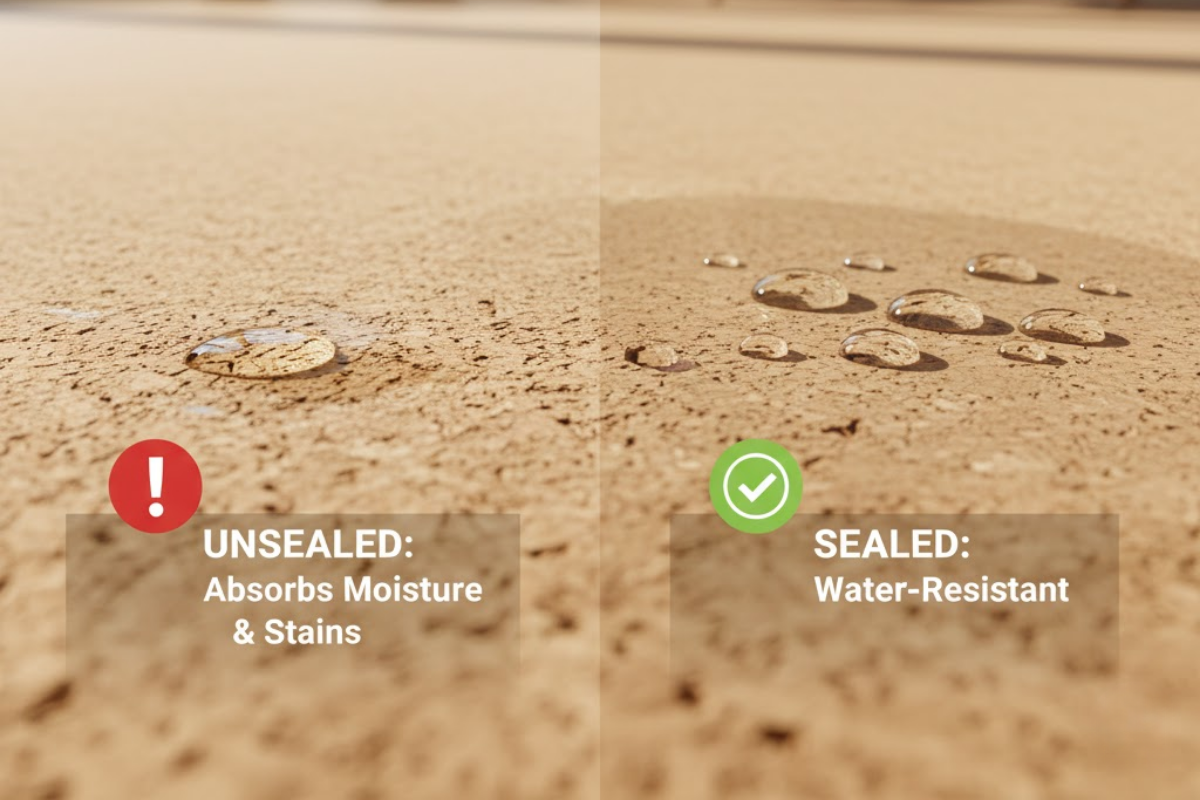
Before we dive into the “how-to,” it helps to understand what you’re working with. Cork is harvested from the bark of the cork oak tree. It’s a renewable resource because the tree isn’t cut down—the bark just grows back. This material is naturally porous, which gives it that slight “bounce” when you walk on it.
However, that porosity means water is its enemy. Most modern cork floors come sealed with polyurethane or wax to protect them, but that seal isn’t invincible. Proper cleaning is essential not just for hygiene, but to protect the structural integrity of the cork itself. If water seeps into the seams or cracks in the finish, the cork can swell, warp, and discolor.
Daily Maintenance: The Key to Longevity
The secret to a long-lasting floor isn’t actually the deep cleaning—it’s what you do every day. Dirt and grit are like sandpaper to your floor’s finish. Every time you walk across a dirty floor, you are grinding those tiny particles into the seal.
1. Sweep or Vacuum Often
You should aim to sweep or vacuum your cork floors daily, or at least every other day.
- Vacuum Settings: If you use a vacuum, make sure it has a “hard floor” setting. You want to turn off the rotating beater bar (the brush roll). That bristly brush is great for digging dirt out of carpets, but it can scratch the finish on your cork floor.
- Broom Choice: A soft-bristle broom or a microfiber dust mop is ideal. They trap dust and pet hair effectively without being abrasive.
2. Wipe Spills Immediately
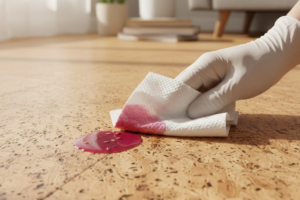
Cork is absorbent. While the sealant offers protection, standing liquids will eventually find a way in. Whether it’s a splash of wine, a dropped ice cube, or a pet accident, wipe it up the second it happens. Use a soft, dry cloth or paper towel to absorb the moisture.
Weekly Routine: How to Mop Cork Floors Safely
Once a week, you’ll want to do a more thorough clean to remove built-up grime that sweeping misses. This is where most people get nervous, but the rule is simple: Less water is more.
Step 1: Prepare Your Cleaning Solution
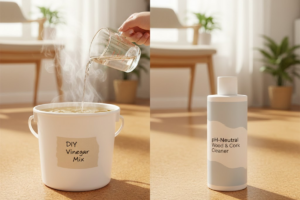
You don’t need harsh chemicals. In fact, you should avoid them. The best cleaning solution for cork floors is often a pH-neutral cleaner specifically designed for cork or hardwood.
If you prefer a DIY route, a mild solution of vinegar and water can work, but proceed with caution. The acidity in vinegar can dull the finish over time if used too frequently or in high concentrations.
- DIY Mix: 1/4 cup of white vinegar to 1 gallon of warm water.
- Commercial Option: Look for a pH-neutral cleaner like Bona Hardwood Floor Cleaner.
Step 2: The Damp Mop Method
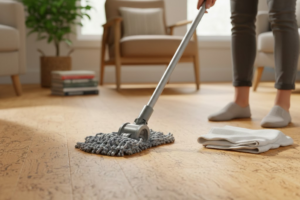
Never, ever flood your cork floor. You should not see puddles.
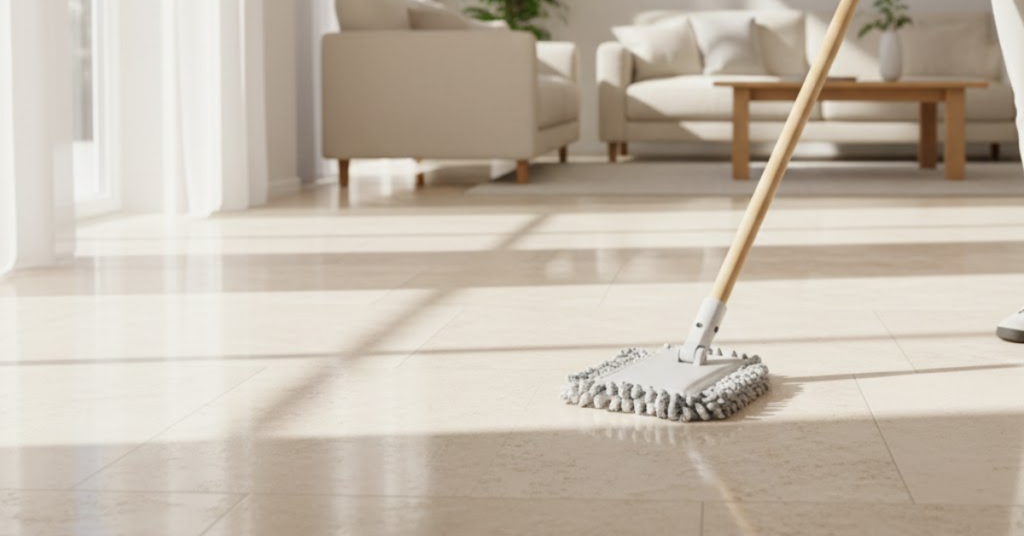
- Dip your mop (sponge or microfiber) into the bucket.
- Wring it out thoroughly. The mop should be damp, almost dry to the touch.
- Mop the floor in the direction of the grain or tiles.
- If the floor looks wet after you pass over it, dry it immediately with a clean towel.
Deep Cleaning and Stain Removal
Sometimes life happens, and you end up with a stubborn spot or a scuff mark. Here is how to handle the tough stuff without ruining your investment.
Removing Scuff Marks
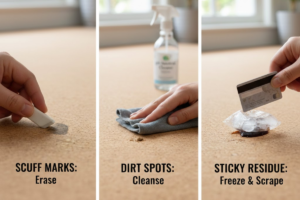
Rubber-soled shoes and furniture legs can leave unsightly black marks.
- The Eraser Trick: Take a standard pencil eraser and gently rub the mark. It often lifts right off.
- Commercial Cleaners: Apply a small amount of cork cleaner to a cloth and rub the spot gently.
Handling Sticky Residue
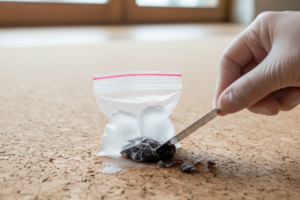
For gum, crayon, or sticky food:
- Put an ice cube in a plastic bag and hold it on the substance to harden it.
- Gently scrape it off with a plastic credit card or a plastic spatula. Never use a metal knife.
Tough Stains
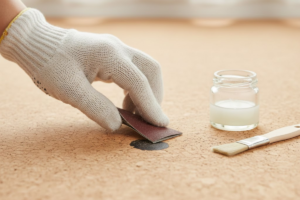
If a liquid has penetrated the finish and stained the cork, deep cleaning might not work. In this case, you may need to lightly sand the area and reapply the finish (polyurethane or wax). This is delicate work, so if the stain is large, consider calling a professional.
Best Cleaning Products for Cork Floors (And What to Avoid)
Using the wrong product is the fastest way to destroy your floor.
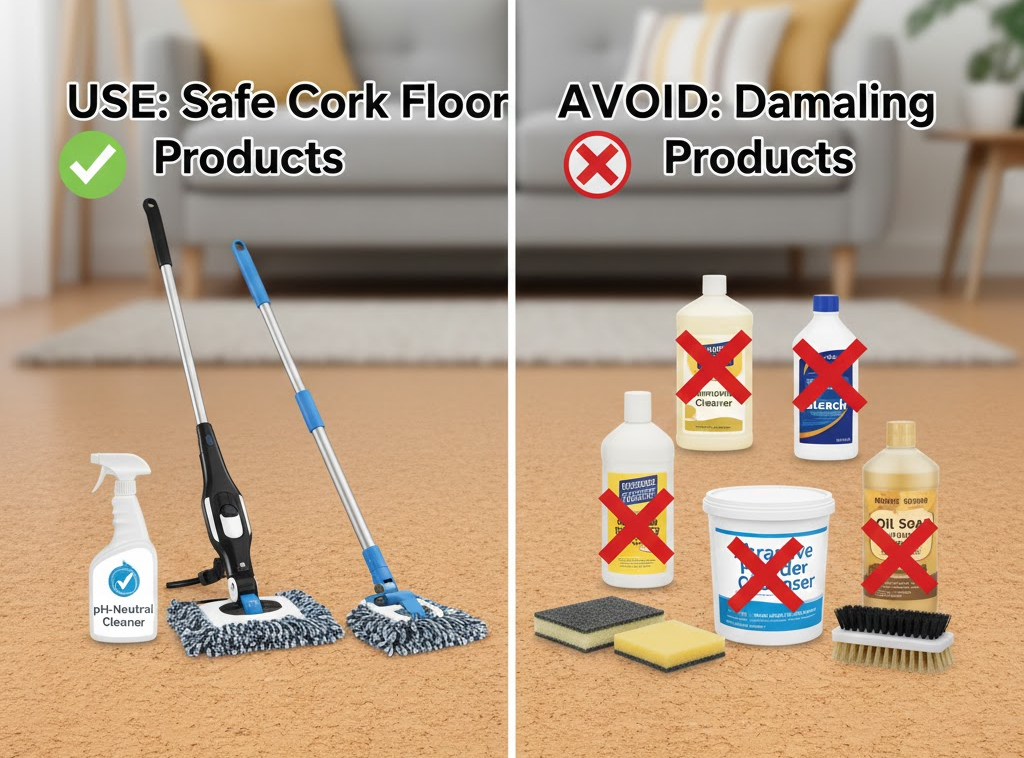
What to Use:
- pH-Neutral Cleaners: These are gentle and won’t eat away at the sealant.
- Microfiber Mops: They are soft, absorbent, and trap dirt efficiently.
- Spray Mops: These are excellent because they control the amount of liquid dispensed, preventing overwetting.
What to Avoid:
- Ammonia-based cleaners: These are too harsh and can strip the finish.
- Bleach: This will discolor the cork and damage the material structure.
- Abrasive scouring powders: These will scratch the surface immediately.
- Oil soaps: These can leave a waxy buildup that makes refinishing the floor difficult later on.
5 Common Mistakes That Ruin Cork Floors
Avoid these pitfalls to keep your floors looking new.
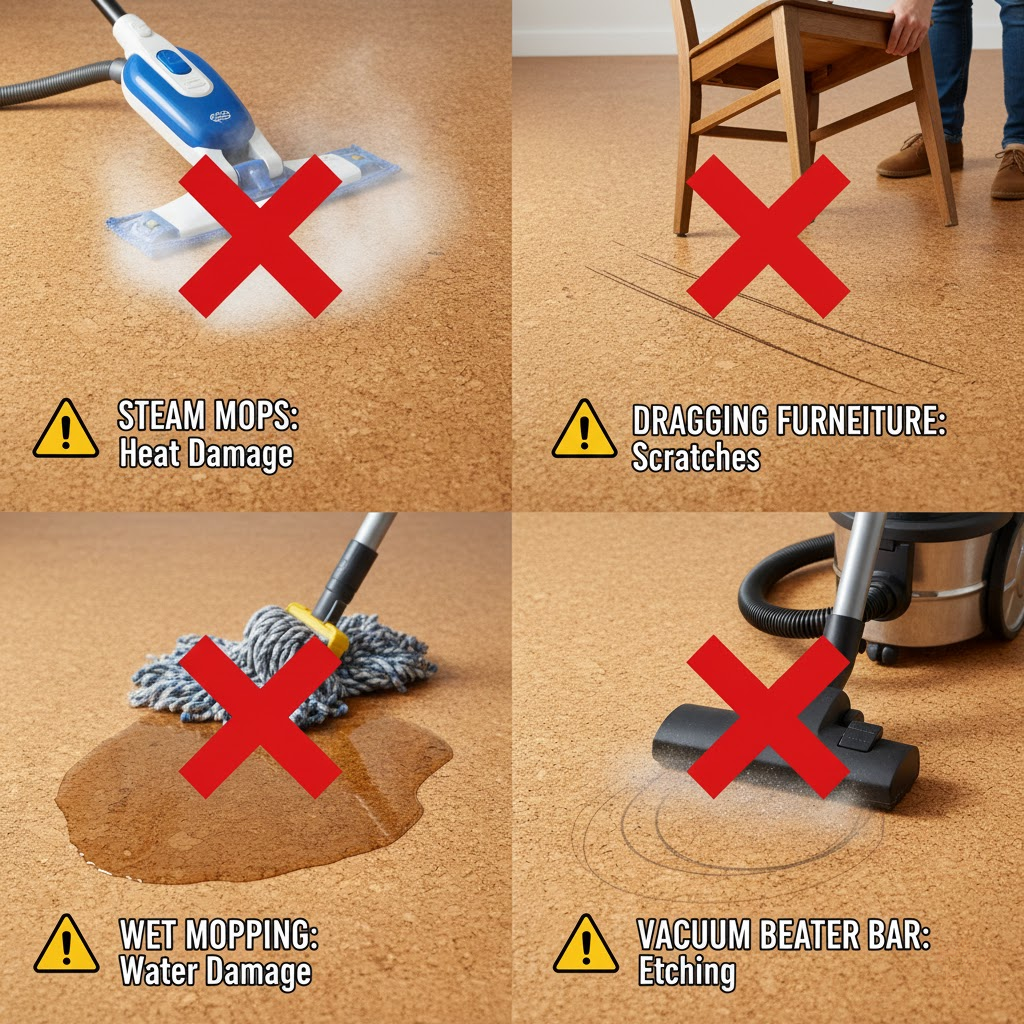
- Using a Steam Mop: We cannot stress this enough—heat and moisture are cork’s kryptonite. Steam forces moisture deep into the seams, causing swelling and irreversible damage.
- Dragging Furniture: Always lift furniture when moving it. Use felt pads under the legs of chairs, tables, and sofas.
- Ignoring Humidity: Cork is wood. It expands and contracts with humidity changes. Keep your home’s humidity levels stable to prevent gaps or buckling.
- Oversaturating the Floor: We’ve said it before, but “damp mop only” is the golden rule.
- Using the Beater Bar: Always double-check your vacuum settings.
FAQ: Your Cork Cleaning Questions Answered
Can I use a steam mop on cork floors?
No. Absolutely not. The intense heat and moisture generated by a steam mop can penetrate the seams of the cork flooring, causing the material to swell, warp, and even peel. It is one of the quickest ways to void your warranty and ruin your floor. Stick to a slightly damp microfiber mop.
How often should I clean my cork floor?
You should sweep or vacuum (without the beater bar) daily or every other day to remove grit. Damp mopping should be done weekly or bi-weekly, depending on foot traffic.
My cork floor looks dull. Can I use wax?
This depends on the finish of your floor.
- Polyurethane finish: Do not use wax. Use a polish or restorer designed for polyurethane floors.
- Wax finish: Yes, these floors require periodic re-waxing to maintain their shine and protection. Check with the manufacturer to confirm which finish you have.
Is vinegar safe for cork floors?
Vinegar is acidic. While many people use a very diluted vinegar solution (1/4 cup to 1 gallon of water), frequent use can dull the finish over time. A pH-neutral commercial cleaner designed for wood or cork is generally a safer long-term choice.
Conclusion
Cleaning a cork floor doesn’t have to be a chore. It’s mostly about prevention and using the right tools. By keeping dirt off the floor with regular sweeping, cleaning up spills instantly, and avoiding excess water, your cork flooring will remain as resilient and inviting as the day it was installed.
Remember, cork is a natural material that gives a lot back to your home in terms of comfort and style. Treat it with a little care, and it will serve you well for years to come. Now that you know exactly how to clean a cork floor, go grab that microfiber mop and give your home the shine it deserves


1 thought on “How To Clean A Couch That Smells?”
Great post! It’s so important to make the switch to eco-friendly cleaning products. Thanks for sharing these recommendations; I’m definitely going to check some of them out.