Have you ever walked into your basement or laundry room and been greeted by a funky, stale smell? You check the trash, sniff the hamper, and inspect the corners, but the source remains a mystery. Often, the culprit is right under your feet: the floor drain.
Floor drains are the unsung heroes of our homes. They quietly whisk away water from leaks, condensation, and spills, preventing floods and water damage. But because they sit low and out of sight, we tend to forget about them until something goes wrong—like a bad smell or a slow drain.
Cleaning a floor drain doesn’t have to be a gross or difficult chore. In fact, with the right approach, it’s a quick weekend task that can save you from serious plumbing headaches down the road. In this guide, we will walk you through everything you need to know about keeping those drains sparkling clean and flowing freely.
Why Bother Cleaning Floor Drains?
It’s easy to think, “If water goes down it, isn’t it cleaning itself?” Unfortunately, no. Floor drains are catch-alls for dirt, lint, soap scum, hair, and sediment. Over time, this debris builds up inside the trap and pipe walls.
Here is why regular maintenance matters:
- Odor Prevention: The most common sign of a dirty drain is the smell. Sewer gases can escape if the water in the trap evaporates, or bacteria can breed in the sludge accumulated in the pipe.
- Preventing Clogs: Small amounts of debris accumulate over time. If left unchecked, they turn into a solid blockage that causes water to back up into your home.
- Pest Control: Drain flies love the organic matter found in dirty drains. Cleaning them removes the breeding ground for these annoying insects.
- Protecting Your Home: A functioning floor drain is your defense against flooding. If your water heater bursts or a pipe leaks, a clogged drain turns a manageable problem into a disaster.
Tools and Materials You Will Need
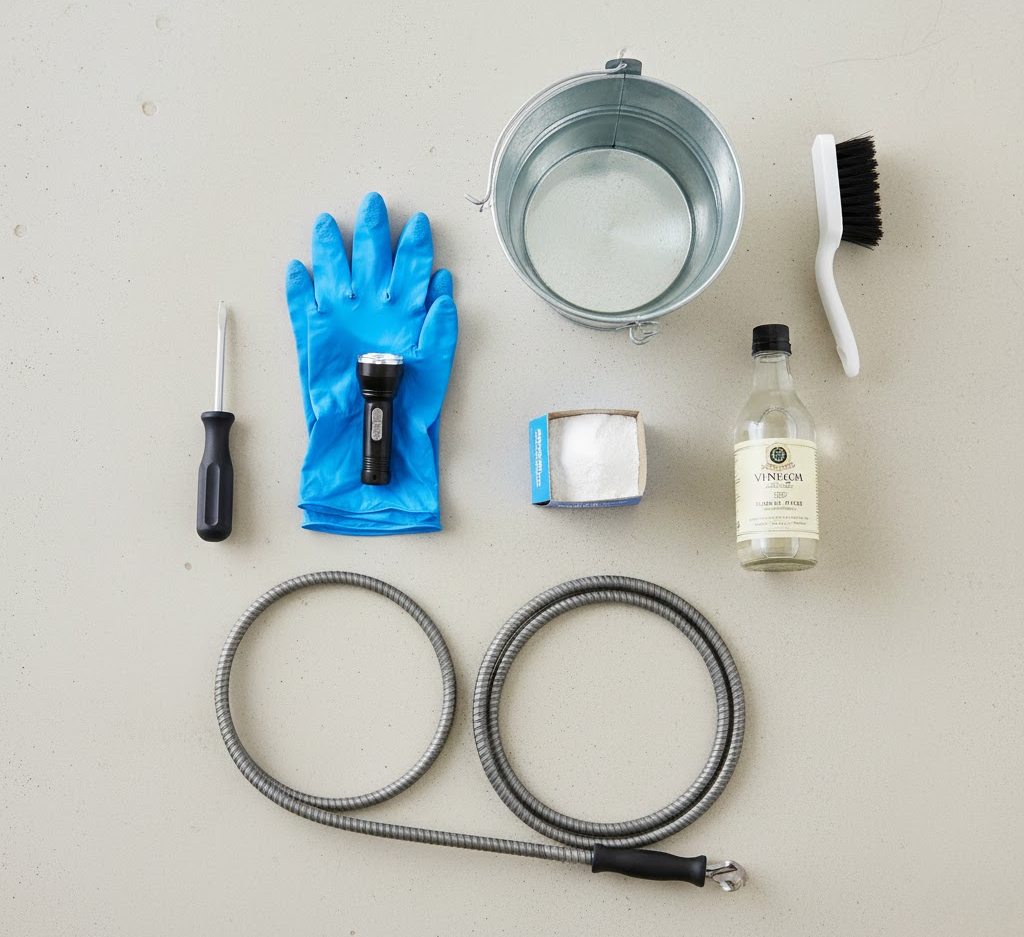
Before you roll up your sleeves, gather your supplies. You likely have most of these items in your cleaning cabinet already.
The Essentials:
- Rubber gloves (crucial for hygiene)
- A flashlight
- A screwdriver (to remove the grate)
- A bucket
- Old toothbrush or scrub brush
- Baking soda
- White vinegar
- Hot water (boiling is best)
For Tougher Jobs:
- Plumber’s snake or drain auger
- Plunger
- Wet/dry vacuum
Step-by-Step: How to Clean Your Floor Drain
Ready to get started? Follow these steps to refresh your drain.
Step 1: Clear the Area and Remove the Cover
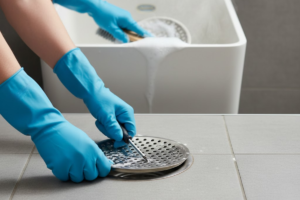
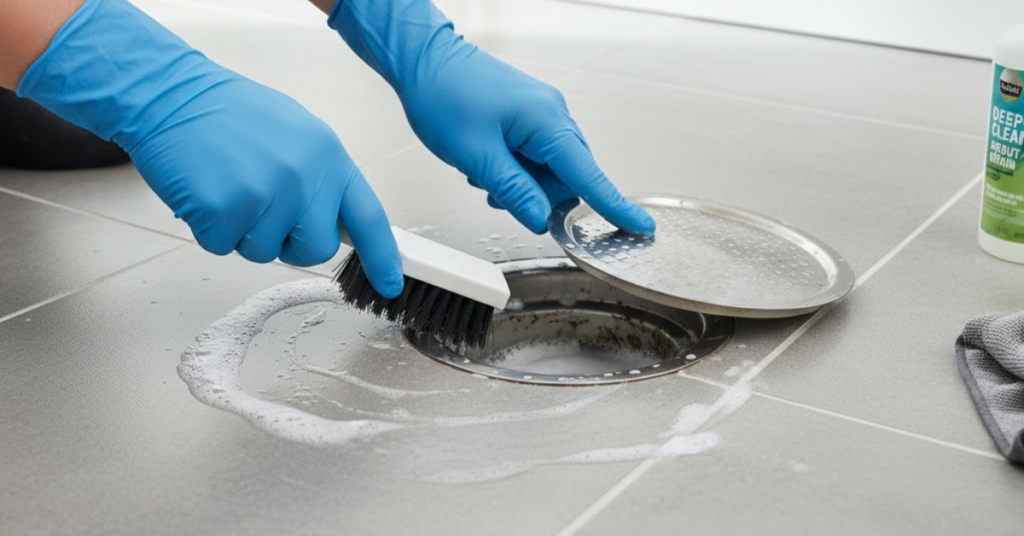
Start by moving any boxes or storage bins away from the drain. You need room to work. Put on your rubber gloves. If the drain has a cover or grate, use your screwdriver to remove it. Sometimes they just lift off, but often they are secured with screws.
Take the grate to a utility sink. Scrub it thoroughly with hot, soapy water and your brush. Remove any hair, lint, or gunk stuck in the slats. Set it aside to dry.
Step 2: Inspect and Remove Visible Debris
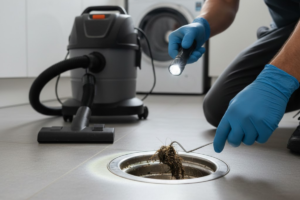
Shine your flashlight down the drain. What do you see? You might spot clumps of hair, dust bunnies, or sediment.
Reach in (wearing your gloves!) and pull out any large debris you can grab. If you don’t want to use your hands, a bent wire coat hanger works wonders as a hook. If there is loose dirt or dry debris at the bottom, use a wet/dry vacuum to suck it out. This prevents you from pushing the dirt further down the pipe when you add water.
Step 3: The Baking Soda and Vinegar Flush
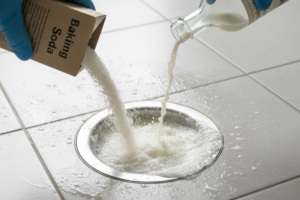
We love this method because it is safe for your pipes and the environment. It acts as a natural cleaner and deodorizer.
- Pour about 1/2 cup of baking soda directly down the drain. Try to coat the sides of the pipe if you can.
- Follow this with 1 cup of white vinegar.
- Prepare for the fizz! The chemical reaction will bubble up, helping to break down fatty deposits and soap scum clinging to the pipe walls.
- Let this mixture sit for at least 15 to 20 minutes.
Step 4: The Hot Water Rinse
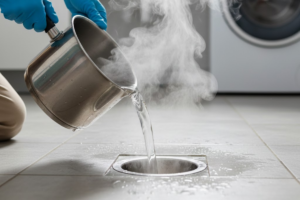
While the vinegar and baking soda are working their magic, boil a large pot of water. Once the 20 minutes are up, slowly pour the boiling water down the drain.
The heat helps melt grease and flush away the loosened debris. Pour slowly to avoid splashing yourself and to let the heat penetrate the sludge effectively.
Step 5: Scrub the Sides
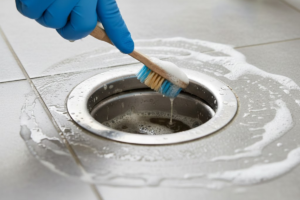
If the drain still looks grimy near the top, take your old toothbrush or a pipe brush. Dip it in some soapy water or vinegar and scrub the visible interior walls of the drain. This ensures you get rid of any lingering bacteria that cause smells.
Step 6: Test the Flow and Reassemble
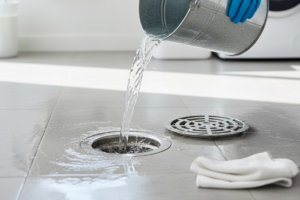
Pour a bucket of regular tap water down the drain to make sure it flows away quickly. If it drains well, you are done! Screw the clean grate back into place.
Dealing with Clogs: When the Drain Won’t Flow
Sometimes, a simple cleaning isn’t enough. If water stands still or drains very slowly, you have a clog. Here is how to tackle it without calling a pro immediately.
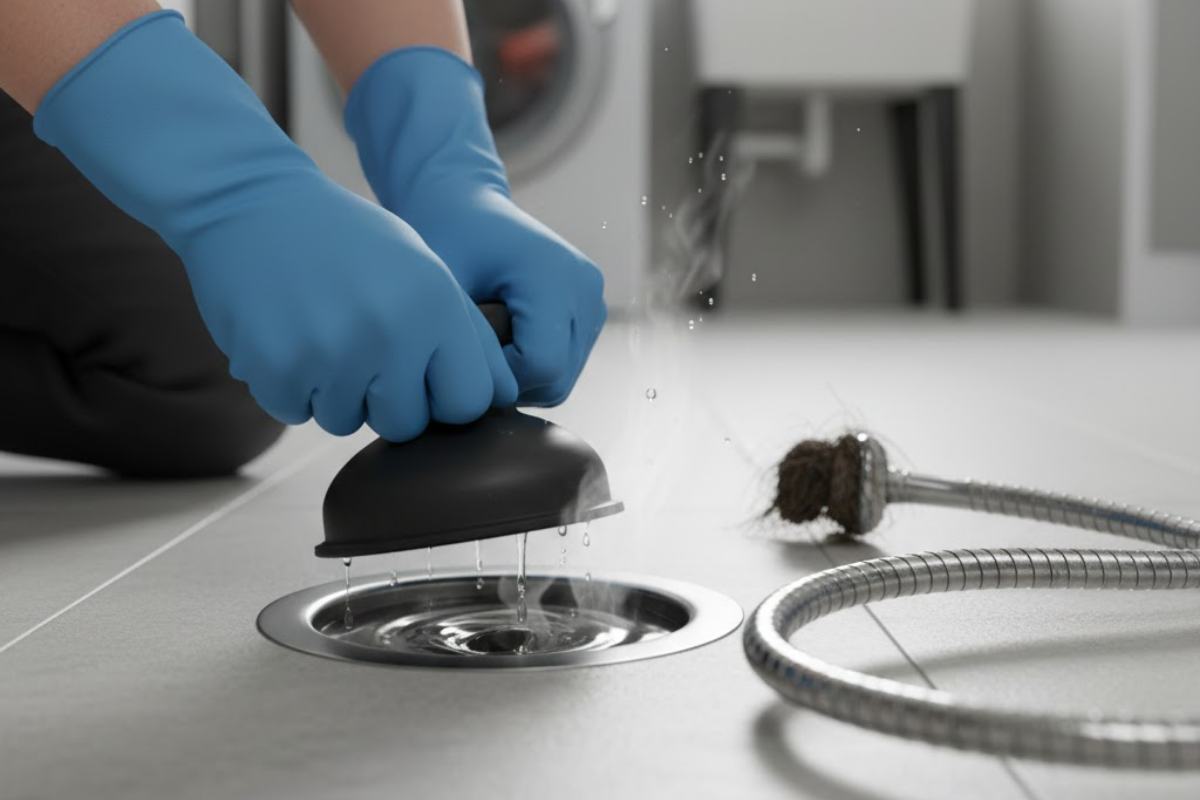
Use a Plunger
A plunger isn’t just for toilets. It can work on floor drains too. Place the plunger cup over the drain opening to create a seal. Pump it vigorously up and down several times. The pressure can dislodge minor blockages. Pour water down to check if the path is clear.
Try a Plumber’s Snake
If the plunger fails, the clog is likely deeper or harder. Feed a plumber’s snake (or drain auger) into the pipe. Turn the handle as you push it down. When you feel resistance, you’ve hit the clog. Rotate the snake to break it up or hook onto it, then pull it back out.
Enzymatic Cleaners
Avoid harsh chemical drain openers if possible; they can damage older pipes. Instead, try an enzymatic cleaner. These use bacteria to eat away organic matter over time. They take longer (often overnight) but are safer for your plumbing system.
Common Mistakes to Avoid
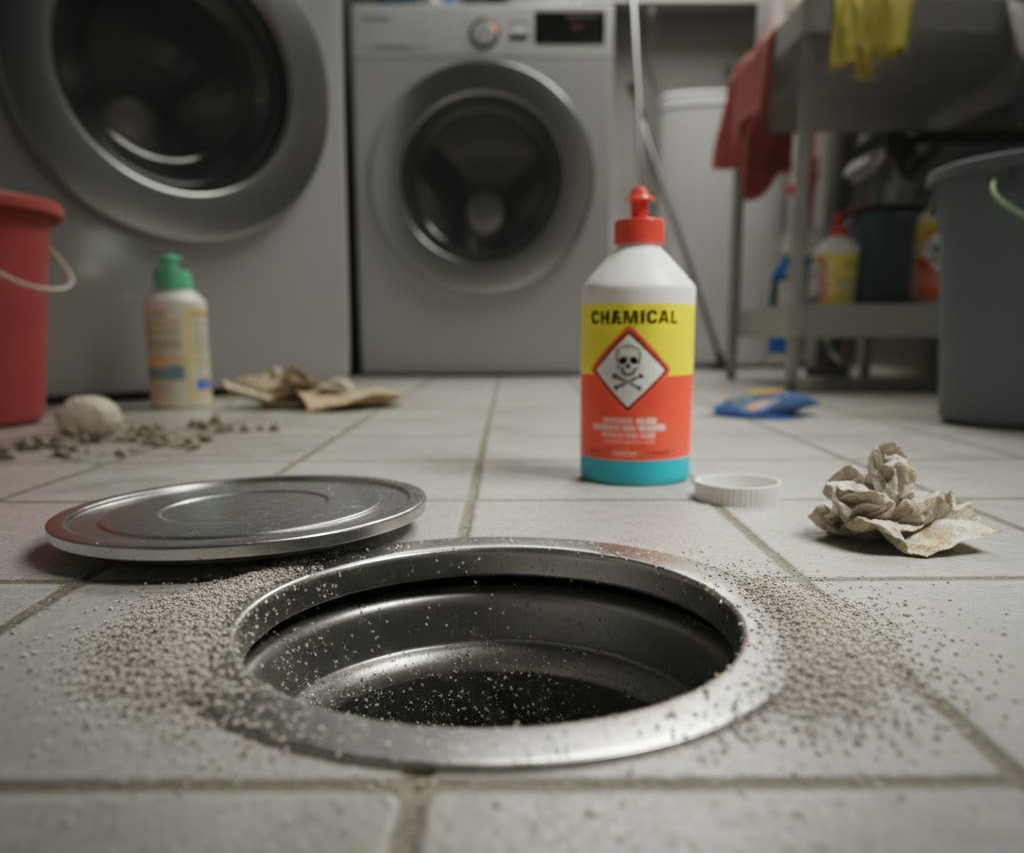
Even well-meaning homeowners can mess up drain cleaning. Avoid these pitfalls:
- Ignoring the Trap: All floor drains have a U-shaped trap designed to hold water. This water acts as a barrier against sewer gas. If you rarely use the drain, the water evaporates. Mistake: Letting the trap dry out. Fix: Pour a bucket of water down rarely used drains once a month.
- Using Your Drain as a Trash Can: Never sweep dust, kitty litter, or construction debris into a floor drain. It settles in the trap and turns into concrete-like sludge.
- Overusing Chemical Drain Cleaners: Caustic cleaners generate heat and can corrode metal pipes or melt plastic ones if used too often. Stick to mechanical cleaning (snaking) or natural cleaners first.
- Forgetting to Replace the Cover: The grate keeps large objects and pests out. Always screw it back on securely.
Maintenance Tips for Healthy Drains
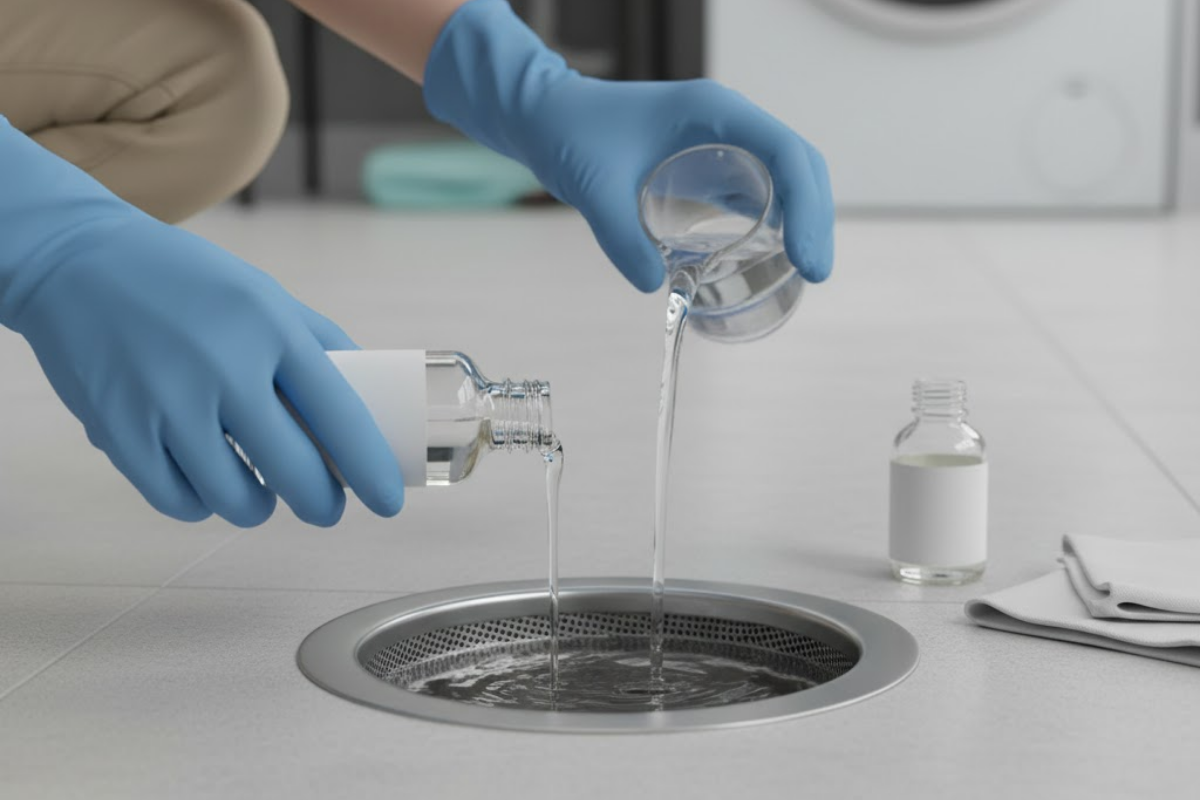
Cleaning is great, but maintenance is better. Here is how to keep things flowing smoothly year-round.
- The Monthly Flush: Set a reminder on your phone. Once a month, dump a bucket of water down your basement or utility room floor drains. This keeps the trap seal full and odors away.
- Add Mineral Oil: If you have a drain that is almost never used, pour a few tablespoons of mineral oil or cooking oil into it after filling the trap with water. The oil floats on top, slowing down evaporation significantly.
- Install a Mesh Screen: If your drain cover has wide slots, buy a cheap mesh screen to place underneath or over it. This catches hair and lint before they enter the pipe.
- Watch What You Dump: If your washing machine drains into a floor drain, ensure you have a lint catcher on the discharge hose. Lint is a major cause of floor drain clogs.
FAQ: Common Questions About Floor Drains
How often should I clean my floor drain?
Ideally, you should do a deep clean (baking soda and vinegar) every 3 to 6 months. However, you should pour water down the drain to fill the trap once a month to prevent sewer smells.
Why does my floor drain smell like rotten eggs?
This usually means the water trap has dried out, allowing sewer gas to enter your home. Pour a gallon of water down the drain. If the smell persists after the trap is full, you may have a clog or a venting issue and should clean the drain thoroughly.
Can I use bleach to clean my floor drain?
You can, but it’s not always the best choice. Bleach is a disinfectant, so it kills bacteria, but it doesn’t break down the sludge or physical debris clogging the pipe. Vinegar and baking soda are better for physical cleaning. Never mix bleach with other cleaners, especially ammonia or vinegar, as it creates toxic fumes.
What should I do if my floor drain keeps backing up?
If you have cleaned it and snaked it, but it keeps backing up, the problem might be further down the main sewer line (like tree roots). In this case, you need to call a professional plumber to inspect the line with a camera.
Is it safe to pour boiling water down a PVC pipe?
Generally, yes, for short periods. However, if you have very old or thin plastic pipes, let the water cool slightly (to about 175°F or 80°C) rather than using a rolling boil, just to be safe. Standard PVC schedule 40 pipe is rated for temperatures up to 140°F for continuous use, but brief exposure to hotter water is usually fine.
Conclusion
Cleaning a floor drain is one of those small home maintenance tasks that pays off in a big way. It keeps your home smelling fresh, keeps