You probably fell in love with limestone flooring because of its natural, earthy charm. It’s elegant, timeless, and brings a warmth to your home that ceramic tile just can’t match. But then reality set in: you actually have to clean it.
If you are staring at a dull spot or a muddy footprint on your beautiful stone and wondering where to start, you are in the right place. Limestone is soft, porous, and a bit sensitive, meaning it requires a specific touch. Using the wrong cleaner can turn a simple chore into a renovation nightmare.
This guide will walk you through exactly how to clean limestone floors safely, what products to avoid at all costs, and how to keep them looking pristine for years to come.
Why Limestone Needs Special Care
Before we grab the mop, it helps to understand what we are dealing with. Limestone is a sedimentary rock composed largely of calcium carbonate. In plain English? It’s basically made of the same stuff as seashells and coral.
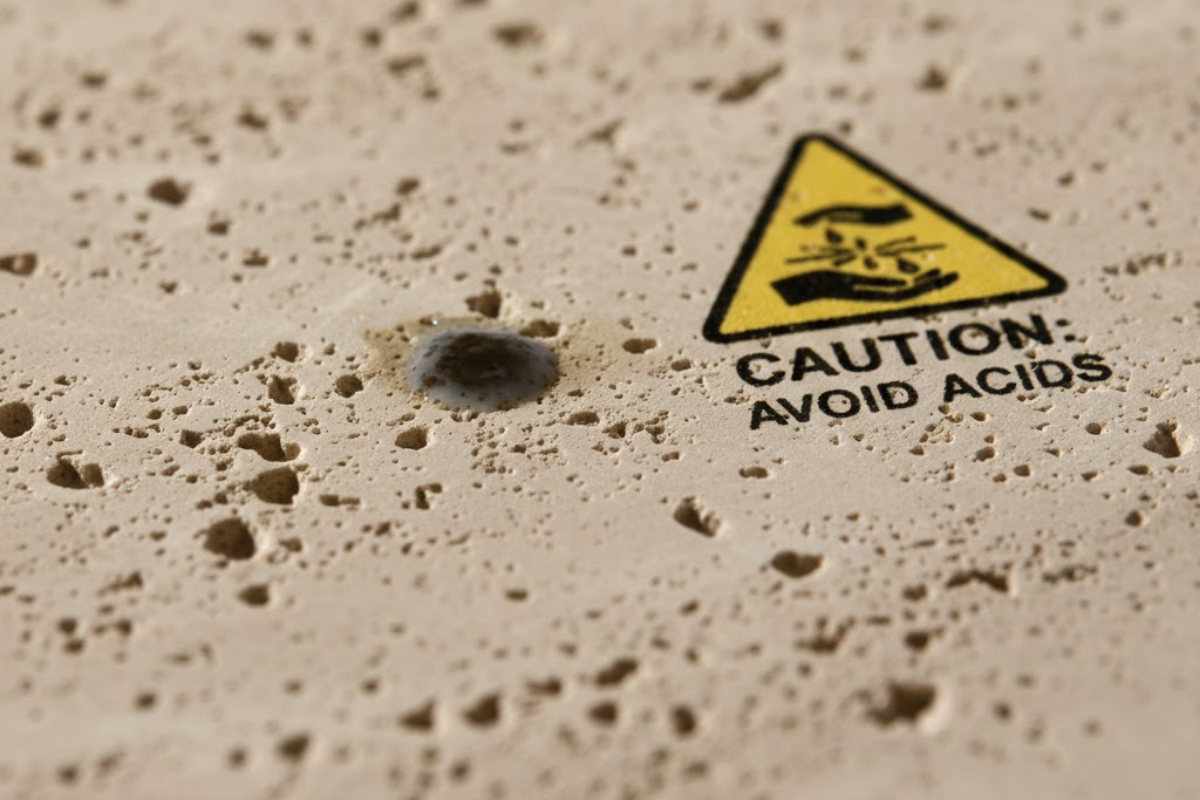
Because it is calcium-based, it is highly reactive to acids. This is the most critical thing to remember: acid is the enemy. Even mild acids like vinegar or lemon juice can eat away at the stone, causing “etching”—dull, rough spots that look like permanent water stains.
Limestone is also extremely porous. Imagine it like a hard sponge. If you spill red wine or coffee and leave it, that liquid seeps deep into the pores, creating a stain that sits inside the stone, not just on top. This is why proper cleaning and sealing are non-negotiable.
Tools and Materials You Will Need
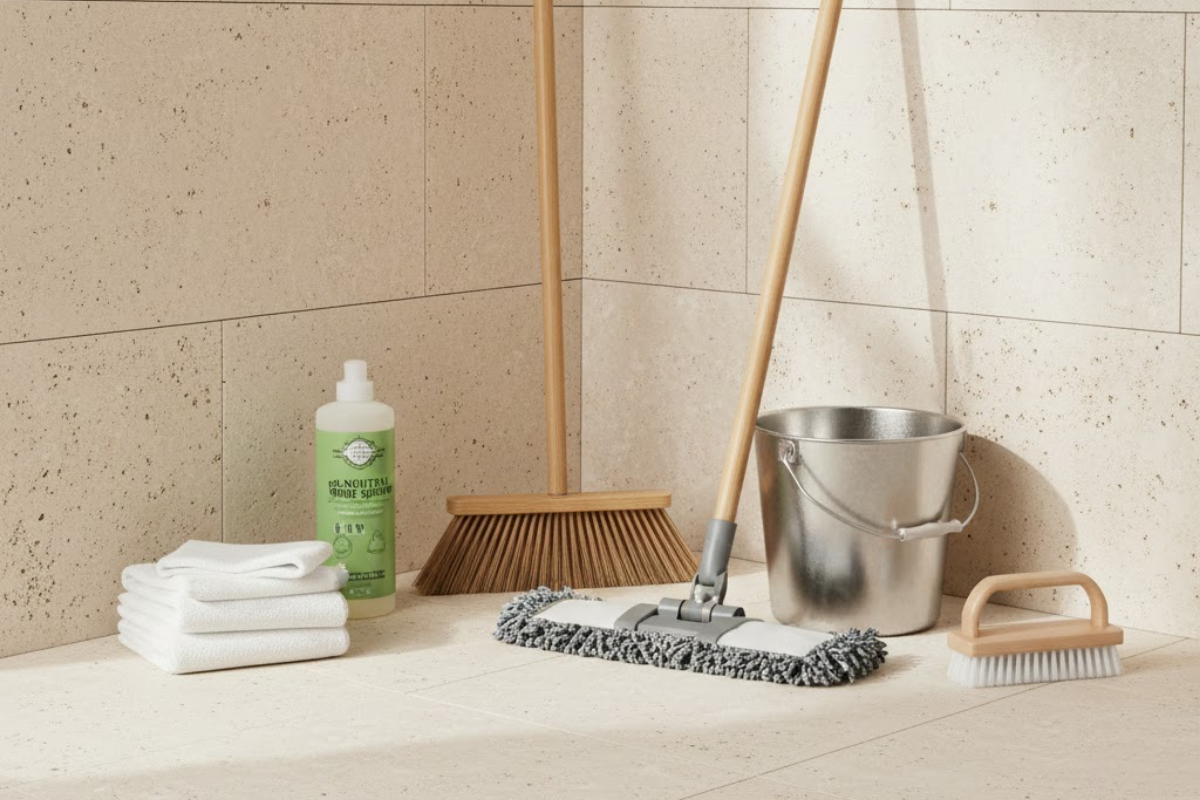
You don’t need a closet full of chemicals. In fact, fewer chemicals are usually better. Gather these supplies before you start:
- Soft-bristle broom or vacuum: If using a vacuum, ensure the beater bar is turned off to prevent scratching.
- Microfiber mop or soft cloth mop: Avoid stiff, abrasive scrubbers.
- PH-neutral stone cleaner: Look specifically for labels that say “safe for limestone” or “neutral pH.”
- Bucket: For mixing your cleaning solution.
- Clean, dry towels: For drying the floor immediately after washing.
- Optional: A soft nylon brush for grout lines.
Step-by-Step Guide: How to Clean Limestone Floors
Cleaning limestone isn’t difficult, but the technique matters. Follow these steps for a safe, effective clean.
1. Remove Loose Debris
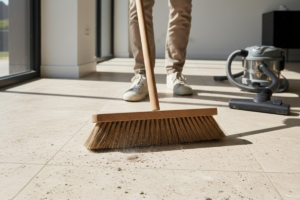
Dirt and sand act like sandpaper on natural stone. Every time you walk over gritty dust, you are creating microscopic scratches that dull the finish over time.
- Sweep the floor gently with a soft broom.
- Alternatively, vacuum the area thoroughly. Make absolutely sure you disable the rotating beater bar, or use a hard-floor attachment with soft bristles.
2. Prepare Your Solution
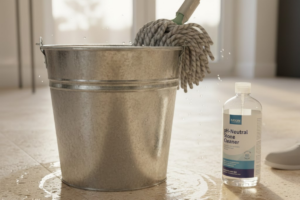
Fill your bucket with warm (not scalding) water. Add your specialized pH-neutral stone cleaner according to the manufacturer’s instructions.
- Pro Tip: Do not “eyeball” the measurements. Too much soap can leave a sticky film that attracts more dirt, making your floors look dirty faster.
3. Mop Gently
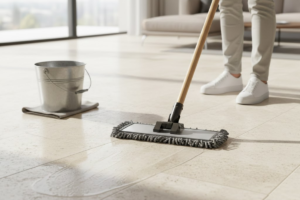
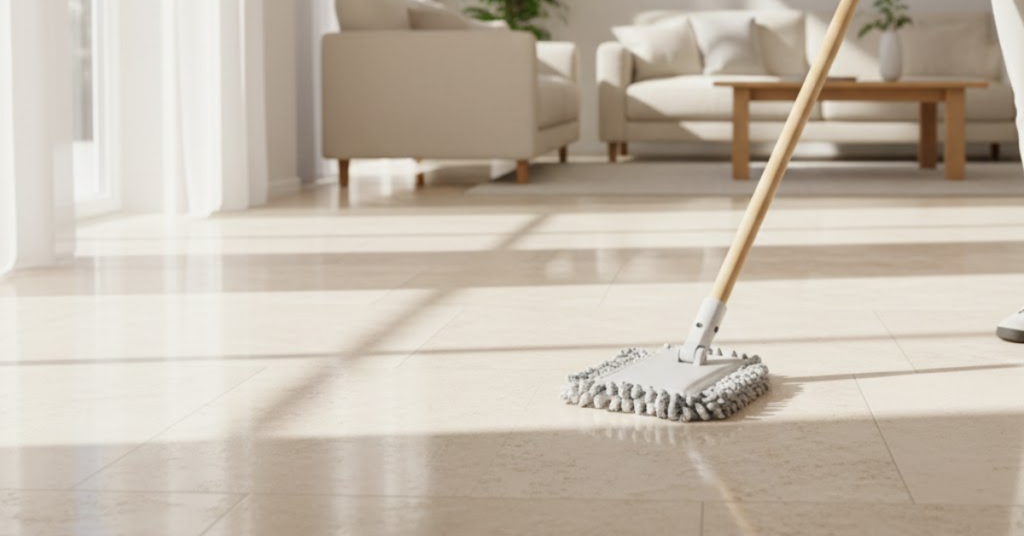
Dip your mop into the solution and wring it out until it is damp, not soaking wet. You want to clean the stone, not flood it.
- Work in small sections (about 4×4 feet).
- Use a figure-eight motion to trap dirt rather than pushing it around.
- Change the water frequently. If the water in your bucket looks gray, you are just spreading dirt back onto the floor.
4. Rinse (Crucial Step!)
Many people skip this, but you shouldn’t. Once you’ve mopped with the cleaning solution, dump the bucket and fill it with plain, fresh water.
- Go over the floor again with the damp mop to remove any remaining soap residue.
5. Dry Immediately
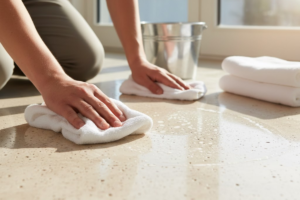
Limestone is porous, so you don’t want water sitting on it for long periods.
- Use soft, clean towels to hand-dry the floor.
- This prevents water spots and streaking, leaving you with that nice, clean finish.
Dealing with Tough Stains
Sometimes a simple mop job isn’t enough. If you have specific stains, here is how to tackle them without damaging the stone.
Oil-Based Stains (Grease, Cooking Oil, Makeup)
These darken the stone. You need to draw the oil out.
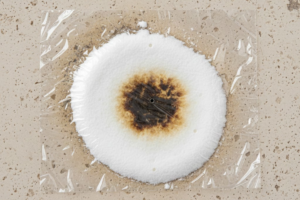
- The Fix: Use a poultice. You can buy a commercial stone poultice or make one with baking soda and water (mix into a thick paste). Apply it to the stain, cover with plastic wrap, poke a few holes for airflow, and leave it for 24 to 48 hours. As the paste dries, it pulls the oil out of the stone.
Organic Stains (Coffee, Tea, Fruit)
These usually leave a pinkish-brown mark.
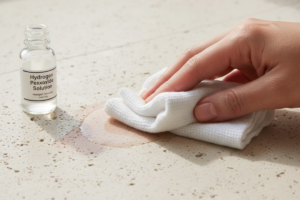
- The Fix: Clean the area with a 12% hydrogen peroxide solution (a few drops) mixed with a tiny bit of ammonia. Warning: Test this in an inconspicuous corner first to ensure it doesn’t lighten the stone too much.
The “Do Not Use” List
If you take nothing else away from this guide, memorize this list. Never use these products on limestone:
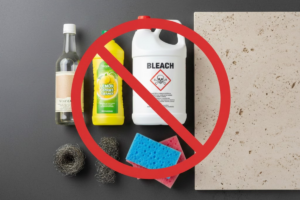
- Vinegar: It is highly acidic and will etch the surface instantly.
- Lemon or Citrus Cleaners: Same issue as vinegar—too acidic.
- Bleach: While it might disinfect, it can damage the sealant and dull the finish.
- Abrasive Scrubbers: Steel wool, scouring pads, or hard-bristled brushes will scratch the soft stone.
- Generic “All-Purpose” Cleaners: Unless it specifically says “safe for natural stone,” assume it isn’t.
The Importance of Sealing Limestone
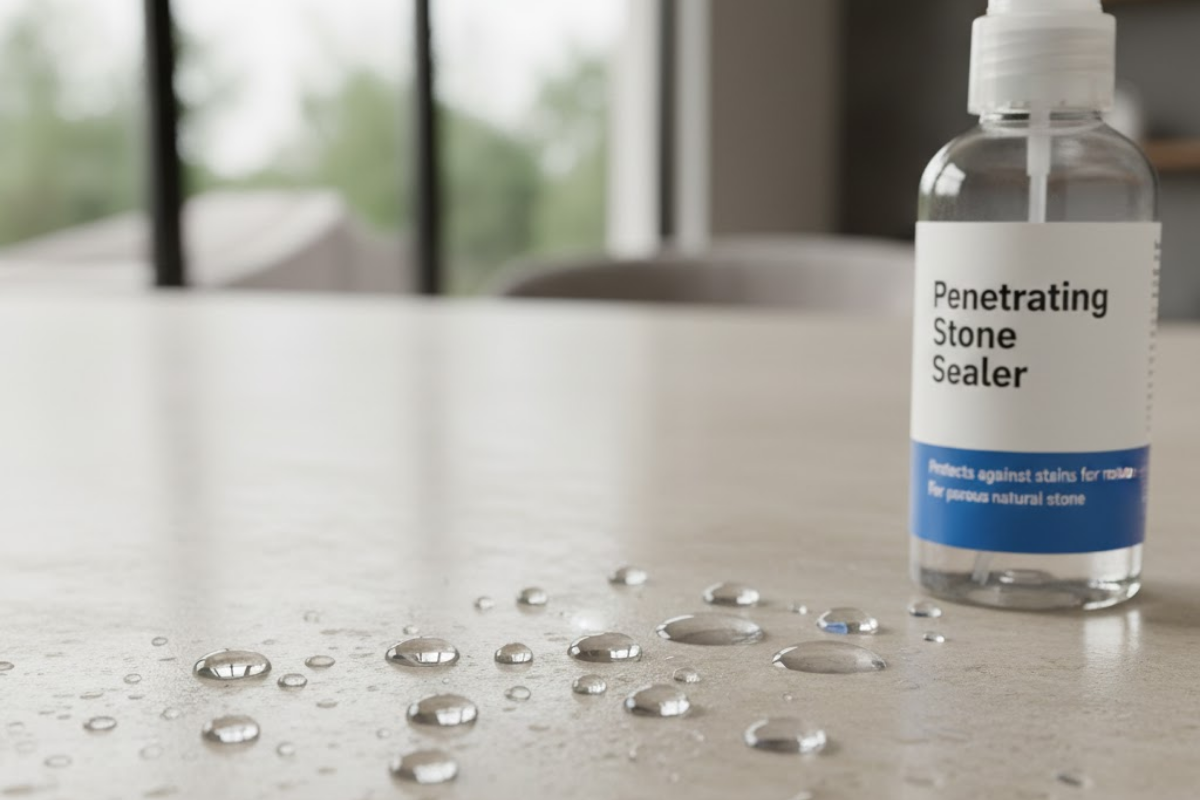
Because limestone is so porous, a sealer is your primary defense line. A penetrating (impregnating) sealer soaks into the pores and repels water and oils, giving you time to wipe up spills before they become stains.
How often should you seal?
Generally, you should reseal limestone floors every 1 to 2 years. However, high-traffic areas like kitchens or entryways might need it annually.
The Water Test:
Not sure if your seal is still working? Pour a small amount of water on the floor.
- If it beads up: Your seal is good.
- If it soaks in and darkens the stone immediately: It is time to reseal.
Eco-Friendly Cleaning Options
If you prefer green cleaning but can’t use vinegar, what are your options?
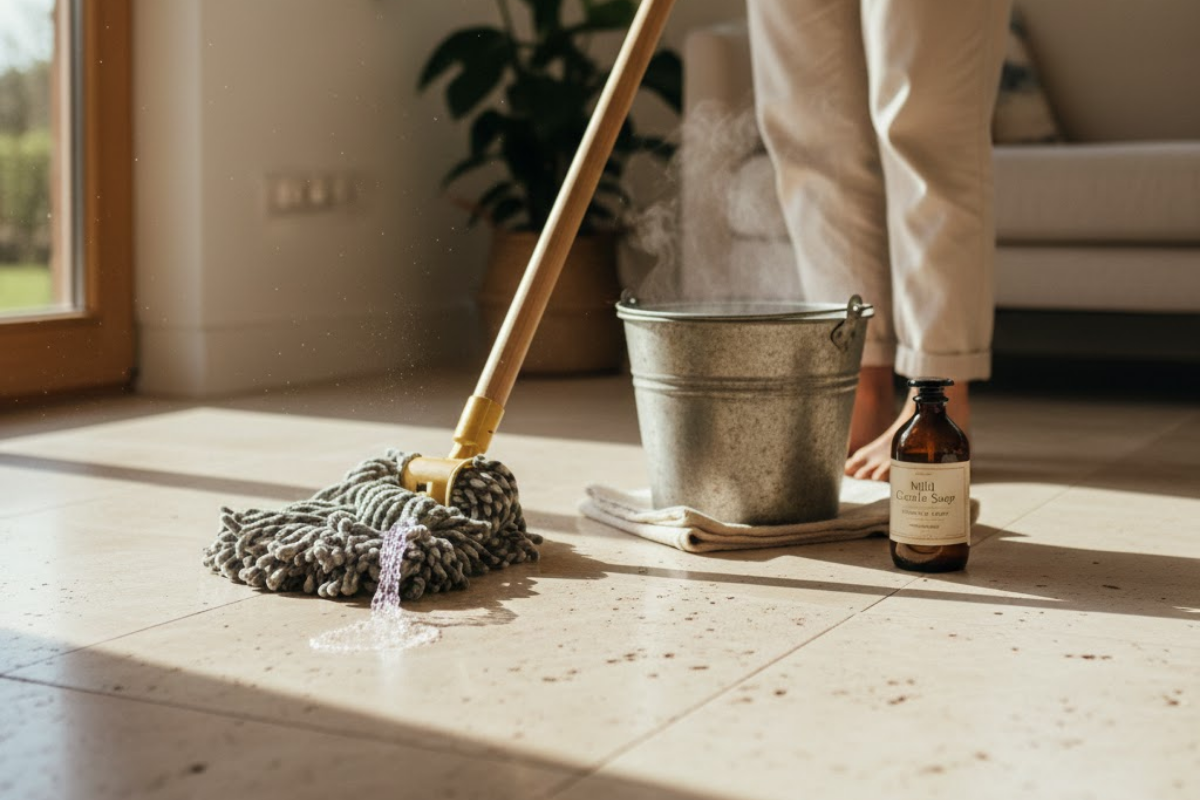
- Hot Water & Microfiber: For daily maintenance, hot water and a high-quality microfiber mop are surprisingly effective. The microfiber lifts bacteria and dirt mechanically without chemicals.
- Castile Soap: A very small amount of mild, unscented Castile soap (like Dr. Bronner’s) mixed with water can work well. Just ensure you rinse thoroughly, as soap can be slippery and leave a residue.
- Steam Mops: Use with caution. While steam is eco-friendly, the intense heat and moisture can force dirt deeper into the pores or damage the sealant over time. If you use one, keep it moving constantly and use a low setting.
Frequently Asked Questions (FAQ)
Can I use vinegar to clean limestone floors?
No. Never use vinegar on limestone. Vinegar is acidic and will cause etching, which physically eats away the calcium in the stone, leaving dull, rough patches that often require professional polishing to fix.
How often should limestone floors be cleaned?
You should sweep or vacuum (without a beater bar) daily or every other day to prevent grit from scratching the surface. Wet mopping can be done weekly or bi-weekly depending on foot traffic.
Can I use a steam mop on limestone?
It is generally not recommended for regular use. The heat can break down sealers, and the moisture can be driven deep into the stone. If you must, use it sparingly on a low setting and dry the floor afterward.
How do I fix dull spots on my limestone?
If the dull spots are from etching (acid damage), you may need a specialized marble/limestone polishing powder. For deep scratches or widespread dullness, it is best to hire a professional stone restoration specialist.
Is baking soda safe for limestone?
Yes, baking soda is alkaline (not acidic), so it is generally safe to use as a poultice for stains. However, do not scrub vigorously with it, as it is slightly abrasive.
Conclusion
Limestone floors are an investment in the beauty of your home. While they might seem high-maintenance compared to vinyl or ceramic, the care routine is actually quite simple once you know the rules. The key is prevention: keep dirt off the floor, wipe up spills immediately, and avoid harsh acids.
By using a pH-neutral cleaner and keeping your sealant fresh, your limestone floors will age gracefully, developing a rich patina and character that will last for generations. Treat them gently, and they will remain the stunning foundation of your home’s design.