Travertine floors bring a touch of natural, timeless elegance to any home. With their unique porous texture and warm, earthy tones, they create a beautiful foundation for your living space. But this unique beauty also means they require special care. If you’re wondering how to clean travertine floor without causing damage, you’ve come to the right place. This guide will walk you through everything you need to know to keep your floors looking spectacular for years to come.
We will cover the essential steps for cleaning, what products to use (and which to avoid), and how to maintain that beautiful finish.
What is Travertine and Why Does It Need Special Care?
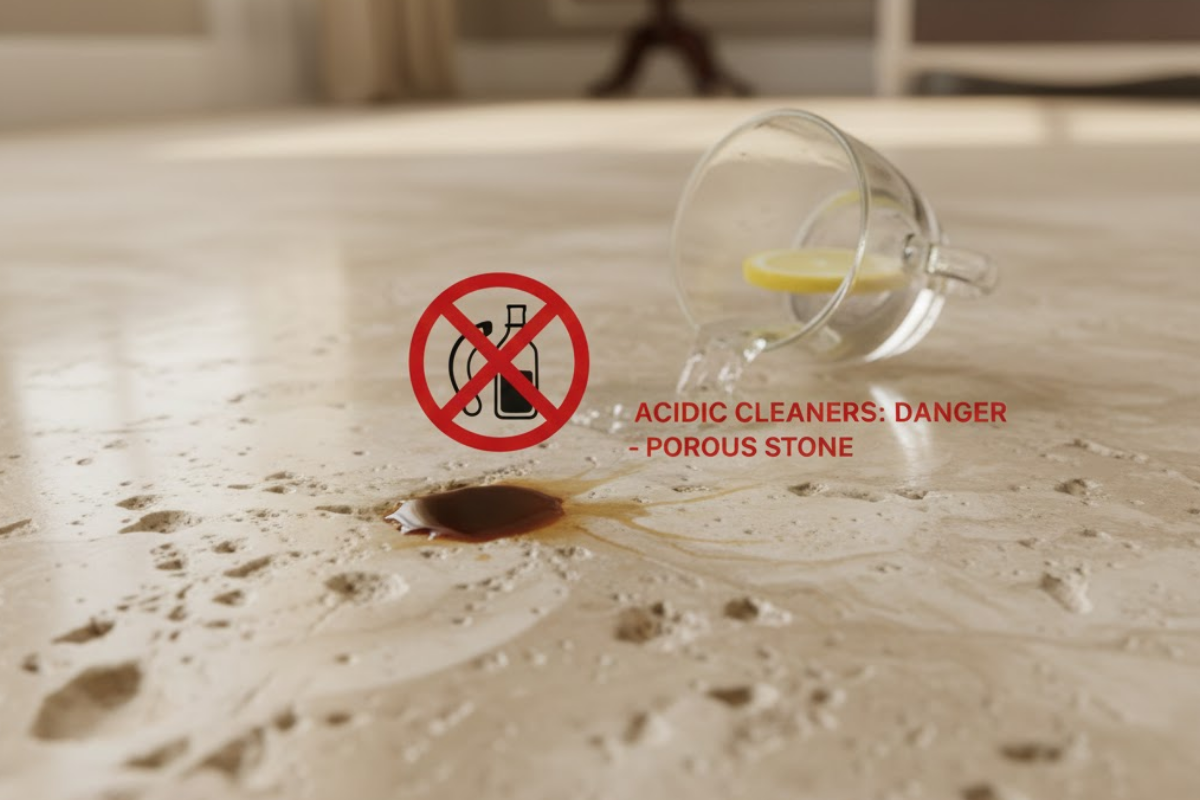
Before we dive into cleaning methods, it helps to understand what travertine actually is. Travertine is a type of limestone that forms around mineral spring deposits. This natural process gives it a fibrous, porous appearance with distinctive pits and holes. These characteristics are part of its charm, but they also make it more vulnerable than other types of flooring like ceramic or porcelain.
Because it’s a soft, porous stone, travertine is sensitive to acidic substances and harsh chemicals. Spills from things like wine, coffee, or even acidic cleaning products can etch the surface, leaving dull spots or stains. Abrasive cleaners can scratch it, permanently damaging the finish. That’s why using the right cleaning techniques and materials is crucial.
Essential Tools and Materials for Cleaning
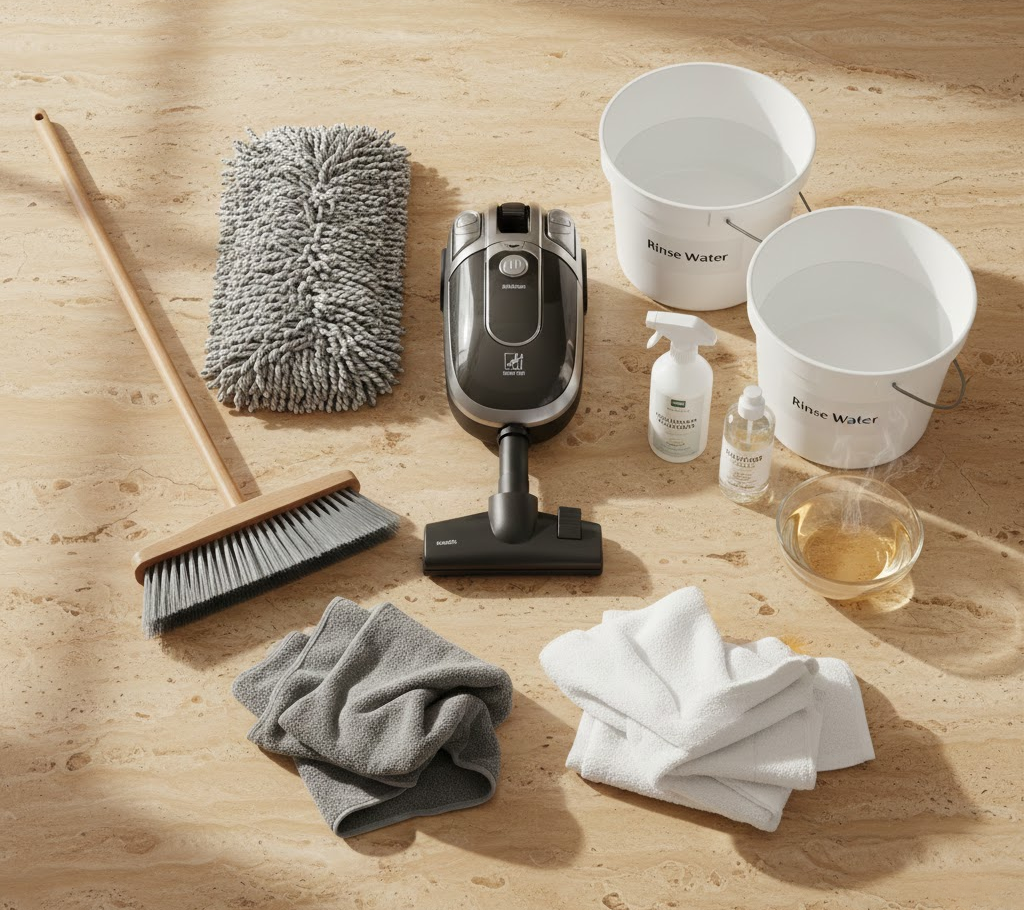
Gathering the right supplies before you start will make the process much smoother and safer for your floor. You don’t need a lot of complicated equipment, just the right kind.
Here’s what you’ll need:
- Soft Bristle Broom or Dust Mop: For daily sweeping to remove dirt and grit.
- Vacuum Cleaner: Use one with a soft brush attachment, and never use a beater bar, which can scratch the stone.
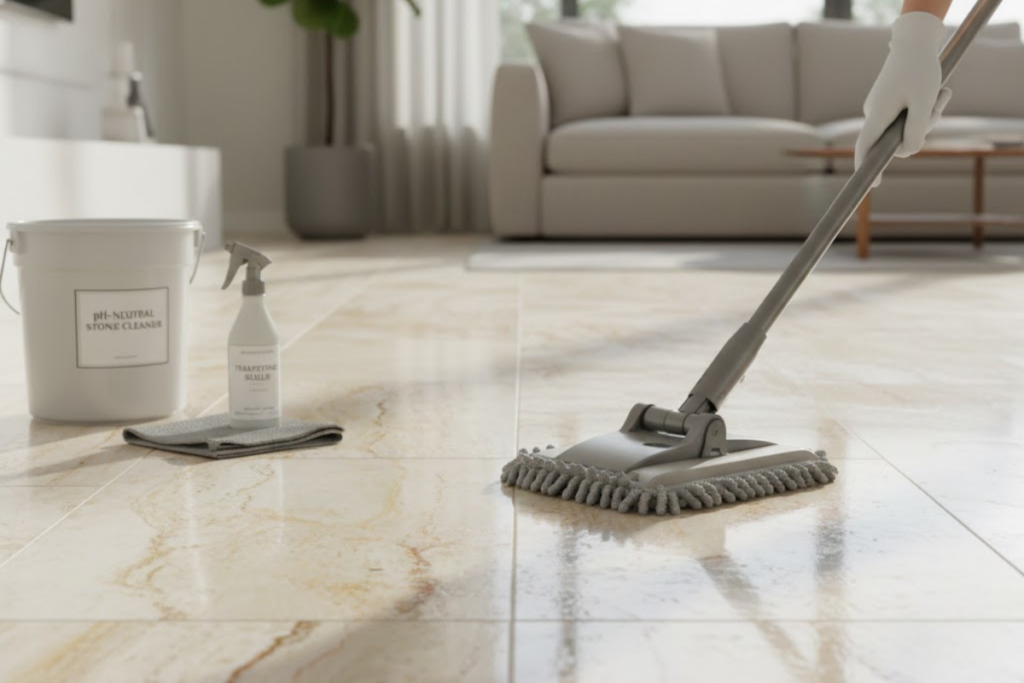
- pH-Neutral Stone Cleaner: This is the most important item. Look for a cleaner specifically formulated for natural stone like travertine or marble.
- Microfiber Mop or Soft Cloths: Microfiber is excellent for trapping dirt without being abrasive.
- Two Buckets: One for your cleaning solution and one for clean rinse water.
- Warm Water: Avoid hot water, as it can cause streaking.
- Soft Towels: For drying the floor completely after washing.
Step-by-Step Guide: How to Clean Your Travertine Floor
Cleaning your travertine floor is a straightforward process when you follow these steps. This method is safe for routine cleaning and will help preserve your floor’s integrity.
Step 1: Remove Loose Dirt and Debris
First, clear the floor of any loose dirt, dust, and grit. Use a soft-bristle broom or a dust mop. You can also use a vacuum cleaner, but only with the hard floor setting and a soft brush attachment. This step is vital because tiny particles of sand and grit can act like sandpaper under a mop, causing fine scratches.
Step 2: Prepare Your Cleaning Solution
Fill one bucket with warm water and your pH-neutral stone cleaner. Be sure to follow the manufacturer’s instructions for the correct dilution ratio. Using too much cleaner can leave a soapy film on your floors. Fill the second bucket with clean, plain warm water for rinsing.
Step 3: Mop the Floor in Sections
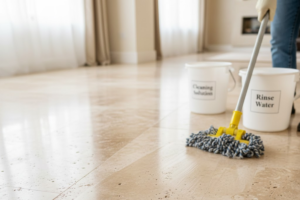
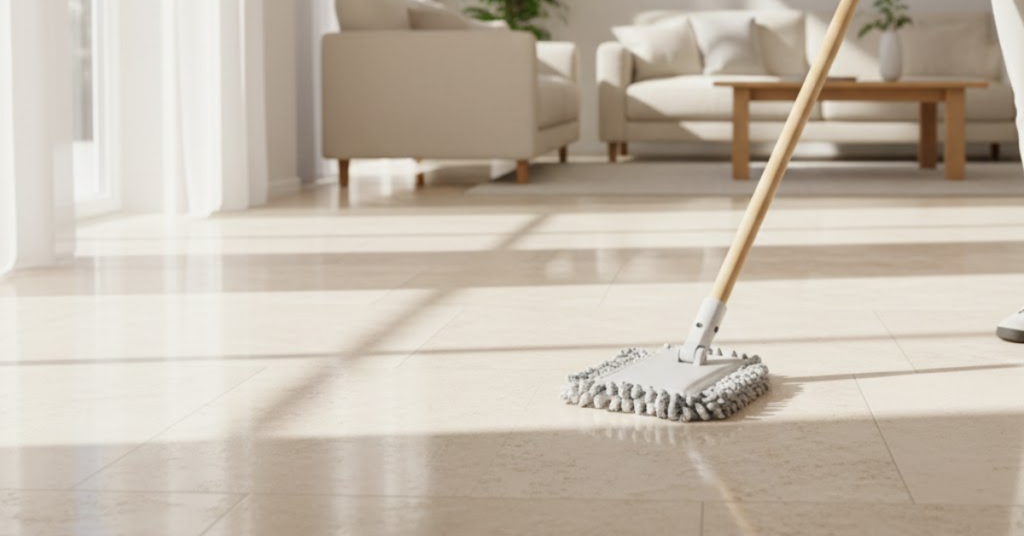
Dip your microfiber mop into the cleaning solution and wring it out until it is damp, not soaking wet. Too much water can seep into the travertine’s pores and grout lines, potentially leading to discoloration over time.
Mop the floor in small, manageable sections. This allows you to rinse and dry each area before the cleaning solution dries on the surface, which could leave streaks.
Step 4: Rinse Thoroughly
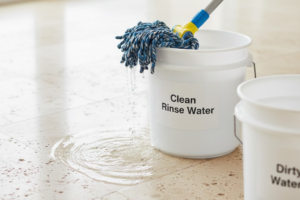
After mopping a section with the cleaning solution, immediately go over it again with your mop rinsed in the bucket of clean water. Wring the mop out well before rinsing. This step removes any lingering cleaner residue, which can attract dirt and dull the floor’s finish. Change your rinse water if it becomes dirty.
Step 5: Dry the Floor Completely
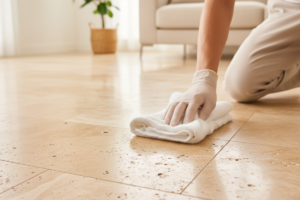
Never let your travertine floor air-dry. Water can leave spots and streaks, and it can also settle into the stone’s pores. Use a clean, soft towel to buff the floor dry, section by section. Drying the floor enhances its natural shine and prevents water marks.
Tips for Maintaining Travertine Floors
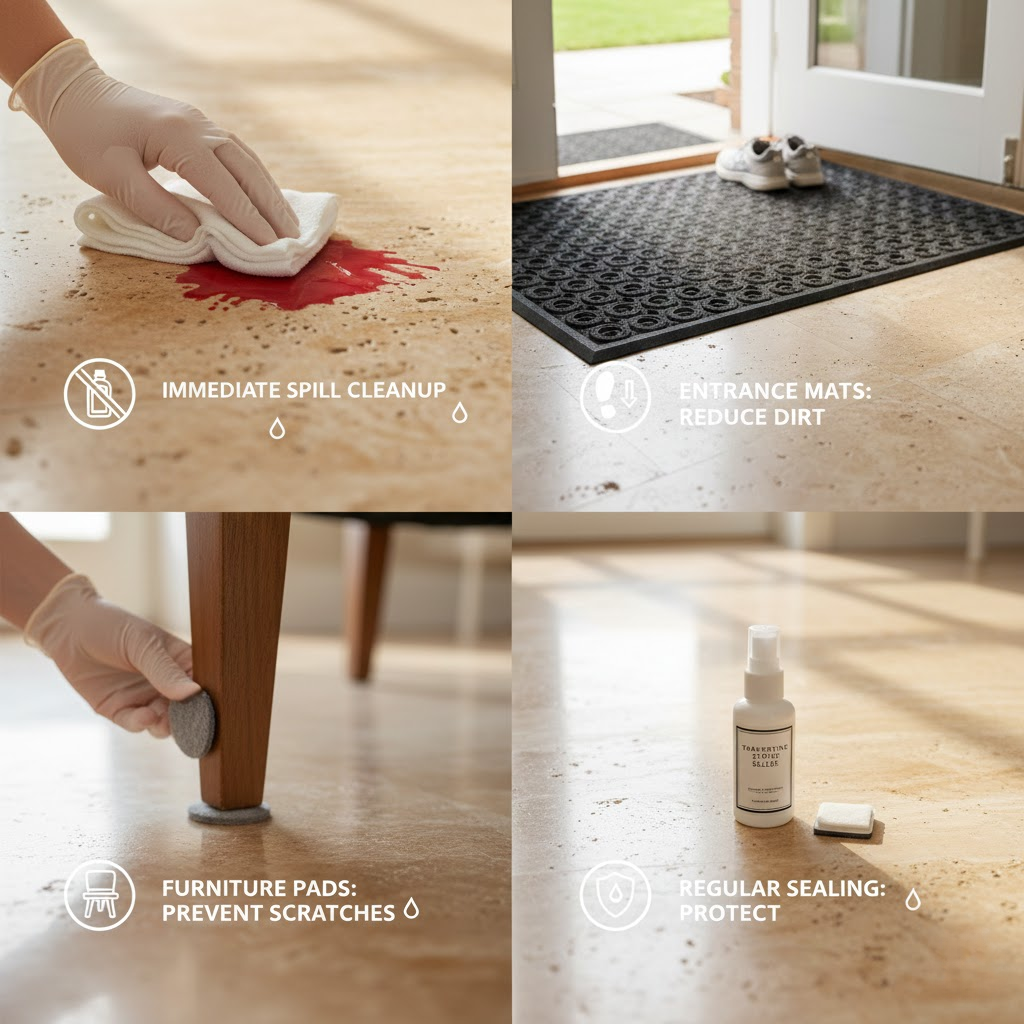
Consistent maintenance is the key to keeping your travertine floors looking their best. A little bit of regular care goes a long way.
- Clean Up Spills Immediately: Travertine is porous, so liquids can seep in and cause stains. Blot spills with a soft cloth as soon as they happen. Don’t wipe, as this can spread the spill.
- Use Doormats and Rugs: Place high-quality doormats at all entrances to trap dirt, sand, and grit from shoes. Consider using area rugs in high-traffic areas to protect the stone from wear.
- Apply Furniture Pads: Put felt pads under the legs of all furniture, including tables, chairs, and sofas. This prevents scratches when furniture is moved.
- Seal Your Floors: Travertine floors should be sealed periodically to protect them from stains and etching. A sealer acts as a protective barrier. How often you need to reseal depends on the type of sealer and the amount of traffic your floor gets, but a good rule of thumb is every 1-3 years.
Common Mistakes to Avoid with Travertine Care
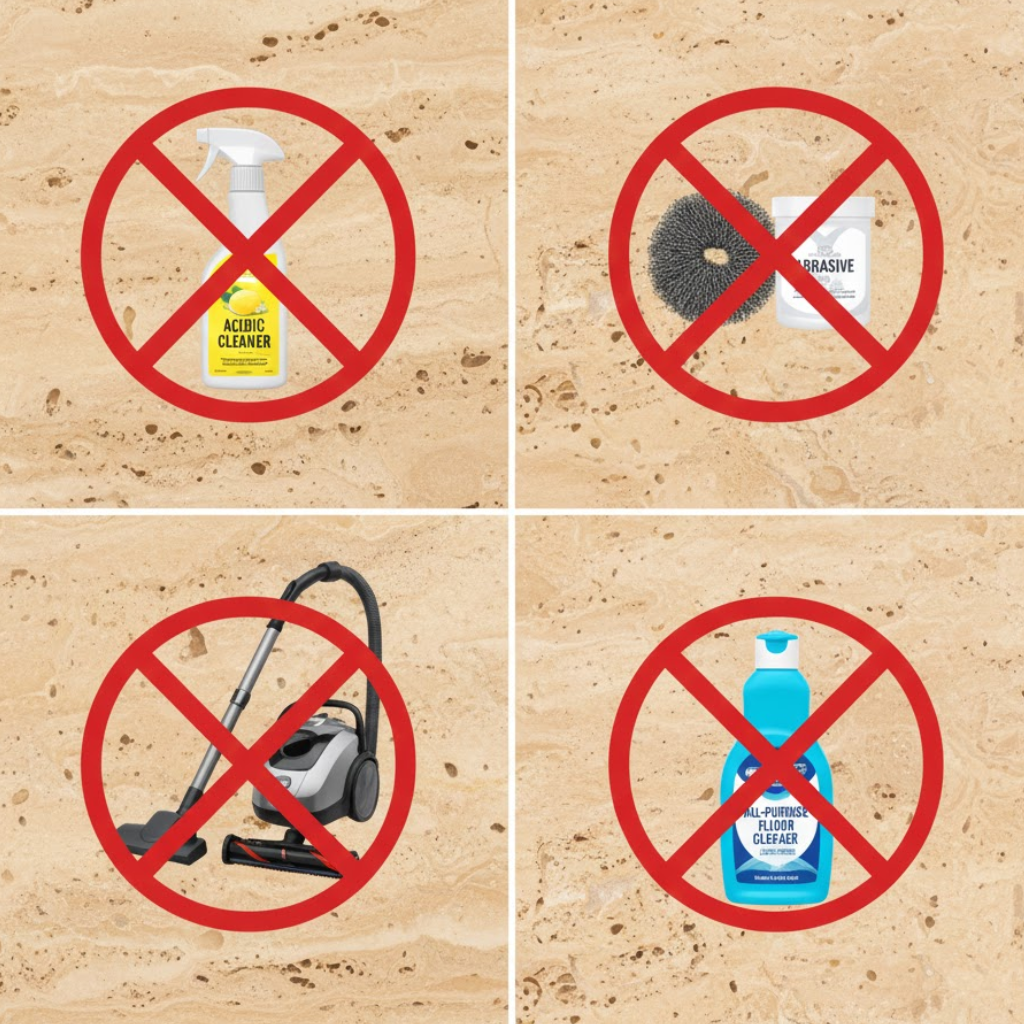
Knowing what not to do is just as important as knowing what to do. Avoid these common mistakes to prevent costly damage.
- Never Use Acidic Cleaners: Avoid products containing lemon, vinegar, or other acids. This includes many common all-purpose household cleaners. They will etch the stone and ruin the finish.
- Steer Clear of Abrasive Cleaners: Powdered cleansers, scouring pads, and stiff-bristled brushes will scratch the soft surface of travertine.
- Don’t Use a Beater Bar Vacuum: The spinning brush of a beater bar is too aggressive and will scratch your floor. Always use a soft brush attachment.
- Avoid Generic Floor Cleaners: Products not specifically designed for natural stone can be too harsh or leave behind a residue that dulls the surface. Always check for a “pH-neutral” or “safe for natural stone” label.
Frequently Asked Questions (FAQ)
Here are answers to some common questions about cleaning and caring for travertine floors.
Q: Can I use a steam mop on my travertine floor?
A: It is generally not recommended. The high heat and pressure from a steam mop can damage the sealant and force water deep into the stone’s pores, which can cause problems over time. Stick to a damp microfiber mop.
Q: How do I remove a stain from travertine?
A: For organic stains (like coffee or food), you can use a poultice made from a pH-neutral cleaner and a dry, absorbent material like baking soda or diatomaceous earth. Apply the paste to the stain, cover it with plastic wrap, and let it sit for 24-48 hours. The poultice will draw the stain out of the stone. Always test a poultice in an inconspicuous area first.
Q: What’s the difference between filled and unfilled travertine?
A: Unfilled travertine has its natural pits and holes exposed, giving it a very rustic look. Filled travertine has these holes filled with a resin or grout mixture and then honed or polished, creating a smooth surface. The cleaning process is the same for both, but filled travertine is slightly more resistant to spills since the pores are already filled.
Caring for travertine floors isn’t difficult it just requires the right approach. By using gentle, pH-neutral products and a consistent maintenance routine, you can easily protect your investment and enjoy the natural beauty of your travertine for many years.