Discovering mold on your concrete floor can be unsettling. Whether it’s in your basement, garage, or patio, that fuzzy black or green growth is not only unsightly but can also pose health risks. The good news is that with the right approach, you can effectively clean mold from concrete and take steps to prevent it from returning.
This guide will walk you through everything you need to know. We’ll cover why mold grows on concrete, what you need to get the job done, and provide step-by-step instructions for a clean, mold-free floor.
Why Does Mold Grow on Concrete?
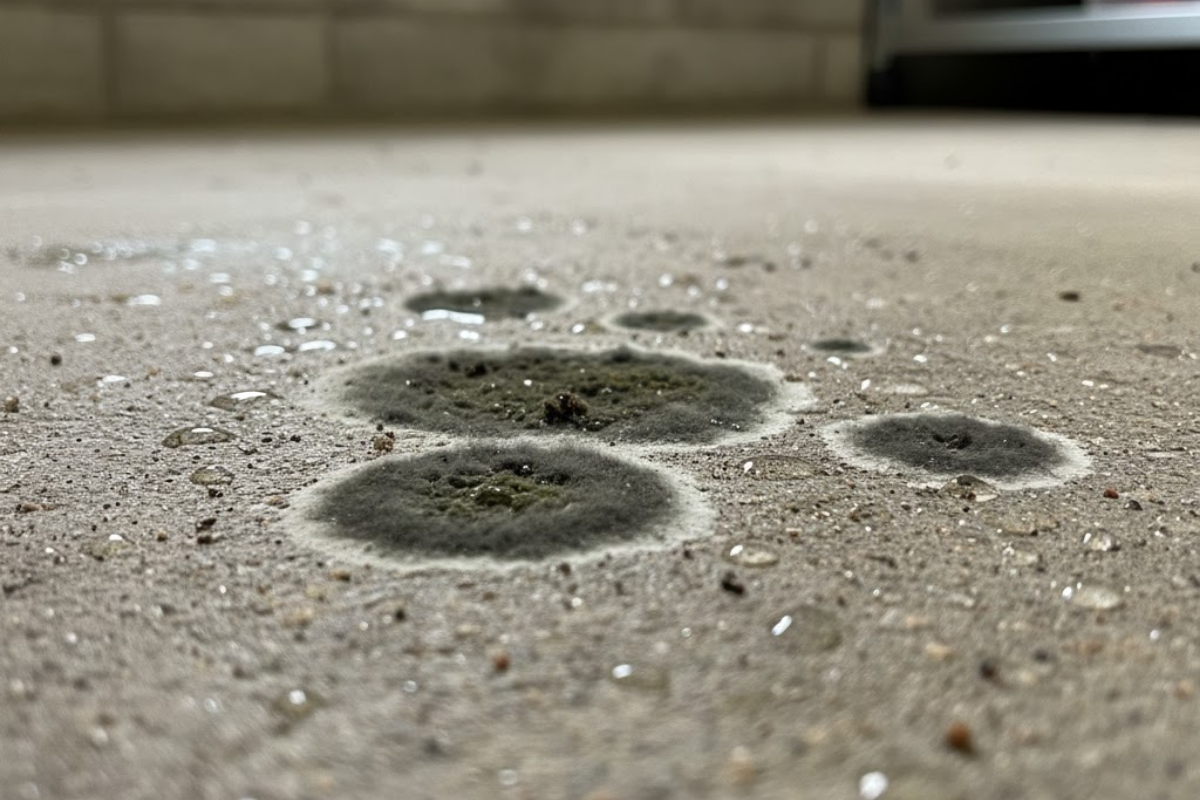
It might seem strange for mold to grow on a hard surface like concrete, but it’s more common than you think. Concrete is porous, meaning it has tiny holes that can trap moisture. Mold needs three things to thrive: moisture, a food source (like dust, dirt, or organic debris), and a suitable temperature.
When water from leaks, high humidity, or condensation settles on a concrete surface, it creates the perfect breeding ground. The dirt and dust that naturally accumulate on the floor provide the food, and before you know it, you have a mold problem.
Safety First: Essential Precautions
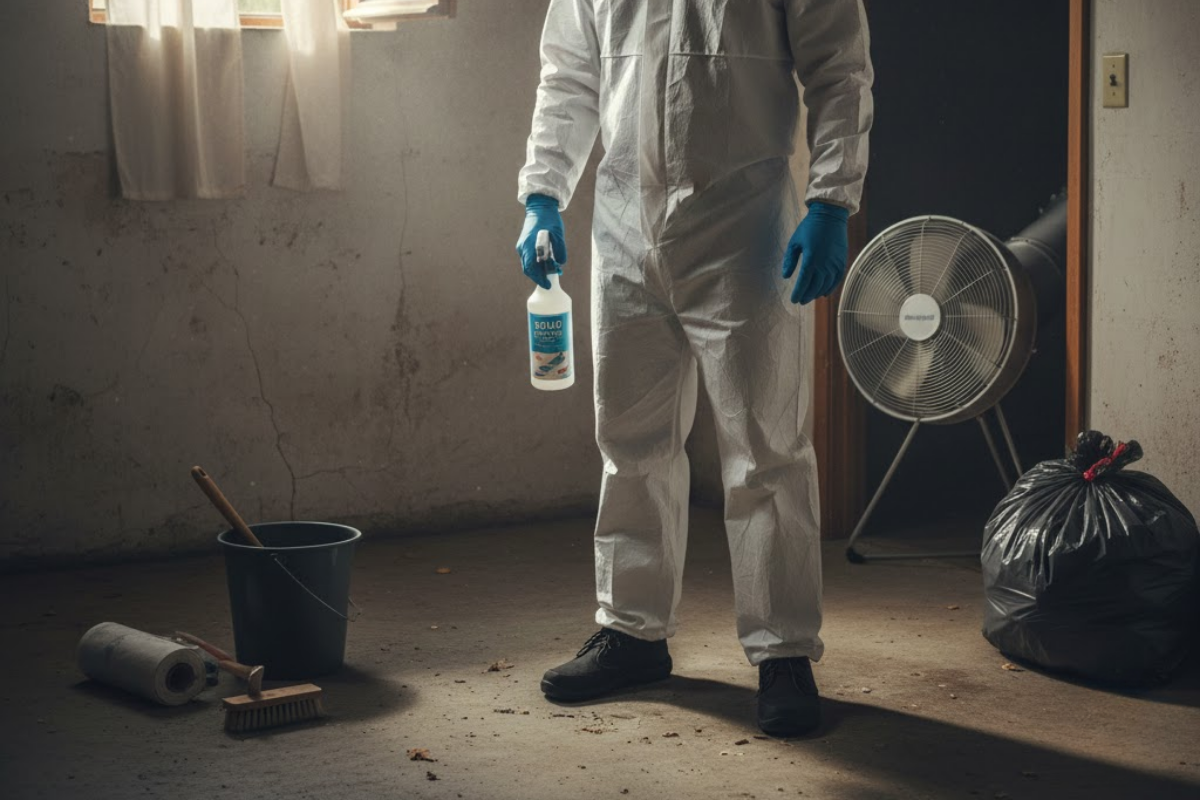
Before you start scrubbing, it’s crucial to protect yourself. Mold spores can become airborne during the cleaning process and can cause respiratory issues and allergic reactions.
Always wear the following personal protective equipment (PPE):
- N-95 Respirator or Mask: Protects you from inhaling mold spores.
- Safety Goggles: Shields your eyes from spores and cleaning solutions.
- Gloves: Use heavy-duty rubber or neoprene gloves to protect your hands.
- Long-Sleeved Shirt and Pants: Cover your skin to prevent contact with mold.
Also, ensure the area is well-ventilated. Open any windows and doors to allow fresh air to circulate. If you’re working in a basement or a space without windows, use fans to direct air outside.
Tools and Materials You’ll Need
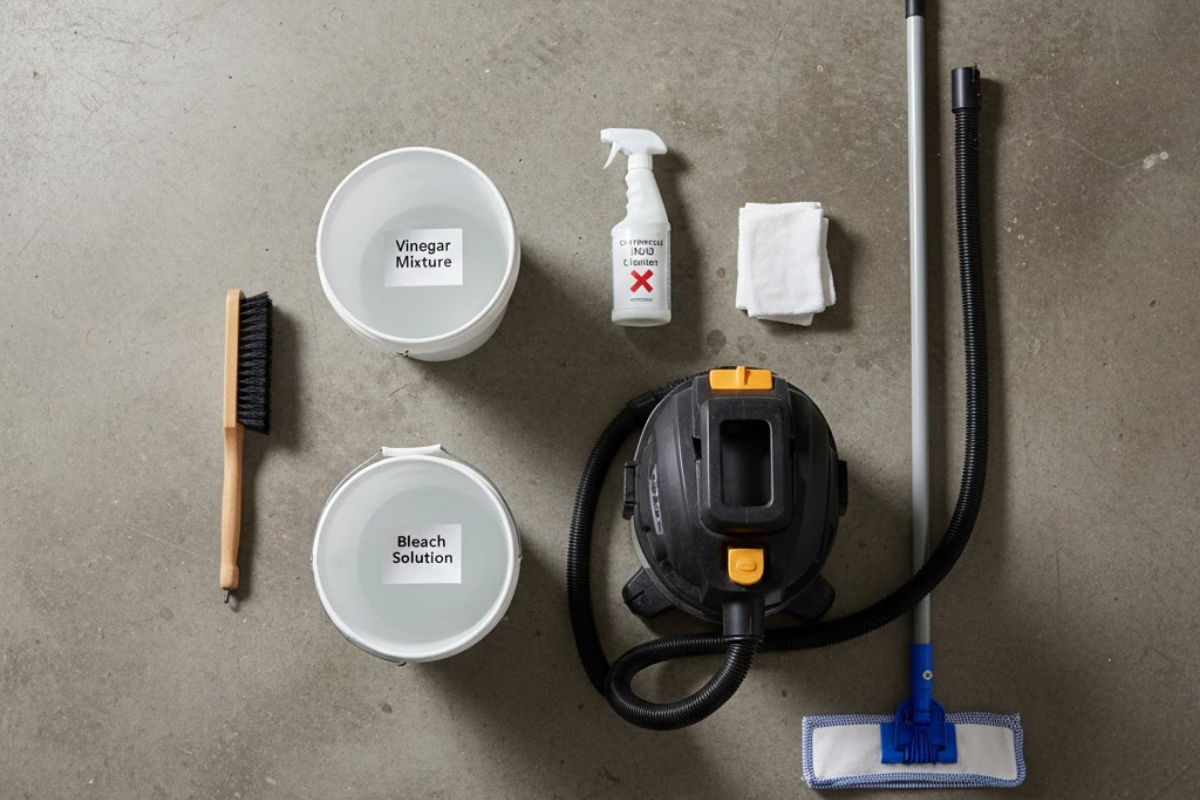
Gathering your supplies beforehand will make the cleaning process much smoother. Here’s a list of what you’ll need to clean mold from your concrete floor:
- Stiff-bristled brush or scrub brush
- Spray bottle
- Bucket
- Wet/dry vacuum (optional but helpful)
- Clean cloths or rags
- Mop
Cleaning Solutions (Choose one):
- Vinegar Solution: Mix equal parts white distilled vinegar and water.
- Bleach Solution: Mix one cup of household bleach with one gallon of water.
- Commercial Mold Cleaner: Products specifically designed for killing mold on concrete.
A Note on Cleaning Solutions: Never mix bleach with ammonia or other household cleaners, as this can create toxic gas. While bleach is effective at killing surface mold, vinegar can penetrate the porous surface of concrete to kill mold at its roots.
Step-by-Step Guide to Cleaning Mold from Concrete
Follow these steps for a thorough cleaning. If you’re dealing with a very large area of mold (more than 10 square feet), consider consulting a professional mold remediation specialist.
Step 1: Prepare the Area
First, clear the affected area of any furniture, boxes, or other items. If you’re cleaning indoors, seal off the room from the rest of the house by closing doors or hanging plastic sheeting over doorways. This prevents mold spores from spreading.
Step 2: Apply Your Cleaning Solution
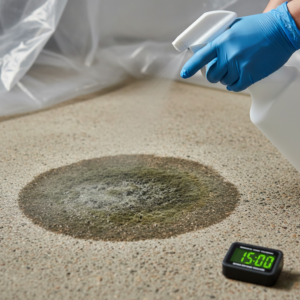
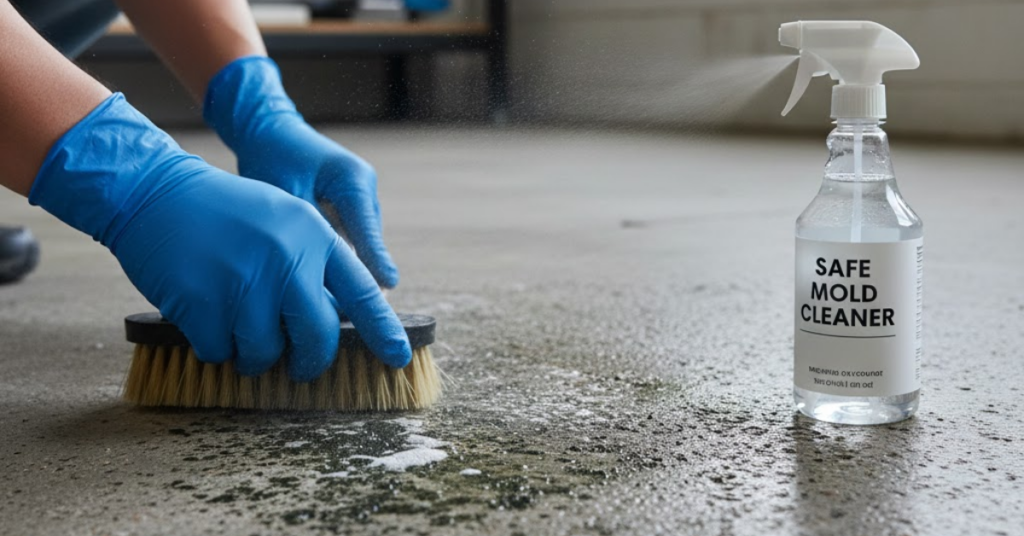
Fill your spray bottle with your chosen cleaning solution (vinegar, bleach, or a commercial cleaner). Generously spray the solution directly onto the moldy sections of the concrete. Be sure to saturate the area completely and extend the spray about a foot beyond the visible mold growth to kill any unseen spores.
Let the solution sit for at least 15-30 minutes. If you are using a bleach solution, let it sit for about 15 minutes. For a vinegar solution, you can let it sit for up to an hour. This gives it time to work its way into the concrete and kill the mold.
Step 3: Scrub the Surface
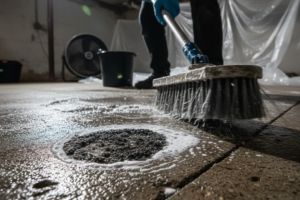
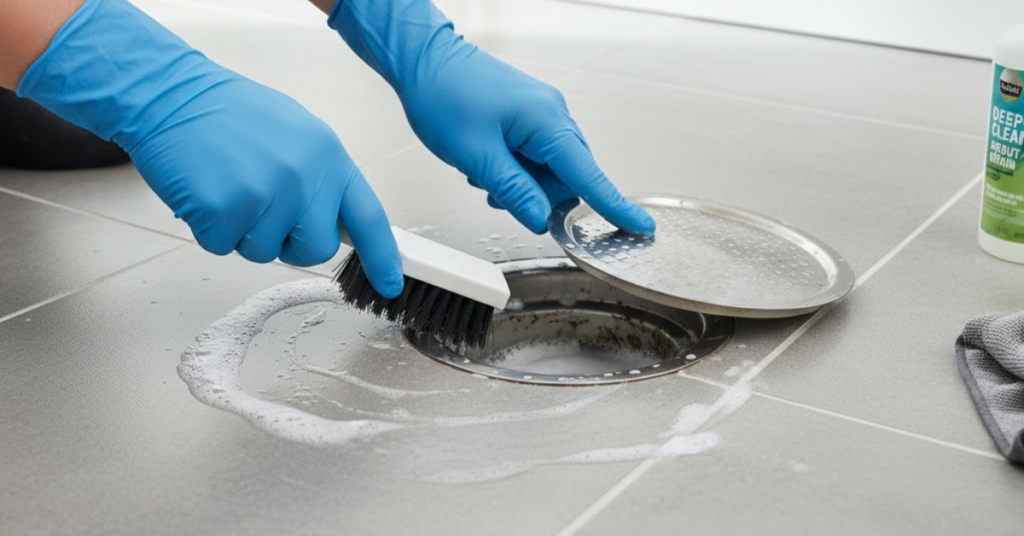
Using a stiff-bristled brush, scrub the affected areas vigorously. The goal is to lift the mold from the surface and out of the concrete’s pores. You may need to apply more cleaning solution as you scrub to keep the area wet. Pay extra attention to any cracks or joints where mold might be hiding.
Step 4: Rinse the Floor
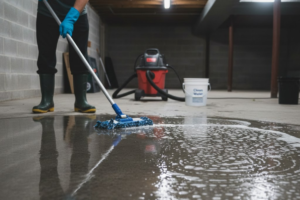
Once you’ve finished scrubbing, it’s time to rinse the floor. If you’re working outside on a patio, you can simply use a garden hose to wash away the residue.
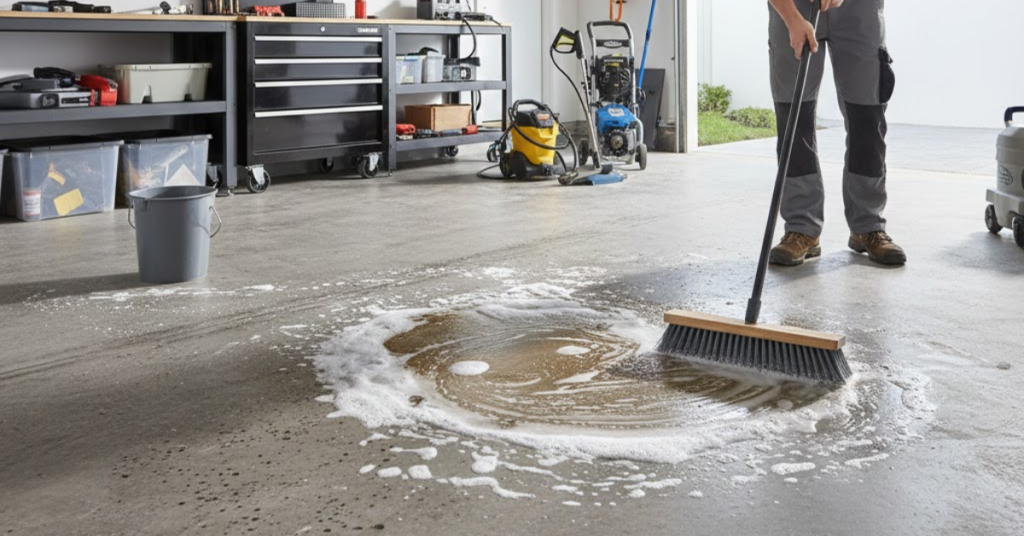
For indoor spaces like a basement or garage, pour a small amount of clean water over the area and use a squeegee to direct the water toward a drain or use a wet/dry vacuum to suck it up. You can also use a mop and a bucket of clean water, changing the water frequently.
Step 5: Dry the Concrete Completely
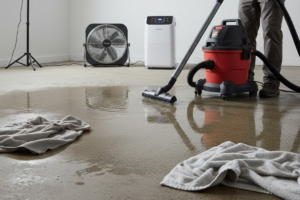
This is the most critical step in preventing the mold from returning. Mold loves moisture, so you need to get the concrete as dry as possible. Use a wet/dry vacuum to remove any remaining water. You can also use old towels or rags to soak up excess moisture.
Afterward, use fans and a dehumidifier to speed up the drying process. Aim to get the humidity level in the room below 50%. It may take 24 to 48 hours for the concrete to dry completely.
How to Prevent Mold from Coming Back
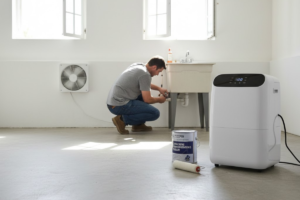
Cleaning the mold is only half the battle. To keep your concrete floors mold-free for good, you need to address the underlying moisture issue.
- Control Humidity: Use a dehumidifier in basements, crawl spaces, and other damp areas to keep humidity levels between 30% and 50%.
- Fix Leaks: Promptly repair any plumbing leaks, foundation cracks, or leaky windows that allow water to seep in.
- Improve Ventilation: Ensure good airflow in damp areas. Use exhaust fans in bathrooms and kitchens and consider adding ventilation to your basement.
- Waterproof Your Concrete: Apply a concrete waterproofing sealer to your floors. This creates a barrier that prevents water from soaking into the porous surface.
- Keep it Clean: Regularly sweep and clean your concrete floors to remove dirt and dust that can serve as a food source for mold.
Frequently Asked Questions
Q: Can I just paint over the mold on my concrete floor?
A: No, you should never paint over mold. Painting will only cover the problem temporarily. The mold will continue to grow underneath the paint, eventually causing it to peel and bubble. Always clean and kill the mold completely before considering painting or sealing the concrete.
Q: Is black mold on concrete dangerous?
A: All molds have the potential to cause health problems, especially for people with allergies, asthma, or compromised immune systems. While “toxic black mold” (Stachybotrys chartarum) gets a lot of attention, any color of mold should be treated with caution and removed promptly.
Q: When should I call a professional?
A: You should call a professional mold remediation company if the mold covers an area larger than 10 square feet, if you suspect the mold is in your HVAC system, or if the mold problem returns after you’ve cleaned it. Professionals have the specialized equipment and training to handle large-scale mold issues safely.