Brick floors add a rustic, charming, and incredibly durable touch to any home. Whether you have them in your kitchen, entryway, or patio, they bring a sense of history and warmth that other materials just can’t match. But let’s be honest—that textured surface can be a magnet for dirt, and figuring out the best way to clean it without damaging the mortar or the brick itself can be tricky.
If you are staring at a dusty or stained brick floor and wondering where to start, you are in the right place. This guide will walk you through exactly how to clean a brick floor, from simple daily maintenance to deep cleaning tough stains, all while keeping that beautiful finish intact.
Why Brick Floors Need Special Care
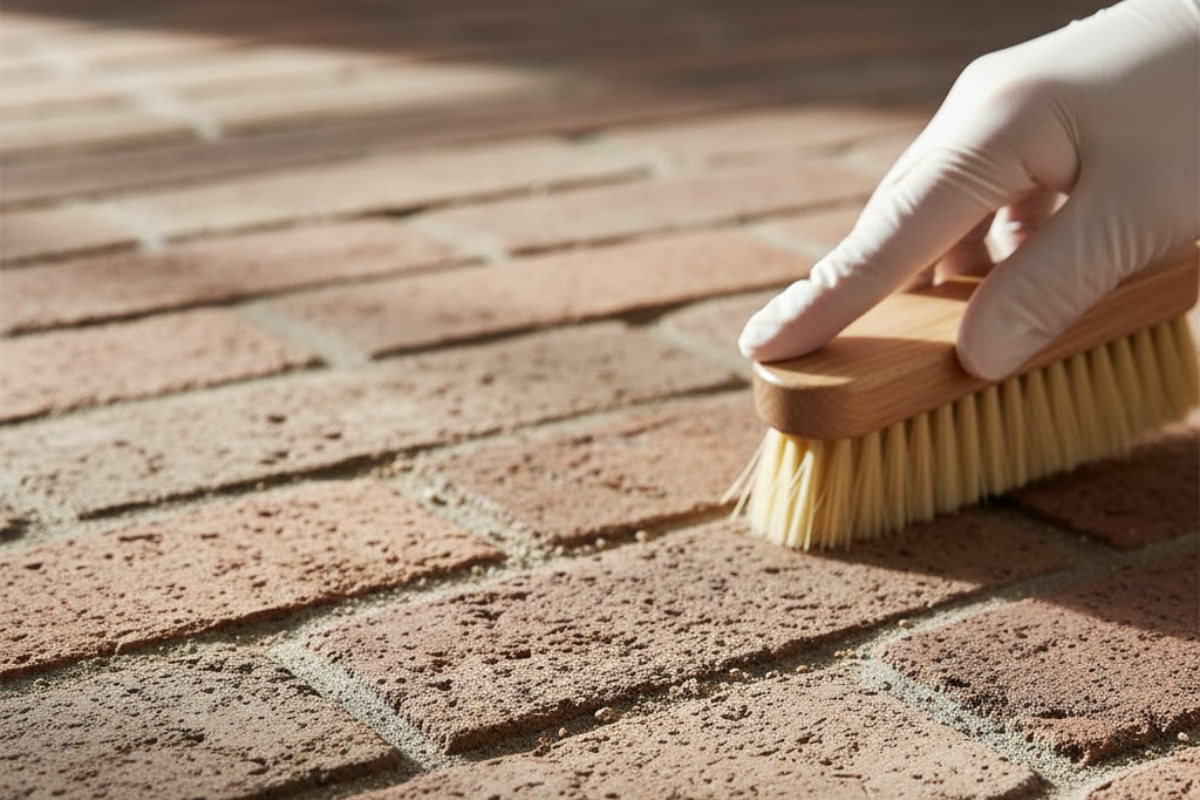
Brick is a porous material. Unlike sealed ceramic tile or vinyl, unsealed brick acts a bit like a hard sponge. It can absorb liquids, oils, and dirt if you aren’t careful. Even sealed brick has texture—nooks and crannies where grime loves to hide.
Because of this porosity and texture, you can’t just slop any old cleaner on it. Harsh acids can eat away at the mortar, while overly soapy detergents can leave a sticky film that actually attracts more dirt. The goal is to lift the dirt out of the pores without damaging the sealant or the brick’s natural color.
Tools and Materials You Will Need
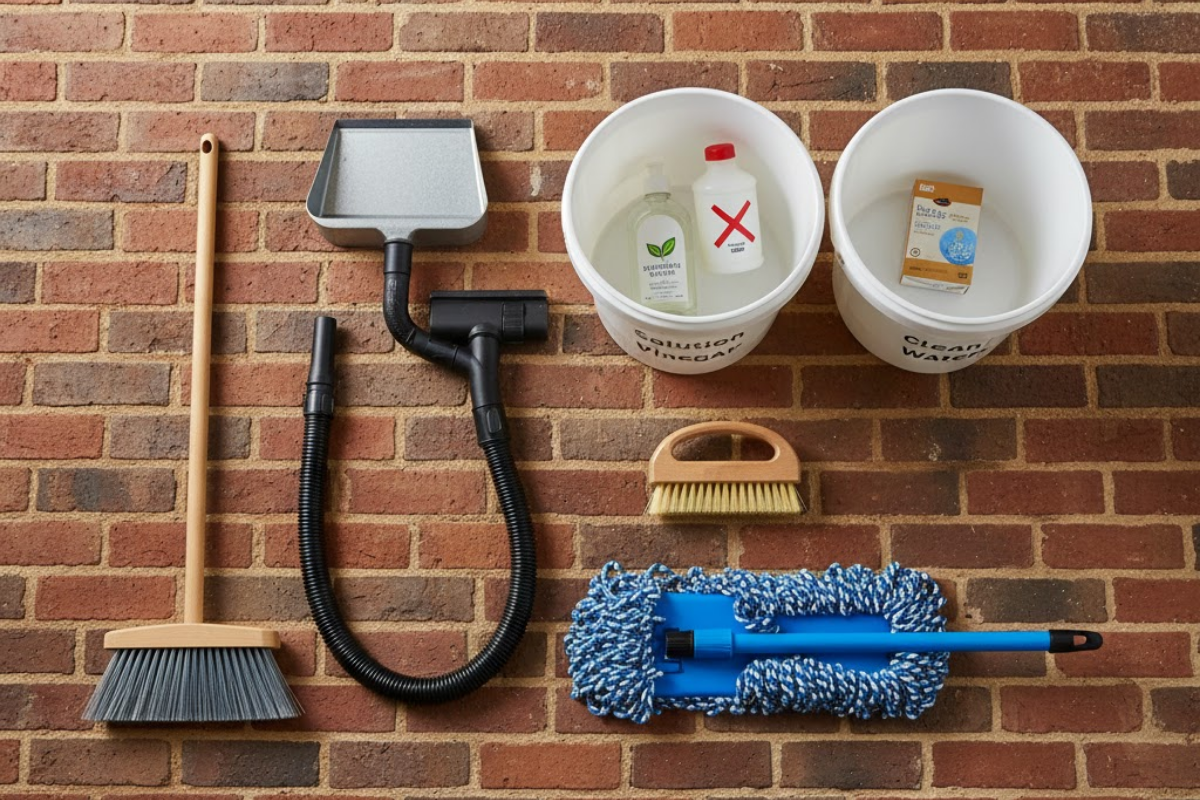
Before you start scrubbing, gather your supplies. Having the right tools makes the job much faster and protects your floor from damage.
The Basics:
- Broom and Dustpan: A high-quality broom with stiff bristles works best for getting into the grout lines.
- Vacuum Cleaner: Ideally one with a hard floor setting or a brush attachment.
- Microfiber Mop or String Mop: Avoid sponge mops, which tend to push dirty water into the grout lines rather than lifting it out.
- Buckets: You will need two—one for the cleaning solution and one for fresh rinse water.
Cleaning Solutions:
- Mild Dish Soap or pH-Neutral Stone Cleaner: This is your safest bet for general cleaning.
- White Vinegar: Great for unsealed brick, but use cautiously on sealed floors (more on this later).
- Baking Soda: Essential for scrubbing grout and tough spots.
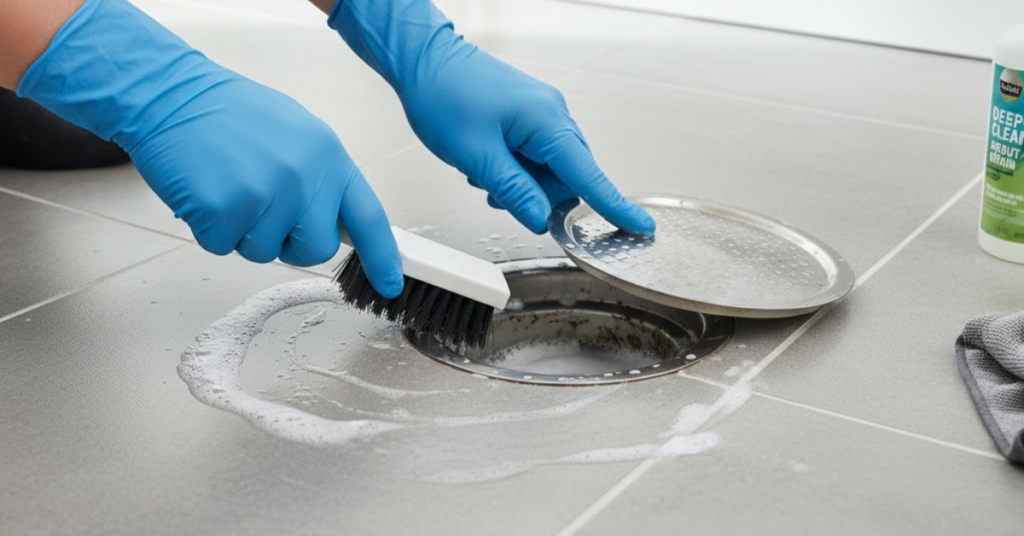
- Stiff Bristle Scrub Brush: For those stubborn stains.
Step-by-Step: How to Clean a Brick Floor
Ready to make those floors shine? Follow this simple process for a thorough clean.
1. Clear the Area and Dry Clean
First, remove rugs, furniture, and any obstacles. You want clear access to the entire floor. Start by sweeping thoroughly. Brick floors are notorious for holding onto grit and sand, which can scratch the surface if you start mopping immediately.
After sweeping, run the vacuum over the floor. Use the brush attachment to get deep into the mortar lines and corners where dust bunnies congregate. Don’t skip this step—wet dust turns into mud, which is much harder to remove.
2. Prepare Your Cleaning Solution
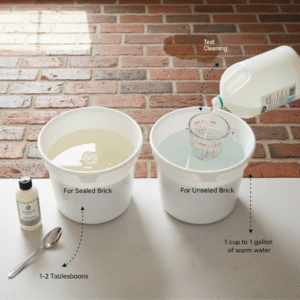
For a standard clean, simpler is better.
- For Sealed Brick: Mix 1-2 tablespoons of mild dish soap or a specialized pH-neutral stone cleaner into a bucket of warm water.
- For Unsealed Brick: You can use a mixture of 1 cup of white vinegar to a gallon of warm water. The acidity helps cut through grime on the rough surface.
Pro Tip: Always test your solution in an inconspicuous corner (like inside a closet or under a heavy cabinet) before doing the whole room.
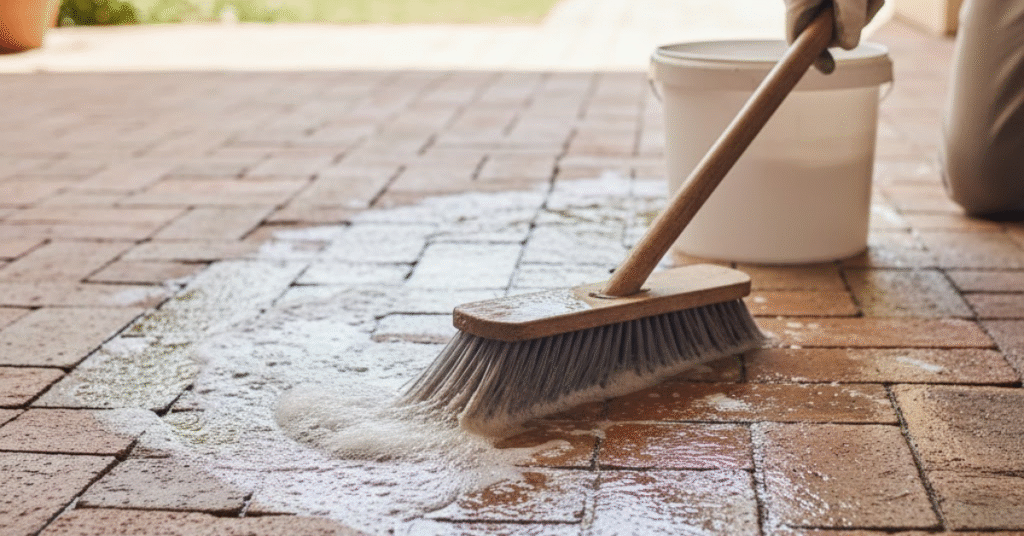
3. The Mop and Rinse Technique
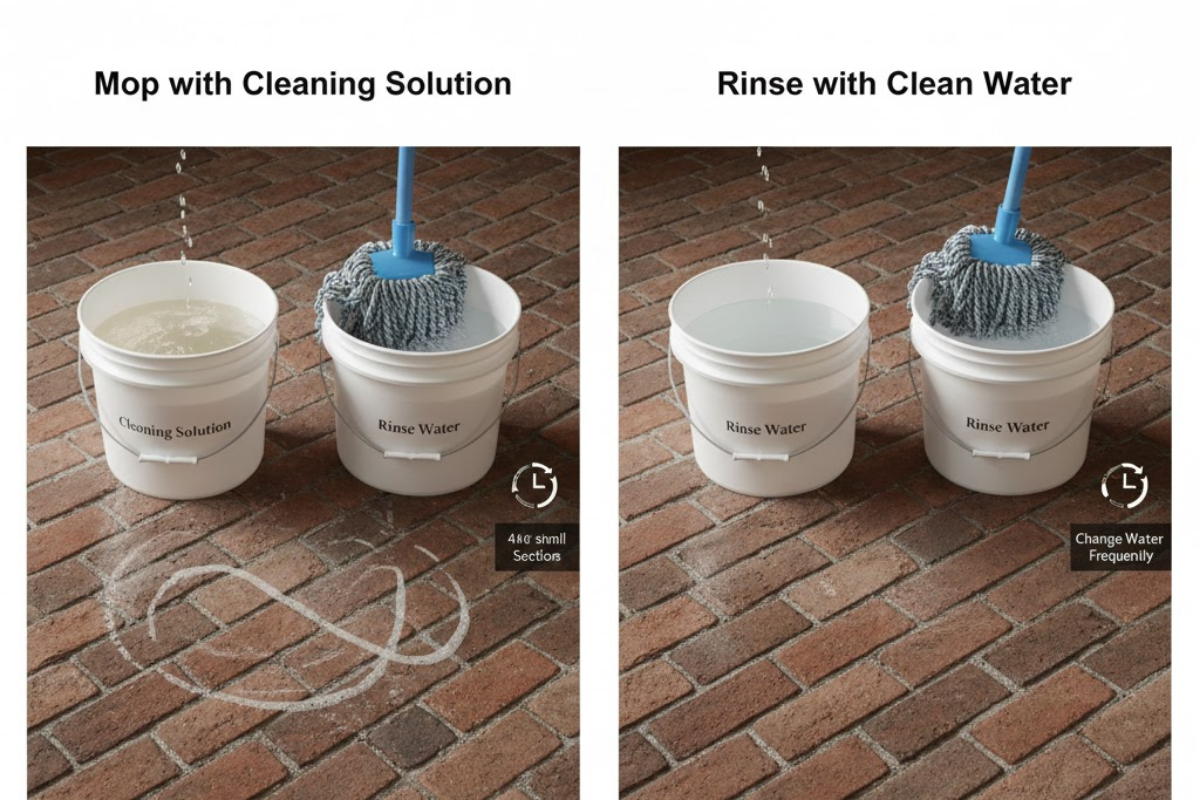
Dip your mop into the cleaning solution and wring it out well. You want the mop damp, not dripping wet. Excess water can seep under the bricks or degrade the subfloor over time.
Mop in small sections. If you are using a string mop, move in a figure-eight motion to trap dirt.
Here is the crucial part: You must rinse. As you finish a section, switch to your second bucket of plain, clean water. Rinse your mop (or use a separate rinse mop) and go over the area again to remove any soapy residue. This prevents hazing and keeps the floor cleaner for longer.
4. Dry the Floor
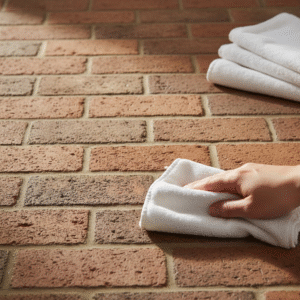
Don’t let the floor air dry completely on its own, especially if you have hard water. Water spots can show up easily on brick. Take an old towel or a dry microfiber cloth and buff the floor dry. This gives it a nice, subtle sheen and ensures no water sits in the grout.
How to Remove Tough Stains from Brick
Sometimes a simple mop isn’t enough. If you have grease spills, rust, or mildew, you need a targeted approach.
Grease and Oil Stains
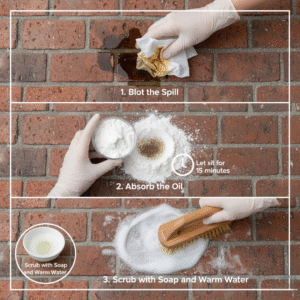
This is common in kitchens. If you drop oil, act fast.
- Blot (don’t wipe!) the spill immediately.
- Sprinkle baking soda or cornstarch over the spot to absorb the oil. Let it sit for 15 minutes.
- Scrub with a stiff brush and a mixture of warm water and dish soap.
Mold and Mildew
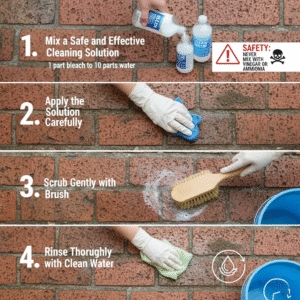
In damp areas like mudrooms or patios, mildew can creep into the grout.
- Mix one part bleach with ten parts water. Caution: Never mix bleach with vinegar or ammonia.
- Apply carefully to the affected area with a sponge.
- Scrub gently with a brush, then rinse thoroughly with clean water.
Rust Stains
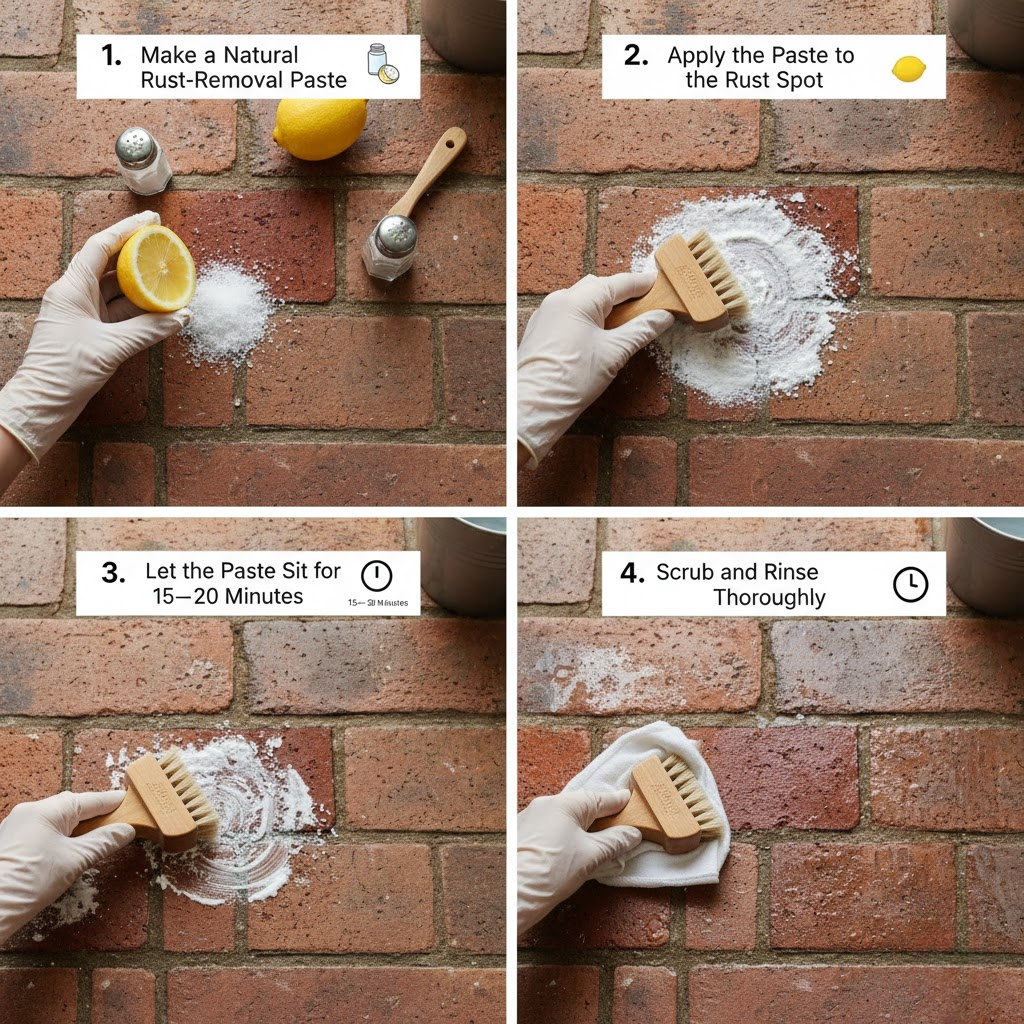
Rust is tough, but manageable. You can make a paste using table salt and lemon juice.
- Apply the paste to the rust spot.
- Let it sit for 15-20 minutes.
- Scrub firmly with your brush and rinse well.
Cleaning the Grout: The Secret to a Fresh Look
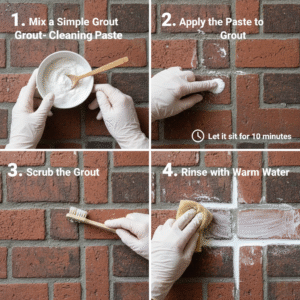
Often, the brick isn’t the problem—it’s the grout. Dirty grout makes the whole floor look dingy.
To clean grout lines:
- Make a paste of baking soda and water.
- Apply it to the grout lines and let it sit for 10 minutes.
- Use an old toothbrush or a specialized grout brush to scrub.
- Rinse with warm water.
This simple trick brightens the grid pattern of your floor, making the brick color pop.
Protecting Your Floor: Maintenance and Sealing
The best way to keep a brick floor clean is to stop it from getting dirty in the first place.
Sealing is Key
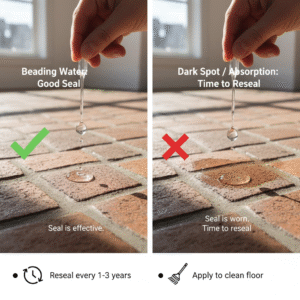
Most indoor brick floors should be sealed. A sealant creates a protective barrier that stops liquids from soaking into the porous clay. You can test your seal by dropping a teaspoon of water on the floor. If it beads up, your seal is good. If it soaks in immediately and creates a dark spot, it’s time to reseal. Generally, you should reseal brick floors every 1-3 years depending on foot traffic.
Use Mats and Rugs
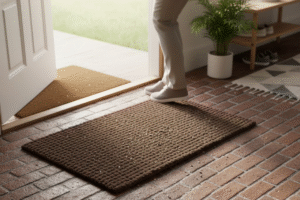
Place doormats at every entrance. Stopping dirt at the door reduces the amount of grit that gets ground into the brick surface.
Clean Spills Immediately
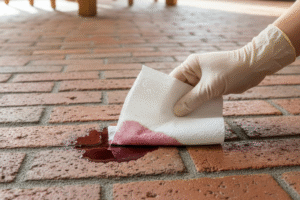
Because brick is porous, time is of the essence. The longer a liquid sits, the deeper it travels. Wipe up wine, coffee, or oil spills the second they happen.
Common Mistakes to Avoid
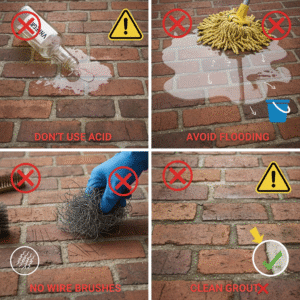
Even well-intentioned homeowners can accidentally damage their brick floors. Steer clear of these errors:
- Using Acid on Sealed Brick: Vinegar and lemon juice are great for many things, but strong acids can eat away at certain sealants and damage cement-based grout. Stick to pH-neutral cleaners for sealed floors.
- Over-wetting the Floor: Flooding the floor with water can cause efflorescence—a powdery white salt deposit that rises to the surface when water evaporates. Keep your mop damp, not soaked.
- Using Wire Brushes: Never use steel wool or wire brushes on brick. They can leave behind metal fibers that will eventually rust and stain the floor, and they can scratch the sealant.
- Ignoring the Grout: You can scrub the brick all day, but if the grout is black with grime, the floor will still look dirty. Give the grout some love.
Conclusion
Cleaning a brick floor doesn’t have to be a daunting chore. With the right tools and a little bit of routine maintenance, your brick surfaces can last a lifetime and look better with age. The character and warmth they bring to your home are well worth the effort.
Remember, the key is to be gentle but consistent. Vacuum regularly, mop with mild cleaners, and tackle stains as soon as they happen. By following these steps on how to clean a brick floor, you will keep your home looking inviting and spotless for years to come.